

Before you hand over money for a used car, plug in an OBD2 scanner. This simple move can save you thousands by revealing hidden problems the seller doesn't want you to know about—problems that won't show up during a test drive or a casual inspection.
When to use an OBD2 scanner before buying a used car comes down to one rule: always, before you commit. Not after. Not if something feels off. Before you even shake the seller's hand and schedule the paperwork. A few minutes with a scanner reads the car's diagnostic computer and tells you what's really going on under the hood.
Related: How to Use an OBD2 Scanner Step by Step
In this article
- Why You Need a Scanner at the Point of Sale
- What Fault Codes Tell You About the Vehicle
- Detecting Hidden or Disabled Warning Lights
- Uncovering Transmission and Engine Issues
- The Right Time to Scan (Timing Matters)
- Verify Mileage Through the Scanner
- What to Do When You Find Fault Codes
- Making the Scanner Part of Your Used Car Buying Process
- Getting the Right Scanner for Pre-Purchase Inspections
- Why Sellers Might Resist
- The Peace of Mind Factor
Why You Need a Scanner at the Point of Sale
Used car sellers have incentive to hide problems. Some will disable dash warning lights by removing bulbs or disconnecting sensors. Others will clear fault codes right before you arrive, hoping you won't notice the underlying issue. A few minutes with BLCKTEC changes that equation completely.
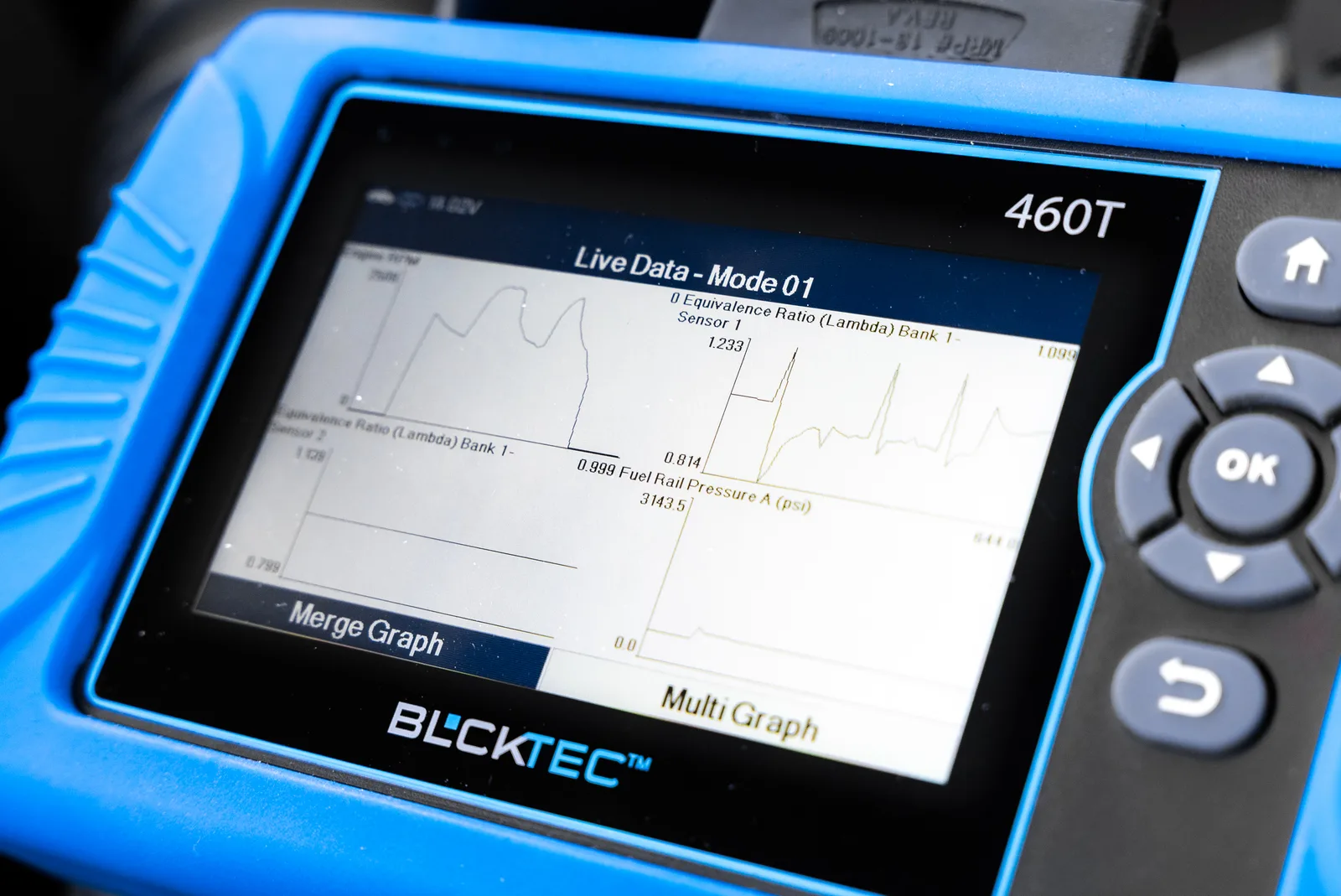
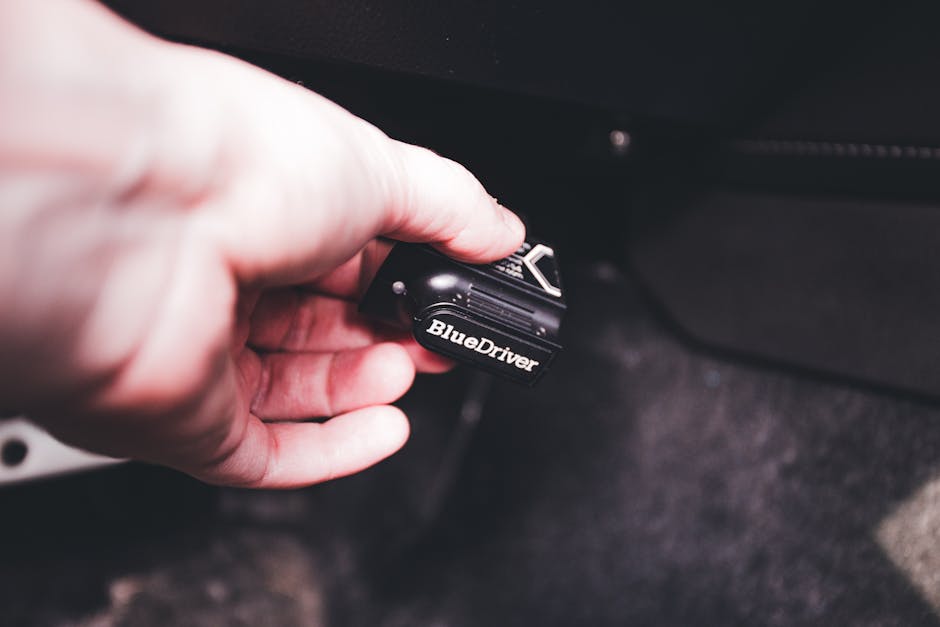
When you plug a scanner into the vehicle's OBD2 port (usually under the steering wheel on the driver's side), you bypass all the tricks. The scanner reads the car's onboard computer directly. It shows you every fault code that's been stored, even if the check engine light has been cleared or hidden.
Related: How to Check a Used Car with OBD2 Scanner: Step-by-Step
This is the difference between buying blind and buying informed.
What Fault Codes Tell You About the Vehicle
Fault codes are like the car's medical records. Each code points to a specific system or component that the vehicle's computer flagged as faulty or out of range.
A transmission solenoid code means the transmission has a problem—maybe slipping, maybe shifting hard, maybe both. You won't feel it on a quick test drive. But the computer caught it, and the scanner reads it.
Catalytic converter codes tell you that this expensive component is failing or has already failed. If a used car has a catalytic converter code, you need to know before you buy.
Engine misfire codes, oxygen sensor codes, fuel system codes—each one points to real money in repairs. Some are cheap fixes. Some are deal-breakers. Either way, you deserve to know.
Detecting Hidden or Disabled Warning Lights
A seller who removes a dash bulb or disconnects a sensor wire is actively hiding a problem. An OBD2 scanner reveals this trick instantly.
The scanner shows you every system the computer monitors. If a sensor is disconnected or a circuit is open, the scanner catches it. If a light should be on but isn't, the fault codes explain why. You'll see what's real and what's been covered up.
This is especially important for the check engine light. Never buy a car with a check engine light unless you scan it first. And never trust a seller who says "the light just comes on sometimes" or "I cleared it and it hasn't come back." Run the scan. Get the facts.
Uncovering Transmission and Engine Issues

Transmission problems are expensive and dangerous. A worn transmission might feel okay on a 10-minute test drive but fail completely after you own it for a month.
An OBD2 scanner reads transmission codes that show solenoid failures, slippage detection, and shift quality problems. You won't see these issues in a test drive. The computer will flag them in the scan.
Engine codes work the same way. Misfires, fuel trim problems, timing issues—the computer knows. A scanner tells you.
The Right Time to Scan (Timing Matters)
Scan the car before you test drive it. Scan it again after the test drive. Scan it one more time before you sign paperwork.
The first scan gives you a baseline. It tells you what problems exist right now, in the car's current state.
The second scan, after you drive it, can reveal problems that only show up when the engine is warm or the transmission is under load. Some faults only trigger during specific driving conditions.
The third scan confirms nothing has changed and no new codes have appeared since the second scan. It's your final confirmation before you commit.
Verify Mileage Through the Scanner
Some OBD2 scanners can pull the vehicle's recorded mileage directly from the onboard computer. This is a quick way to spot odometer fraud on the spot.
The mileage data varies by vehicle make and model—not every car stores it in a way that a standard scanner can access—but when it's available, you get a second verification of what the seller claims.
What to Do When You Find Fault Codes
Finding codes doesn't automatically mean "don't buy." It means "negotiate or walk."
A single fault code for a $50 sensor? Maybe that's acceptable if the price reflects the repair cost. A catalog of transmission codes, catalytic converter failures, and engine misfires? That's a different story. That's a car that's going to drain your bank account.
Use the scan results to push back on price or make an informed decision to walk away. Either way, you're not guessing.
Making the Scanner Part of Your Used Car Buying Process
Smart buyers treat an OBD2 scan like a pre-purchase inspection. It's not optional. It's standard.
Related: Best OBD2 Scanner for Used Car Inspection 2026: Top 5 Ranked
Some dealerships and private sellers will let you scan on the spot. Some won't. If a seller refuses to let you plug in a scanner, ask yourself why. That hesitation is information too.
If you're serious about buying used cars safely, keep a scanner with you. An affordable diagnostic tool fits in your glove box and takes 60 seconds to use. BLCKTEC makes scanners designed exactly for this moment—quick, reliable, and easy enough that anyone can use them without training.
Looking for an OBD2 Scanner?
Explore BLCKTEC →You don't need to be a mechanic to plug in a scanner and read codes. You don't need to understand every technical detail. You just need to know that a fault code exists and what it costs to fix. That knowledge protects you.
Getting the Right Scanner for Pre-Purchase Inspections
You don't need a high-end professional scanner for pre-purchase inspections. You need something that reads codes clearly, handles multiple vehicle makes and models, and works fast.
A basic handheld scanner does exactly that. Plug it in, read the codes, note them down, and move forward with confidence. No subscriptions. No complicated menus. Just results.
Keep your scanner in the car. Use it every time. Make it part of your routine before you buy. Some buyers even scan cars they're already considering trading in or selling—it gives you real data about what you own and what repair bills might be coming.
Why Sellers Might Resist
A few sellers will push back when you ask to scan. They might say "the battery's disconnected" or "we already cleared the codes" or "my mechanic checked it already."
None of those statements prevent you from scanning. A disconnected battery doesn't erase the computer's fault code memory. Cleared codes will show back up the moment the condition triggers again. And a seller's mechanic isn't your mechanic.
A clean scan from your scanner in your hands is the only verification that matters to you. Insist on it politely but firmly.
The Peace of Mind Factor
The real value of scanning before you buy isn't just about avoiding disasters. It's about peace of mind.
When you drive off the lot, you'll know you bought a car with your eyes open. You didn't get fooled. You didn't miss anything obvious. Whatever repairs come later, they won't be surprises you could have caught before the purchase.
That confidence is worth the small investment in a scanner and the few minutes it takes to use it.
When should I scan a used car?
Scan before you test drive it, after you test drive it, and one final time before you sign paperwork. Three scans give you the complete picture of what's really happening in that vehicle.
Can I use a basic OBD2 scanner or do I need a professional tool?
A basic scanner is all you need for pre-purchase inspection. You're reading codes, not performing repairs or deep diagnostics. A simple handheld scanner gets the job done in minutes and costs a fraction of what you'll save by catching one major problem before you buy.
What if the seller won't let me scan the car?
That's a red flag. If someone won't let you check the car's computer before you buy it, that's usually because they know something's wrong. Walk away or make the scan a condition of moving forward.
Can an OBD2 scanner tell me about accident damage or frame damage?
No. A scanner reads the car's computer and its fault codes. It doesn't detect collision history or frame damage. For that information, you'll want a pre-purchase inspection by a mechanic or a vehicle history check. But the scanner handles the hidden mechanical faults that the seller hopes you won't find.
Looking for an OBD2 Scanner?
Explore BLCKTEC →