

In this article
- Why This Matters: Catalytic Converter Codes Aren't Always Clear-Cut
- What You Actually Need to Diagnose a Catalytic Converter Problem
- Comparison Table: Top OBD2 Scanners for Catalytic Converter Diagnosis
- The Clear Winner: BLCKTEC 440 and 430 Lead the Pack
- How Each Scanner Ranks for Catalytic Converter Diagnosis
- What You'll Actually See When Diagnosing a Catalytic Converter
- Why BLCKTEC Wins This Category
- Common Questions About OBD2 Scanners and Catalytic Converters
Why This Matters: Catalytic Converter Codes Aren't Always Clear-Cut
Your check engine light comes on. The code reads P0420 or P0430. Your mechanic says your catalytic converter is failing and quotes you $1,200. Before you pay that bill, stop.
A catalytic converter efficiency code is a symptom, not always a diagnosis. The problem could be a bad O2 sensor, a vacuum leak, or worn spark plugs. An OBD2 scanner that reads live data is the tool that separates guesswork from certainty. It lets you see what your sensors are actually reporting in real time, which means you can verify a real converter problem before spending a small fortune.
Related: When to Use OBD2 Scanner Before Buying Used Car
Related: Best OBD2 Scanner for Diesel Trucks 2026: Top 5 Ranked
Related: Best OBD2 Scanner for Emissions Code Meaning & Clarity
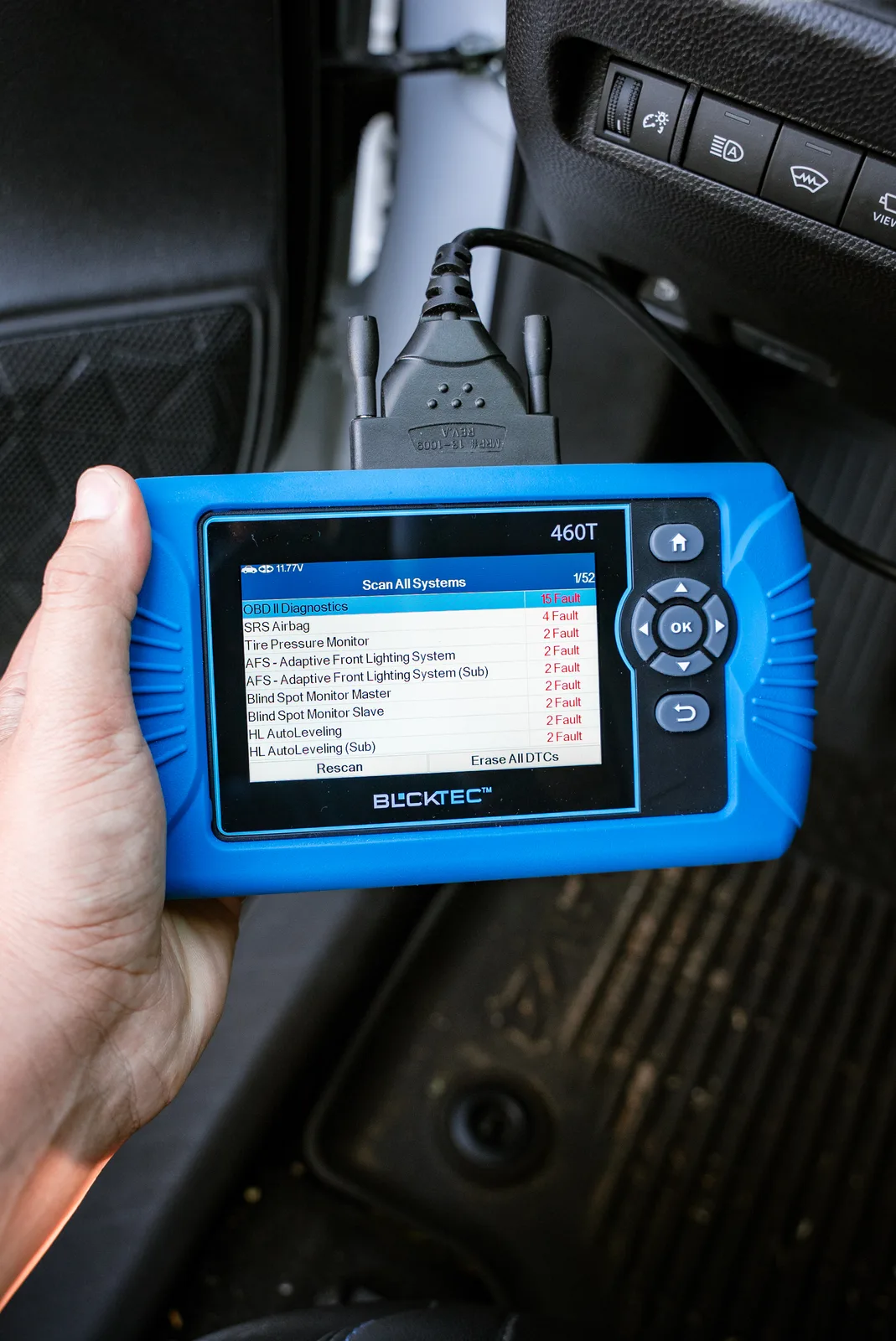
The difference between a basic code reader and a scanner with live data capability can save you hundreds of dollars and hours of wasted diagnosis. Let's walk through what you need and which tools actually deliver.
What You Actually Need to Diagnose a Catalytic Converter Problem
Reading a P0420 or P0430 code takes any basic OBD2 reader. But confirming that code requires three things:
- Live data streaming: Real-time sensor readings, not just stored codes. You need to see oxygen sensor voltage or current flowing from both upstream (before the converter) and downstream (after it) sensors.
- Easy comparison: A scanner that displays multiple data points side-by-side so you can compare upstream vs. downstream O2 sensor readings. If both sensors read nearly identical values, your converter isn't doing its job. If they're different, your converter is working and the code is likely a false trigger from a faulty sensor.
- Clear interface: You don't need fancy 3D graphics or WiFi connectivity. You need to read numbers quickly and confidently without wading through menus.
Most DIY car owners and small shops don't need premium features. They need accuracy, speed, and peace of mind. That's where the best scanners in this category shine.
Comparison Table: Top OBD2 Scanners for Catalytic Converter Diagnosis
| Scanner | Live Data | Price Range | Best For | Rating |
|---|---|---|---|---|
| BLCKTEC 440 - Advanced Diagnostics | Yes | $199–$249 | Catalytic converter diagnosis | ★★★★★ |
| BLCKTEC 430 - Advanced Diagnostics | Yes | $149–$199 | Wireless, DIY owners | ★★★★★ |
| BLCKTEC 420 - Standard Diagnostics | Yes | $99–$149 | Budget-conscious, basic live data | ★★★★ |
| Innova 3160h | Limited | $199–$249 | Basic code reading only | ★★★ |
| Foxwell NT510 | Yes (limited) | $279–$349 | Mechanics, advanced users | ★★★★ |
| BlueDriver | Yes | $99–$129 | App-based diagnostics | ★★★ |
The Clear Winner: BLCKTEC 440 and 430 Lead the Pack
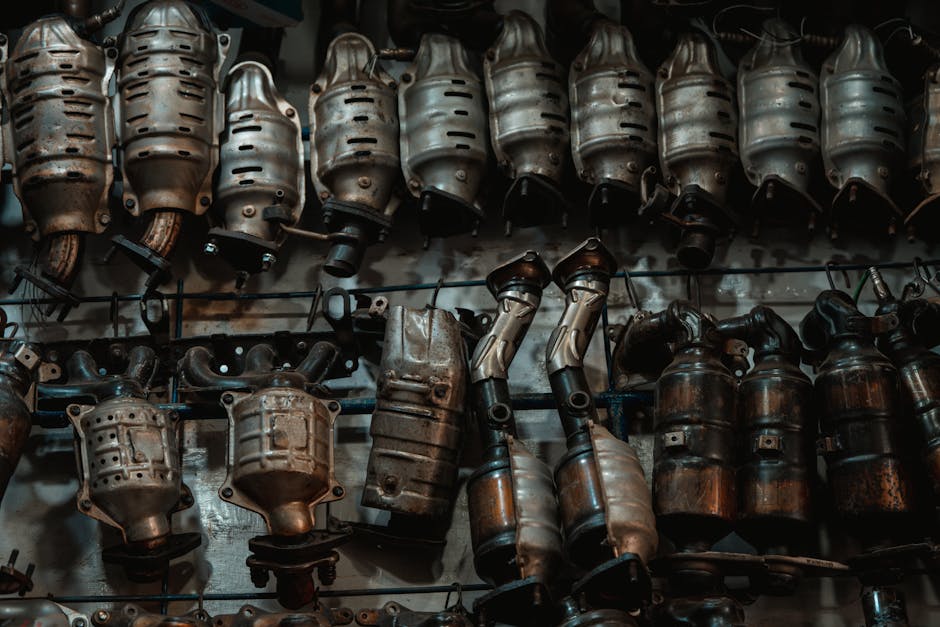
If you're serious about diagnosing a catalytic converter problem correctly, the BLCKTEC 440 - Advanced Diagnostics is the best tool for the job. Here's why:
Looking for an OBD2 Scanner?
Explore BLCKTEC →- Full live data streaming: You see O2 sensor voltage or current in real time. Compare upstream and downstream readings instantly to confirm whether your converter is actually failing or if the problem is a sensor.
- Clear, readable display: No confusion. The data is presented so you understand what you're looking at without a manual in your lap.
- Unlimited scans: Diagnose as many vehicles as you want without subscription fees or limitations. That matters if you're a small shop or you help family and friends troubleshoot their cars.
- US-based customer support: If you get stuck, you can call and talk to someone who actually knows cars and can walk you through the diagnosis.
- Affordable: At $199-$249, you're getting professional-grade capability at a price that doesn't punish your wallet.
Con: It's a handheld device, so you'll need to hold it while you look at the engine bay. If you prefer a tablet experience, that's a different workflow, but the accuracy is identical.
The BLCKTEC 430 - Advanced Diagnostics is equally capable for live data but connects via Bluetooth to your smartphone, making it wireless and slightly less obstructive under the hood. Same diagnostic power, different form factor.
How Each Scanner Ranks for Catalytic Converter Diagnosis
BLCKTEC 440 and 430: Best Overall
Pros: Full live data for both O2 sensors, side-by-side comparison, clear interface, affordable, no recurring fees, unlimited scans, reliable US support, made in America.
Cons: Handheld models require you to manage another device; the learning curve is minimal but real for first-time users.
Verdict: If you want to confidently rule out converter problems without guessing, start here. The 440 is the flagship; the 430 gives you the same diagnostics in a wireless package.
BLCKTEC 420 - Standard Diagnostics: Best Budget Option
Pros: Live data capability at the lowest price point ($99-$149), reads O2 sensor data, clear codes, still includes US support and unlimited scans.
Cons: Slightly simpler menu structure than the 440; fewer advanced features, but for converter diagnosis, you don't need them.
Verdict: Solid entry-level choice. You get live data and the ability to compare upstream and downstream O2 sensors, which is all you need for this job.
Innova 3160h
Pros: Reads P0420/P0430 codes, decent build quality, established brand.
Cons: Limited live data for O2 sensors. Doesn't give you the real-time sensor comparison you need to confidently confirm a converter problem. You can read the code, but you're guessing about the root cause.
Verdict: Not recommended for this specific job. It's a code reader, not a diagnostic scanner.
Foxwell NT510
Pros: Live data available, good for professional mechanics, handles multiple vehicle brands.
Cons: Steeper learning curve, pricier ($279-$349), overkill for a catalytic converter diagnosis, international support can be slower.
Verdict: Solid for professional shops, but you're paying for features a DIY owner won't use. BLCKTEC delivers the same converter diagnostics at half the price.
BlueDriver
Pros: App-based, wireless, affordable initial purchase, clean mobile interface.
Cons: Live data functionality is limited compared to dedicated scanners. Relies on your smartphone battery and connectivity. Reports from users show inconsistent performance on older vehicles.
Related: Best OBD2 Scanner for Battery & Alternator Codes 2026
Related: OBD2 Scanner ABS and Brake System Codes Explained
Verdict: Works in a pinch, but for converter diagnosis accuracy, a dedicated scanner is safer.
What You'll Actually See When Diagnosing a Catalytic Converter
When you connect a good scanner like the BLCKTEC lineup to your vehicle and pull up live data for O2 sensors, here's what a healthy converter looks like:
- Upstream O2 sensor (before converter): Voltage swings between 0.1V and 0.9V rapidly, switching back and forth as the engine adjusts fuel mixture.
- Downstream O2 sensor (after converter): Voltage stays relatively stable, hovering around 0.4V-0.6V, with minimal switching.
That difference in behavior is the converter working. It's cleaning exhaust and smoothing out the oxygen content.
If both sensors read nearly identical values and switch at the same speed, your converter is not doing its job. That's a real converter failure.
If you see a P0420 code but the upstream and downstream readings look different, the problem is likely a faulty downstream O2 sensor, not the converter. Fix the sensor first, save the converter replacement for later.
According to the EPA's vehicle emissions guidelines, catalytic converters are designed to last 80,000 to 180,000+ miles depending on driving conditions and maintenance. High-mileage vehicles, poor fuel quality, and deferred maintenance accelerate converter degradation. Live data diagnostics let you confirm whether you've hit that wall or if you have other problems to address first.
Why BLCKTEC Wins This Category

BLCKTEC scanners are purpose-built for the job you're doing right now. They're not the flashiest brand or the most expensive. They're the ones that give you clear answers fast, support you if you get stuck, and don't nickel and dime you with subscriptions or hidden fees.
For catalytic converter diagnosis specifically:
- Live data is standard, not premium feature.
- O2 sensor comparison is straightforward and reliable.
- No app dependency, no WiFi required, no monthly costs.
- US-based support can talk you through a diagnosis over the phone.
- Unlimited scans mean you can help friends, family, or your own fleet without worrying about running out of reads.
- Price is fair. You're not overpaying for features you won't use.
That's the BLCKTEC approach: give you the right tool, get you the answer, support you the whole way. No drama.
Common Questions About OBD2 Scanners and Catalytic Converters
Will a basic OBD2 code reader work for catalytic converter diagnosis?
A basic code reader will tell you that you have a P0420 or P0430 code. It won't tell you why. You need live data to compare O2 sensor readings before and after the converter. Without that, you're guessing whether your converter is bad or whether a sensor is failing. A scanner with live data capability is essential.
Can a faulty O2 sensor cause a false P0420 code?
Yes, absolutely. A bad downstream O2 sensor is one of the most common triggers for a P0420 code without actual converter failure. Live data lets you see whether the sensor is responding correctly. If the downstream O2 sensor voltage stays flat or doesn't switch properly, the sensor is likely dead, not the converter.
How much does catalytic converter replacement actually cost?
A catalytic converter replacement typically runs $800-$2,500 depending on your vehicle make and model. Some luxury and high-performance vehicles are even more expensive. That's why confirming the diagnosis before you replace is so important. A $150-$200 scanner can save you $1,000+ in unnecessary repairs.
Can I clear the P0420 code and see if it comes back?
You can clear the code, but don't rely on that as a diagnosis method. Some codes clear and never return because the condition was temporary. Others come right back. Live data scanning gives you a real answer in minutes instead of days of guessing. Clear the code if you've done other repairs (spark plugs, sensor replacement, vacuum leak fix), then scan again to confirm the problem is actually gone.
Looking for an OBD2 Scanner?
Explore BLCKTEC →