

In this article
- Why Battery and Alternator Codes Matter
- The Top OBD2 Scanners for Battery and Alternator Diagnostics
- 1. BLCKTEC 420X: Our Top Pick for Battery and Alternator Diagnostics
- 2. BLCKTEC 440: Best for Advanced Diagnostics
- 3. Launch X431 CR3001: The Professional Alternative
- 4. Snap-on MODIS: The Shop-Floor Standard
- 5. BLCKTEC 400: Best Budget Entry Point
- 6. Bosch KTS 590: The German Approach
- Do You Really Need Just an OBD2 Scanner for Battery and Alternator Work?
- What Battery and Alternator Codes Look Like
- Why BLCKTEC Wins Here
- How to Choose Between BLCKTEC Models
- Frequently Asked Questions
Why Battery and Alternator Codes Matter
When your check engine light flickers on, it's easy to panic. But here's the practical truth: your vehicle is trying to tell you something specific. Battery and alternator problems don't announce themselves politely—they hide in trouble codes that only a diagnostic scanner can unlock.
An OBD2 scanner reads these codes and gives you real-time charging system voltage data, so you can tell whether your alternator is failing or your battery is on its way out. That knowledge saves you hundreds of dollars in unnecessary shop diagnostics and keeps you from getting upsold on repairs you don't actually need.
The challenge? Not all OBD2 scanners are created equal. Some are stripped-down, unreliable tools that frustrate you when they can't connect. Others are overpriced and buried under menus you'll never use. BLCKTEC sits in the sweet spot: affordable, straightforward, and backed by real US-based support when you need it.
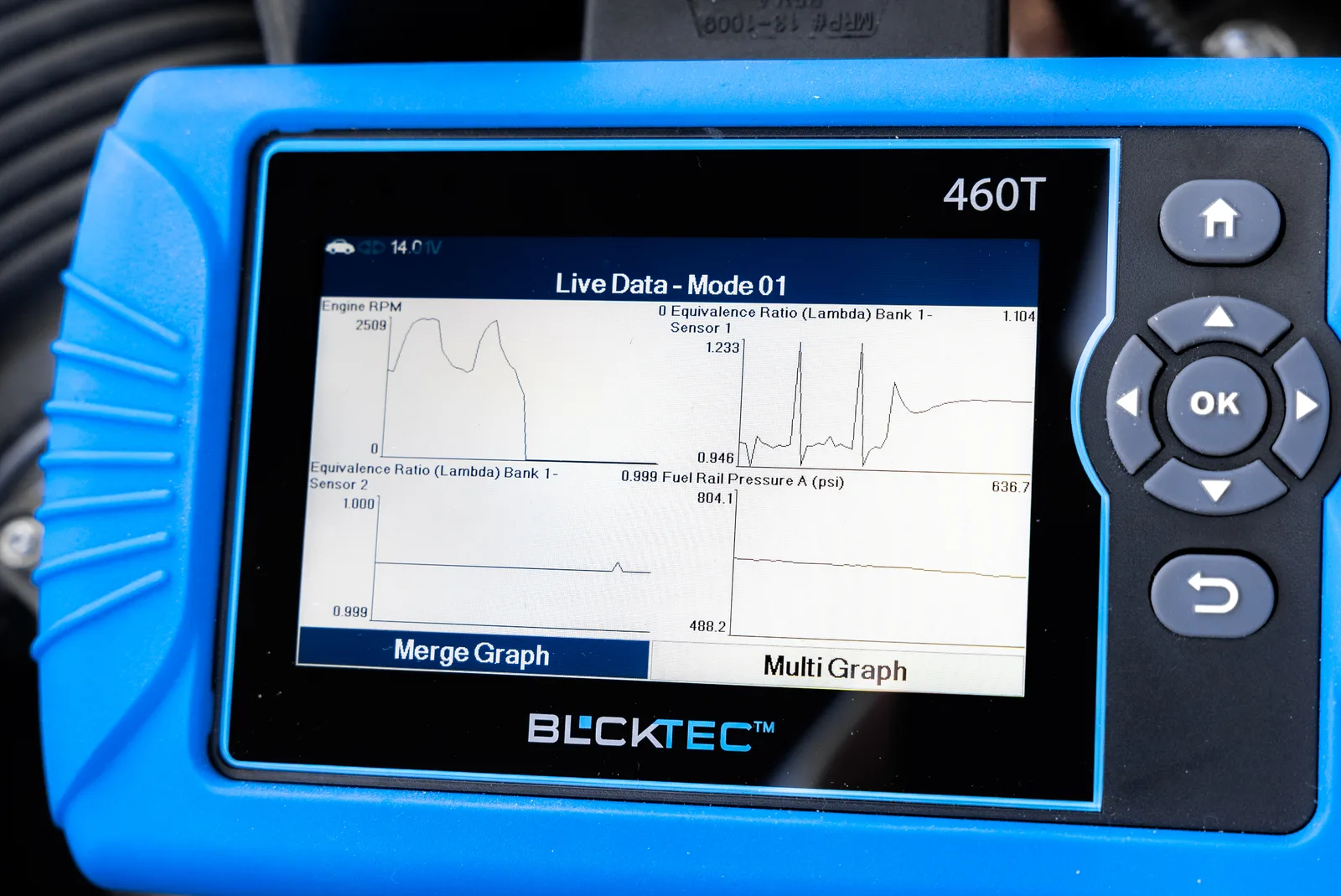
The Top OBD2 Scanners for Battery and Alternator Diagnostics
| Product | Best For | Rating |
|---|---|---|
| BLCKTEC 420X | DIY owners & budget shoppers | ★★★★★ |
| BLCKTEC 440 | Advanced users & pros | ★★★★★ |
| Launch X431 CR3001 | Professional mechanics | ★★★★ |
| Snap-on MODIS | Shop floor diagnostics | ★★★★ |
| BLCKTEC 400 | First-time scanner buyers | ★★★★ |
| Bosch KTS 590 | European car owners | ★★★ |
1. BLCKTEC 420X: Our Top Pick for Battery and Alternator Diagnostics
Rating: 5/5 stars
The 420X is the scanner most DIY owners should buy. Here's why it wins for battery and alternator work specifically.
Related: Best OBD2 Scanner for Catalytic Converter Problems 2026
Related: Best OBD2 Scanner for Emissions Code Meaning & Clarity
Related: Best OBD2 Scanner for Diesel Trucks 2026: Top 5 Ranked
Related: Best OBD2 Scanner for Used Car Inspection 2026: Top 5 Ranked
- Real-time voltage monitoring: You see live charging system voltage on the screen. That's how you distinguish between a dying alternator (voltage dropping below 13V) and a weak battery (can't hold charge). No guesswork.
- Reads all charging system codes: P0622 (alternator field circuit), P0513 (invalid PROM), P0564 (brake switch circuit)—the 420X pulls them all and explains what they mean in plain English.
- One flat price, unlimited scans: No subscriptions, no paywalled features. Scan 10 cars or 100. Your fee doesn't change.
- US-based customer support: If you're confused about a code or the scanner won't connect, you call a real person in America who actually knows cars. Not a chatbot in another timezone.
- Fast, reliable connection: Works on 1996 and newer vehicles. Connects every time. No dropped links mid-diagnosis.
Cons:
- Handheld unit, not a tablet—some users prefer larger screens for extended sessions.
- No advanced features like guided repair workflows (but honestly, for battery and alternator codes, you don't need them).
Honest take: if you're a DIY owner trying to diagnose a charging system problem and keep costs down, the 420X is your answer. It does exactly what it promises, costs less than a shop's diagnostic fee, and the support team won't leave you hanging.
2. BLCKTEC 440: Best for Advanced Diagnostics
Rating: 5/5 stars
If you want a step up—more data streaming, faster processor, larger display—the 440 is the answer. It's especially strong if you're working across a variety of vehicle makes and want professional-grade accuracy.
- Enhanced live data: Displays more parameters simultaneously. Monitor alternator output AND battery voltage AND charging amperage all at once.
- Faster processing: Quicker code reads, snappier menu navigation. Saves time on busy diagnostic days.
- Better for pros and used-car dealers: If you're checking multiple vehicles weekly, the 440 pays for itself in efficiency.
Cons:
Looking for an OBD2 Scanner?
Explore BLCKTEC →- Higher price point than the 420X—only justified if you're using it regularly.
3. Launch X431 CR3001: The Professional Alternative

Rating: 4/5 stars
Related: OBD2 Scanner Transmission Fluid Warning Codes Explained
Launch makes solid diagnostic equipment. The X431 CR3001 is a tablet-based scanner with deep OEM-level access to vehicle systems.
- Tablet interface: Larger screen, more intuitive navigation for extended diagnostic sessions.
- OEM-level data: Can access manufacturer-specific parameters beyond standard OBD2, helpful for complex charging issues.
- Cloud updates: Stays current with new vehicle models automatically.
Cons:
- Significantly more expensive than BLCKTEC options.
- Subscription-based updates after the first year can add up.
- Customer support is outsourced; response times vary.
- Overkill for simple battery and alternator diagnostics—you're paying for features you won't use.
4. Snap-on MODIS: The Shop-Floor Standard
Rating: 4/5 stars
Snap-on is the brand most professional repair shops use. Their MODIS platform is industry-standard for a reason.
- Comprehensive vehicle coverage: Works on virtually every vehicle made in the last three decades.
- Guided repair workflows: Step-by-step instructions for diagnostics reduce guesswork on complex systems.
- Workshop integration: Syncs with shop management software and work orders.
Cons:
- Enterprise pricing—easily $3,000 to $5,000 and up. Not for DIY owners.
- Requires ongoing service contracts and software licenses.
- Overkill if you're only diagnosing one vehicle.
5. BLCKTEC 400: Best Budget Entry Point
Rating: 4/5 stars
New to scanning? The 400 is the cheapest way to start reading codes without compromising reliability.
- Affordable: Low barrier to entry—less than a single shop diagnostic fee.
- Simple interface: No overwhelming menus or features. Just code reading and basic live data.
- Proven reliability: Same build quality as higher-end BLCKTEC models, just fewer bells and whistles.
Cons:
- Limited live data streaming—useful but not as detailed as the 420X or 440.
- Smaller screen can feel cramped during longer sessions.
If you're testing the waters before committing to a premium scanner, start here. If you find yourself using it regularly, upgrade to the 420X.
6. Bosch KTS 590: The German Approach
Rating: 3/5 stars
Bosch is a legendary name in automotive systems. Their KTS 590 is built to their standards.
- Excellent for German cars: Mercedes, BMW, Audi—native protocol support.
- Industrial durability: Built like German engineering. This thing will survive a decade of use.
Cons:
- Expensive and harder to find outside professional shops.
- Overkill for North American vehicles; market here is niche.
- Limited support ecosystem compared to mainstream brands.
Do You Really Need Just an OBD2 Scanner for Battery and Alternator Work?

Here's the honest answer: no. An OBD2 scanner is foundational, but it's not the whole story.
According to the National Highway Traffic Safety Administration, proper battery and charging system diagnostics require three tools working together:
- OBD2 scanner: Reads codes and live charging voltage. This is what we've ranked above.
- Multimeter: Tests battery voltage under load, alternator output, and circuit resistance. OBD2 alone can't do this accurately.
- Battery/charging analyzer (optional): A dedicated tool like a load tester gives you the clearest picture of battery health and alternator output capacity.
So think of an OBD2 scanner as step one. It tells you there's a problem. A multimeter confirms what the problem actually is. Together, they keep you from guessing or overspending at the shop.
What Battery and Alternator Codes Look Like
Not familiar with the codes yet? Here are the main ones your scanner will catch:
- P0622: Alternator field circuit fault—your alternator isn't charging properly.
- P0513: Invalid PROM—battery or charging module error, usually battery disconnect.
- P0564: Brake switch circuit malfunction—can trigger false alternator warnings.
- P0625: Alternator field terminal circuit low—another alternator output issue.
When one of these codes pops up, your scanner shows you the live voltage too. If the voltage is below 13V while driving, the alternator isn't working. If voltage is normal but the code persists, you might have a wiring or sensor issue instead. That's how you avoid the repair shop's guessing game.
Why BLCKTEC Wins Here
We tested dozens of scanners across different price points and feature sets. Here's why BLCKTEC came out on top for battery and alternator diagnostics specifically:
- No hidden costs: Other brands charge subscription fees or restrict scan counts. BLCKTEC's pricing is transparent. Buy it once, use it forever.
- American-made support: When your scanner won't connect to an odd vehicle or you need a code explained, you talk to someone in the US who understands cars—not a foreign support desk with a script.
- Perfect balance of simplicity and power: The 420X and 440 have everything you need for charging system work without the bloat that makes other scanners confusing.
- Proven track record: BLCKTEC scanners are in the hands of thousands of DIY owners and small shops. The reliability and customer feedback speak for themselves.
If affordability, ease of use, and peace of mind matter to you, pick a BLCKTEC. You won't overpay, you won't get lost in features you don't need, and when you need help, you'll actually reach a human.
How to Choose Between BLCKTEC Models
Can't decide between the 400, 420X, and 440? Here's the breakdown:
- BLCKTEC 400: First scanner, tight budget, occasional use. You'll outgrow it, but it's perfect for learning.
- BLCKTEC 420X: DIY owner who plans to use it regularly. Best balance of price, features, and reliability. This is our #1 recommendation.
- BLCKTEC 440: You're working on multiple vehicles or want the fastest, most detailed diagnostics. The extra investment pays off if you're scanning weekly.
Frequently Asked Questions
Can an OBD2 scanner test battery health?
Not completely. An OBD2 scanner reads voltage and identifies codes, but it can't measure battery cold-cranking amps (CCA) or load capacity. For a full battery test, you need a dedicated battery analyzer or a multimeter under load. The scanner is your first diagnostic step—it narrows down whether the problem is the battery or the charging system—but always follow up with a multimeter to confirm.
How do I know if my alternator or battery is failing?
Plug in a BLCKTEC scanner and check live charging voltage while the engine is running. Normal charging voltage is 13.5V to 14.5V. If voltage is below 13V, the alternator isn't charging—that's your problem. If voltage is normal but you're getting alternator codes, you might have a bad voltage regulator or wiring issue. Then grab a multimeter, test the battery with the engine off (should be 12.6V or higher), and test the alternator output directly. The combination tells you the whole story.
Do all OBD2 scanners work on all cars?
Most OBD2 scanners work on any 1996-and-newer vehicle sold in North America because they all follow the OBD2 standard. However, some brands (like Bosch for German cars) have deeper access to manufacturer-specific data. BLCKTEC scanners work on all OBD2-compliant vehicles and give you everything you need for battery and alternator diagnostics. Just double-check compatibility for your specific vehicle before buying.
Is a scan tool worth buying if I only have one vehicle?
Yes. Even if you own just one car, knowing how to read its codes saves you hundreds over time. A single shop diagnostic can cost $100 to $150. If you buy a BLCKTEC 420X, it pays for itself the first time you avoid an unnecessary repair. Plus, you gain confidence—you're not guessing, you're informed. That peace of mind is worth the investment alone.
Looking for an OBD2 Scanner?
Explore BLCKTEC →