

Your car's transmission fluid is basically the lifeblood of your transmission. When something goes wrong with it, your OBD2 scanner will pick up a code. But here's the thing: most basic code readers won't show you the whole story. That's where understanding OBD2 scanner transmission fluid warning codes becomes really valuable.
In this guide, we'll walk you through what these codes mean, what your scanner can actually tell you, and how to use that information without getting ripped off at the shop.
In this article
- What Are Transmission Fluid Warning Codes?
- Common Transmission Fluid Codes You'll See
- Why Your Basic Scanner Might Miss Transmission Fluid Problems
- Understanding Transmission Fluid Temperature Data
- What Your Scanner Can and Can't Tell You
- How to Read Transmission Fluid Codes on Your Scanner
- Transmission Fluid Type Matters (A Lot)
- When to Call a Mechanic vs. DIY Troubleshooting
- Why Getting Ahead of Transmission Codes Saves Money
- Getting the Right Scanner for Transmission Diagnostics
- Key Takeaways
What Are Transmission Fluid Warning Codes?
Transmission fluid warning codes are diagnostic trouble codes (DTCs) that trigger when your vehicle's computer detects a problem with transmission fluid temperature, pressure, or quality. Your car has sensors that constantly monitor this stuff, and when something's off, they send a signal to the engine control module (ECM).
Related: Can OBD2 Scanners Detect Transmission Problems?
Related: Best OBD2 Scanner for Emissions Code Meaning & Clarity
Related: Best OBD2 Scanner for Used Car Inspection 2026: Top 5 Ranked
Related: Best OBD2 Scanner for Diesel Trucks 2026: Top 5 Ranked
The codes usually fall into a few categories: temperature warnings (fluid too hot or too cold), pressure issues (not enough hydraulic pressure), and quality concerns (fluid degraded or wrong type). When you plug in BLCKTEC or any OBD2 scanner, these codes show up so you know something needs attention.
Related: Best OBD2 Scanner for Battery & Alternator Codes 2026
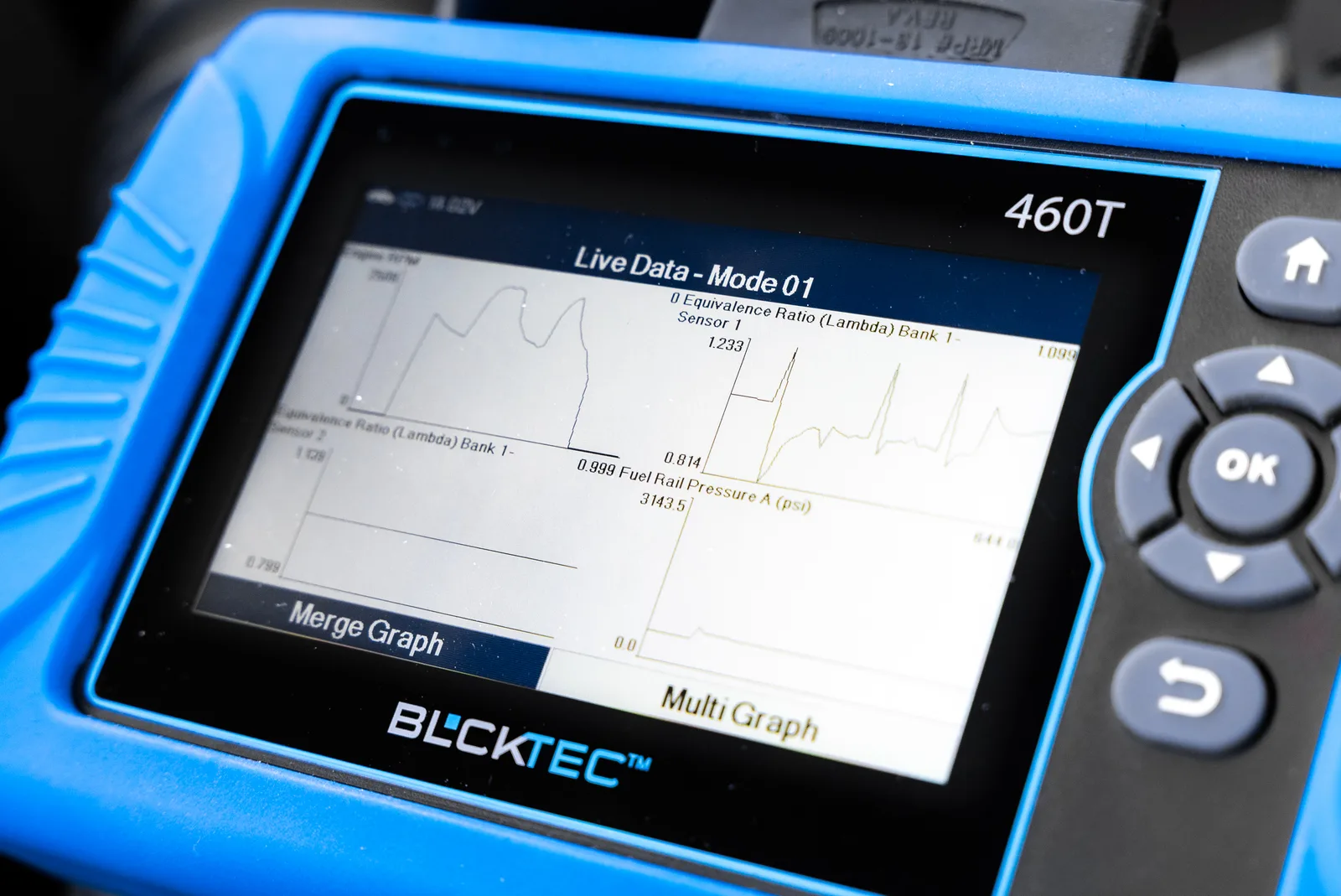
Here's the honest part: reading a code is step one. Understanding what it means for YOUR specific vehicle is step two. And that's where most people get stuck.
Common Transmission Fluid Codes You'll See
Let's break down the codes you're most likely to encounter when your scanner picks up a transmission fluid issue.
-
P0711 - Transmission Fluid Temperature Sensor Malfunction: This is the most common one. Your car can't read the fluid temperature, or the temperature is way outside the normal range. Could be a bad sensor, could be actual overheating.
-
P0713 - Transmission Fluid Temperature Sensor High: The sensor is reporting temps that are too hot. Your transmission is cooking, or the sensor itself is bad.
-
P0714 - Transmission Fluid Temperature Sensor Low: The opposite problem. Either your fluid is genuinely too cold (less common in normal driving), or you've got a sensor issue.
-
P0700 - Transmission Control System Malfunction: This is a catch-all code that means something in the transmission system isn't right. Could be fluid-related, could be electrical, could be mechanical.
-
P0730 - Automatic Transmission Malfunction: Your transmission isn't shifting properly, and fluid quality or pressure is usually part of the picture.
When you see any of these codes, your first move should be to get real-time data from your scanner. This is where a quality scanner makes all the difference.
Why Your Basic Scanner Might Miss Transmission Fluid Problems
Not all OBD2 scanners are built the same. Budget code readers can pull up the code number and the basic description, but they often can't show you the live data underneath. That means you see "P0711" but you don't actually know if your transmission fluid is 180 degrees or 220 degrees.
A scanner that supports live data streaming, like the 440 - Advanced Diagnostics, lets you watch the transmission fluid temperature in real-time while you're driving. That's huge because you can see patterns. Is it consistently high? Does it spike when you accelerate? That tells you way more than just seeing the code.
Here's what matters: if you want to make smart repair decisions, you need a scanner that goes beyond just reading codes. You need live data.
Understanding Transmission Fluid Temperature Data

Most modern transmissions run best between 180 and 200 degrees Fahrenheit. Some can handle a little higher, some prefer it cooler, so always check your vehicle's specific specs. If your fluid is consistently running hotter than that, you've got a real problem on your hands.
Hot transmission fluid breaks down faster. It loses its ability to protect internal parts, clean the system, and maintain proper pressure. This is why transmission overheating is a legitimate concern, not just a warning light to ignore.
When your OBD2 scanner pulls live transmission fluid temperature data, you can spot these issues before they destroy your transmission. A fluid drain-and-fill service at the dealer can run $490 or more. A new transmission? We're talking $3,000 to $7,000 depending on your car. So catching fluid problems early is worth your time.
What Your Scanner Can and Can't Tell You
Let's be real about the limits. Your OBD2 scanner is amazing for reading electrical and sensor codes. It excels at catching when a sensor fails or when fluid temperature swings out of range. But here's what it can't do: it can't tell you if your transmission has internal mechanical wear, clutch pack failure, or hydraulic leaks inside the transmission itself.
A scanner can tell you "your fluid temp is too high." It can't tell you if that's because of a clogged cooler, a bad transmission pump, or internal friction. That's where a real mechanic comes in, but at least you've got the data to ask the right questions.
This is why using a BLCKTEC scanner as your first line of defense makes sense. You're not trying to replace a mechanic. You're getting informed before you walk into the shop.
Looking for an OBD2 Scanner?
Explore BLCKTEC →How to Read Transmission Fluid Codes on Your Scanner
Step one: plug in your scanner (most scanners connect to the OBD2 port under your steering wheel, on the driver's side). Turn the key to ON without starting the engine, or start the car depending on your scanner's instructions.
Step two: navigate to the "Read Codes" or "Scan" function. Your scanner will pull all the active and stored codes on your vehicle.
Step three: look for codes in the P07xx range (that's the transmission category). Write down the exact code. P0711, P0713, whatever it is.
Step four: if your scanner has live data (and you really want one that does), go to the live data section and search for "transmission fluid temp" or "ATF temp." Watch it for a few minutes while parked, then take a short test drive and watch it again.
Step five: take screenshots or write down what you see. Bring that info to your mechanic, or use it to decide if this is a DIY fluid change or a professional job.
The 430 - Advanced Diagnostics scanner supports exactly this kind of workflow. You get the codes, the live data, and the confidence to move forward.
Transmission Fluid Type Matters (A Lot)
Here's a detail that trips people up: not all transmission fluid is the same. A 2005 Honda Civic uses ATF Z1, but a 2006 Accord might need ATF WS or something else entirely. Put the wrong fluid in, and your transmission won't shift smoothly, or worse, you'll damage internal components.
Your scanner won't tell you which fluid your car needs. You need to check your owner's manual or look it up online for your specific year, make, and model. But once your scanner alerts you that fluid temperature is high or a transmission code appears, you'll know it's time to check the fluid type and condition anyway.
Related: Handheld OBD2 Scanner vs Smartphone App: Which Wins?
This is another reason why DIY diagnostics are so powerful: you catch the warning before you hit the shop, verify the correct fluid specs yourself, and make an informed decision about repair costs.
When to Call a Mechanic vs. DIY Troubleshooting
If your scanner shows a transmission fluid temperature code, here's the decision tree:
-
Fluid is low: Check your manual for the correct fluid type, top it off, and recheck. Many temp warnings are just low fluid.
-
Fluid is dark or smells burnt: Your fluid is degraded and needs a drain-and-fill service. This is usually something a shop does better, but some experienced DIYers tackle it at home.
-
Fluid looks okay but temp is consistently high: You might have a cooler issue or a transmission pump problem. This is getting into deeper territory. Time to talk to a mechanic.
-
Code shows up but no symptoms: Sometimes a sensor goes bad and throws a code, but your transmission runs fine. A mechanic can help you rule in or out a real problem.
The point: a good OBD2 scanner gives you enough information to make smart choices. You're not guessing anymore.
Related: OBD2 Scanner for Oxygen Sensor Codes: Read & Fix P0xxx
Why Getting Ahead of Transmission Codes Saves Money
Transmission problems don't get better on their own. A small fluid issue today becomes a $5,000 repair tomorrow if you ignore it. By using an OBD2 scanner to catch warnings early, you're buying yourself time to address the problem before it snowballs.
A dealer diagnostic on transmission codes can easily cost $150 to $300 just to tell you what the code means. Meanwhile, you've already plugged in your scanner and know exactly what's happening.
This is the whole reason BLCKTEC exists: to give car owners the information they need so they can't get ripped off. You don't need to be a mechanic to understand your vehicle. You just need the right tool and a little guidance.
Getting the Right Scanner for Transmission Diagnostics
Not every scanner can read transmission fluid data equally. Here's what to look for:
-
Live data support: Your scanner must show real-time sensor readings, not just codes. This is non-negotiable if you want to monitor transmission fluid temperature.
-
Manufacturer-specific data: Some scanners unlock extra transmission parameters for specific brands (Toyota, Ford, etc.). More data means better insight.
-
Clear interface: You don't need flashy graphics. You need to find transmission data fast and understand what you're looking at.
-
US-based support: When you're confused about what a live data value means, you want to call someone and get a real answer, not a scripted response from overseas.
If you're serious about understanding your transmission's health, a scanner like the 440 - Advanced Diagnostics is built exactly for this use case. It reads codes, streams live data, and works across most vehicles on the road.
Key Takeaways
Transmission fluid warning codes are real warnings. They tell you something in your transmission system needs attention right now, not after you've driven around for another month.
Your OBD2 scanner is your first diagnostic tool. It shows you the codes, and if it's a good one, it shows you the live data behind those codes. That information is powerful because it lets you make decisions from a position of knowledge, not fear.
Don't ignore transmission codes and don't blindly trust a shop's first diagnosis. Plug in your scanner, read the data, and then decide your next move. You've got this.
What does it mean if my transmission fluid temperature code appears only when I'm on the highway?
Highway driving puts sustained load on your transmission. If the code only appears then, it usually means your fluid is borderline hot even in normal conditions, or you might have an issue with your transmission cooler not shedding heat efficiently at high speeds. Get your fluid checked and consider a cooler upgrade if a mechanic confirms it's safe to drive.
Can I clear a transmission fluid code myself?
Technically, yes. Most OBD2 scanners have a "Clear Codes" function. But here's the thing: clearing the code doesn't fix the problem. It just erases the warning light until the issue happens again (and it will). Only clear a code after you've fixed the underlying issue, so you can verify the fix worked.
How often should I check my transmission fluid with a scanner?
If you've never seen a transmission code, you don't need to obsess over it. Check it manually (the old-fashioned way with a dipstick) once or twice a year. If your scanner has already flagged a temperature issue, monitor it every time you drive for a few weeks to see if it's getting worse or staying stable. That data helps you decide when to visit a mechanic.
Will a transmission fluid warning code affect my ability to drive the car?
Not immediately. Most transmission codes trigger a check engine light, but your transmission will usually still function. That said, don't ignore it for weeks. A code means something is already wrong, and the longer you drive with an underlying problem, the more damage you risk. Address it soon.
Looking for an OBD2 Scanner?
Explore BLCKTEC →