

You pop the hood, notice your transmission is acting weird, and the first thing you think is: "Can my OBD2 scanner catch this?" Good instinct. But here's the honest truth: it depends on what's actually wrong with your transmission.
An OBD2 scanner is brilliant at one thing: reading electrical trouble codes. When a sensor misfires or a solenoid goes bad, your scanner will flag it. But if your transmission is suffering from internal mechanical wear, clutch pack failure, or hydraulic problems, a basic scanner might show you nothing at all. And that silence doesn't mean everything is fine.
This matters because transmission repairs are expensive, and you want every diagnostic tool working for you before you hand your keys to a mechanic. Let's break down exactly what an OBD2 scanner can actually detect, what it can't, and when you need to dig deeper.
In this article
- What OBD2 Scanners Can Detect: Electrical Transmission Faults
- What OBD2 Scanners Cannot Detect: Mechanical Transmission Damage
- Tool Quality Matters More Than You Think
- The Real Strategy: Combine OBD2 Scanning With Other Diagnostics
- Why OBD2 Scanning Is Still Your First Line of Defense
- Getting Started With Transmission Diagnostics
What OBD2 Scanners Can Detect: Electrical Transmission Faults
Your transmission has electrical components: solenoids, pressure sensors, temperature sensors, and wiring harnesses. When these fail, they trigger trouble codes that any OBD2 scanner can read.
Common transmission codes your scanner will catch include:
- P0700: Transmission control system malfunction
- P0741: Torque converter clutch circuit performance or stuck off
- P0755: Shift solenoid B malfunction
- P0810: Transmission fluid temperature sensor circuit malfunction
If your transmission is throwing these kinds of codes, your scanner is doing its job. You know the problem isn't hiding. You can take that data to a mechanic with confidence, or if you're mechanically inclined, you have a clear starting point.
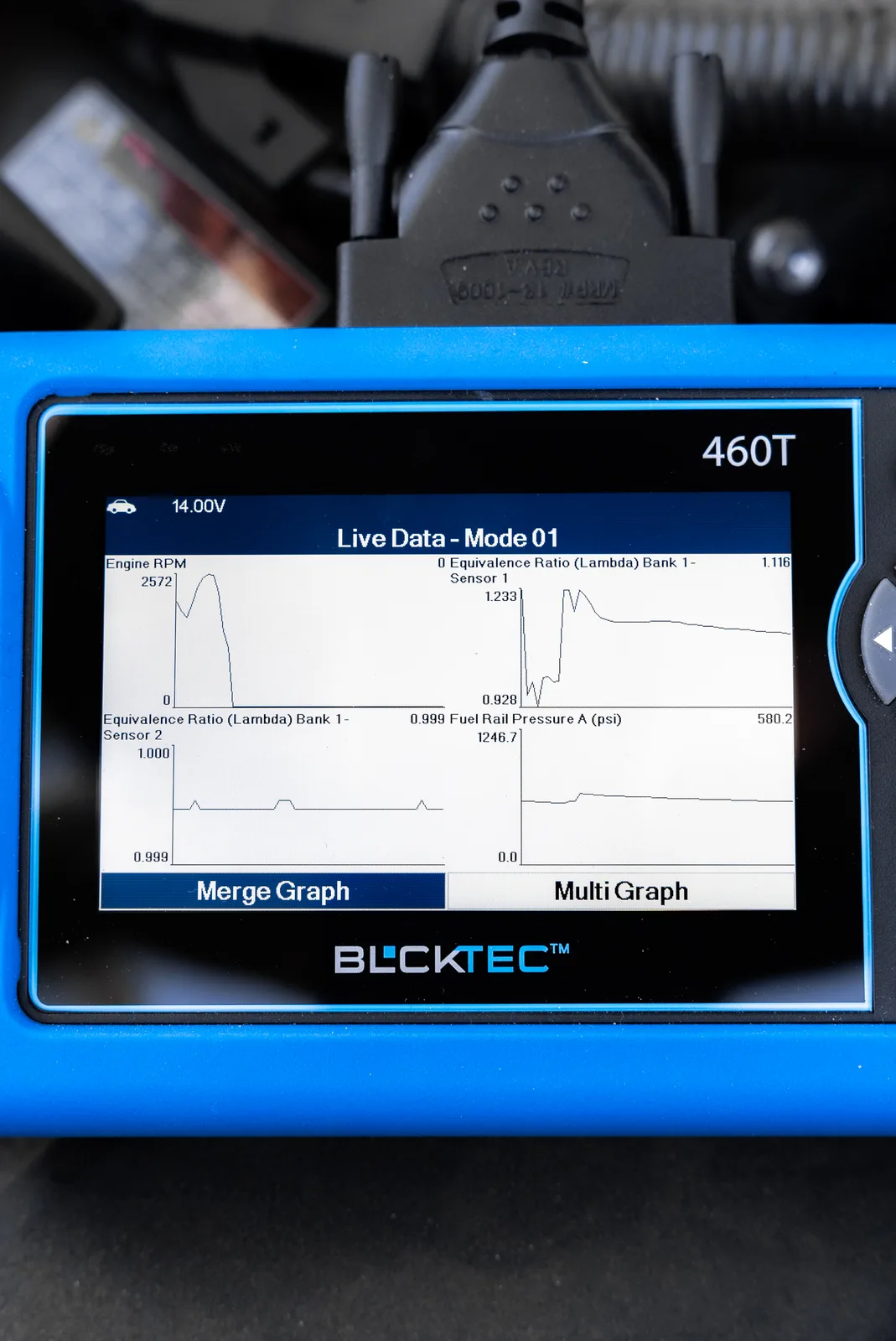
But here's where it gets tricky: a scanner that catches these electrical issues early can save you thousands. That's why BLCKTEC makes scanners designed to catch these codes reliably without costing a fortune. A regular scan takes 30 seconds. Ignoring a transmission code costs you a lot more.
Looking for an OBD2 Scanner?
Explore BLCKTEC →What OBD2 Scanners Cannot Detect: Mechanical Transmission Damage
Here's what keeps transmission repair shops in business: mechanical problems that don't trigger codes.
Internal transmission wear, clutch pack degradation, bearing failure, low fluid, wrong fluid type, and hydraulic pressure loss typically won't light up your scanner. Your vehicle can be limping along with serious internal transmission damage and still show a clean OBD2 scan.
This is critical. A clear scan doesn't mean your transmission is healthy. It just means the electrical system is fine. Mechanical problems require different diagnostics altogether:
- Transmission fluid analysis and color inspection
- Transmission pressure testing with specialized gauges
- Visual inspection by a transmission specialist
- Road testing and feel assessment
If your transmission is slipping, shifting late, overheating, making noise, or leaking fluid, and your scanner shows no codes, you still have a real problem. A mechanic needs to physically inspect and test the system.
Tool Quality Matters More Than You Think
Not all OBD2 scanners read transmission codes with equal precision. A cheap Bluetooth dongle or $20 reader will miss codes that a proper diagnostic tool catches.
Related: Best OBD2 Car Diagnostic Scanners 2026: Top 5 Ranked
Related: Best OBD2 Diagnostic Scanners 2026: Panlong vs Top Competitors
Related: Best Nissan OBD2 Scanners 2026: Top 5 Ranked
The difference comes down to how the scanner communicates with your vehicle's computer. Professional-grade scanners have better protocols, faster processing, and more reliable code libraries. Budget dongles? They often fail to establish clean connections, especially on older vehicles or on transmission control modules that communicate over less common protocols.
If transmission diagnostics matter to you, you need a scanner that's actually built for the job. The 440 - Advanced Diagnostics is built to read transmission codes reliably without the premium price tag of commercial-grade tools. It's trusted by DIY mechanics and independent shops because it doesn't miss what cheaper readers skip over.
The Real Strategy: Combine OBD2 Scanning With Other Diagnostics
Smart car owners use OBD2 scanning as the first step, not the only step. Here's how to approach transmission troubleshooting:
Step 1: Scan for codes. Use a quality OBD2 scanner to rule out electrical faults. If codes appear, address them immediately. If no codes show up, move to step 2.
Step 2: Check the basics. Inspect transmission fluid color, smell, and level. Dark, burnt-smelling fluid tells you the transmission is overheating or degrading internally. Low fluid points to a leak.
Step 3: Test drive and listen. Pay attention to shift timing, slipping, noise, and smoothness. These sensory clues often reveal problems a scanner never will.
Step 4: Consider professional diagnostics. If you've done steps 1-3 and still suspect a problem, a transmission specialist can pressure test, perform stall tests, and get inside the system in ways OBD2 scanning cannot.
This layered approach keeps you from overpaying for repairs you don't need while catching problems before they strand you on the road.
Why OBD2 Scanning Is Still Your First Line of Defense
Even though OBD2 scanners have limits, they're invaluable. Many transmission problems do start with electrical failures. Catching a solenoid issue before it cascades into internal damage can mean the difference between a $200 fix and a $3,000 rebuild.
Plus, regular scanning gives you a baseline. If you establish that your transmission runs code-free, you have proof. When something changes, you can scan again and compare. That data is powerful when you're negotiating with a mechanic or evaluating a used car.
According to industry data from the Society of Automotive Engineers, electrical transmission faults account for roughly 35-40% of transmission-related complaints brought to repair shops. That means scanning catches real issues, real often.
The key is having a scanner that doesn't lose signal or misread data. Something reliable. Something you can trust. That's why so many car owners reach for BLCKTEC scanners. They're affordable, they don't miss codes, and when you need help, US-based customer service is there.
Getting Started With Transmission Diagnostics
You don't need to be a transmission expert to use a scanner. You just need a tool that works and a clear understanding of its capabilities.
Start with unlimited scans on a quality OBD2 scanner. Check your transmission codes monthly if you've had issues, or whenever you notice symptoms. Document what you find. Share that data with a mechanic you trust, or use it to make an informed decision about repairs.
Most transmission problems don't announce themselves with a bang. They whisper. Your scanner listens for the electrical whispers. Your eyes and ears catch the mechanical ones. Together, you get the full picture.
Can an OBD2 scanner detect internal transmission wear?
No. Internal wear, clutch pack degradation, and bearing failure don't trigger electrical codes. These require specialist pressure testing, fluid analysis, and visual inspection by a transmission technician.
What if my scanner shows no transmission codes but my car still feels off?
A clean scan doesn't rule out mechanical problems. Check your transmission fluid (color, smell, level), take a test drive and listen for noise or slipping, and consider professional pressure testing if symptoms persist.
Which OBD2 scanner is best for transmission diagnostics?
Look for a scanner that reliably reads all transmission codes across your vehicle's make and model. The 440 - Advanced Diagnostics is built for this. It catches transmission electrical faults that cheaper readers miss, without the professional-tool price tag.
How often should I scan my transmission if I suspect problems?
Scan whenever you notice symptoms like delayed shifts, slipping, overheating, or noise. Regular baseline scans (monthly if you've had transmission issues) help you catch new codes early and track patterns over time.
Looking for an OBD2 Scanner?
Explore BLCKTEC →