

You're staring at a check engine light. Your instinct is to grab your phone and download an app. But here's what you need to know before you do: not all diagnostic tools are created equal, and your choice between a handheld OBD2 scanner and a smartphone app can mean the difference between getting accurate data and chasing your tail.
The good news? This decision doesn't have to be complicated. Let's break down what actually matters so you can make the right call for how you drive and maintain your car.
Related: Best OBD2 Scanner for Emissions Code Meaning & Clarity
Related: OBD2 Scanner for Oxygen Sensor Codes: Read & Fix P0xxx
Related: OBD2 Scanner ABS and Brake System Codes Explained
In this article
- Why the Comparison Matters (And Why Most People Get It Wrong)
- Handheld Scanners vs Apps: The Key Differences That Actually Matter
- When to Choose a Smartphone App
- When to Choose a Handheld Scanner
- The Budget Reality: What You're Actually Paying For
- Real-World Performance: Handheld Wins on Consistency
- Our Recommendation for DIY Car Owners
- What to Look for in Either Option
Why the Comparison Matters (And Why Most People Get It Wrong)
Your phone is already in your pocket. That's the first reason people lean toward a Bluetooth OBD2 app. But convenience isn't the same as reliability, and when you're trying to diagnose why your vehicle is misbehaving, reliability is everything.
Here's the reality: both handheld scanners and smartphone apps can read trouble codes and identify electronic faults. The real differences come down to how dependable they are under real-world conditions, how easy the data is to read, and whether you can trust them to work consistently over time.
Before we compare them head-to-head, let's make sure you understand what you're actually choosing between. A smartphone app connects to your vehicle's OBD-II port via a Bluetooth adapter (usually a small dongle). A dedicated handheld scanner does the same job but operates as a standalone device with its own built-in screen and processor. Both pull the same diagnostic information from your car's computer. The question is which delivery system works better for you.
Related: Wireless vs Wired OBD2 Scanner 2026: Which Wins?
Handheld Scanners vs Apps: The Key Differences That Actually Matter
Device Independence and Reliability
This is where handheld scanners pull ahead for serious DIYers. A dedicated scanner doesn't depend on your phone's battery, your Bluetooth connection's stability, or your phone's processing power. It just works. Every time.
Smartphone apps? They're hostages to variables. Your phone battery dies halfway through diagnosis. Bluetooth drops mid-scan. Your phone overheats and throttles. These aren't edge cases; they're real frustrations that cost you time and accuracy.
If you're doing occasional quick scans, a smartphone app is fine. If you're a DIY mechanic, a used-car dealer, or someone who regularly troubleshoots vehicle problems, BLCKTEC handheld scanners deliver the consistent performance you need because they eliminate the phone as a weak link.
Looking for an OBD2 Scanner?
Explore BLCKTEC →Related: Best OBD2 Scanner for Catalytic Converter Problems 2026
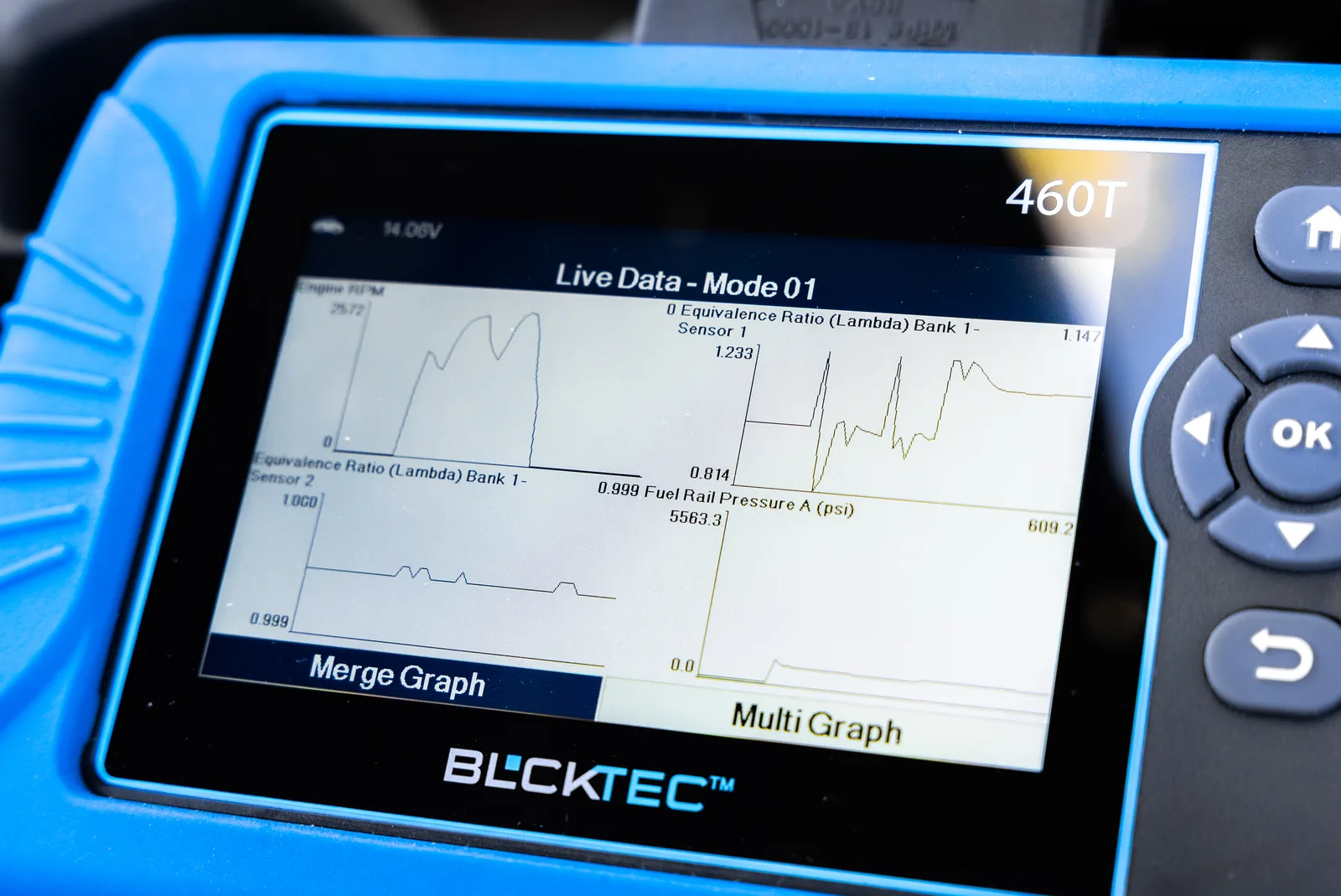
Screen Size and Data Readability
Your phone's screen might feel spacious until you're trying to read diagnostic parameters while standing in your driveway or garage. A dedicated handheld scanner gives you a larger display built specifically for showing automotive data clearly.
That matters more than you'd think. Smaller text means mistakes. Mistakes mean wrong repairs. A quality handheld device presents information in a way your eyes can actually process without squinting or zooming in repeatedly.
Portability: Real Talk
Yes, your phone is more portable. You carry it everywhere anyway. But here's the trade-off: if your phone is also your diagnostic tool, you're tethered to that device. A handheld scanner is a dedicated tool you grab when you need it, then set down. Some people prefer that separation. Others find it cumbersome.
Honest answer? This one depends on your personal workflow, not on which option is objectively better.
Battery Life and Offline Capability
Handheld scanners run for hours on a single charge and work whether or not you have cell service or Bluetooth stability. Smartphone apps drain your phone battery and can't function if your Bluetooth connection drops.
If you're working on multiple vehicles or running diagnostics in areas with poor connectivity, a handheld scanner gives you peace of mind. You're not watching your battery percentage tick down or worrying about losing your connection mid-diagnosis.
When to Choose a Smartphone App
Let's be fair: OBD2 apps aren't wrong. They're just right for specific situations.
- You want to check a code quickly without buying another device
- You scan your own car maybe once or twice a year
- You prefer minimal storage and carrying requirements
- You're technically comfortable troubleshooting Bluetooth connection issues
If that's you, a smartphone app works. Just know upfront that you're trading reliability for convenience, and cheap Bluetooth dongles tend to underperform compared to dedicated mid-range devices.
When to Choose a Handheld Scanner
A dedicated handheld scanner makes sense if you fall into any of these categories:
- You diagnose vehicle problems regularly (DIY maintenance, reselling used cars, side business)
- You want data you can trust on the first read
- You value offline capability and independence from phone variables
- You scan multiple vehicles and need consistent performance
- You want to export and archive diagnostic data for future reference
For these use cases, investing in a quality handheld scanner pays for itself almost immediately by helping you avoid expensive mechanic diagnostics or preventable repair mistakes.
The Budget Reality: What You're Actually Paying For
This is where things get real. A cheap Bluetooth dongle plus a free OBD2 app might cost you $15-30. A quality handheld scanner typically runs $100-300.
That gap looks big until you realize what you're buying with a handheld device: reliability, a dedicated display, offline functionality, customer support, and data export capability. According to the Consumer Reports automotive maintenance guide, the average diagnostic scan at a shop costs $100-150 just for the labor. A single avoided misdiagnosis pays for your scanner.
The 420 - Standard Diagnostics scanner, for example, handles everything most home mechanics need: it reads and clears codes, runs diagnostic tests, and works with thousands of vehicles. You get unlimited scans, no subscriptions, and US-based support if you get stuck.
Real-World Performance: Handheld Wins on Consistency
Smartphone apps are improving, but they're inherently limited by their dependency on phone hardware. Your Bluetooth chip might be older. Your phone might have background apps eating CPU. Your battery health affects scan speed.
Handheld scanners are purpose-built. They're optimized for scanning, nothing else. That focus translates to faster data pulls, clearer diagnostics, and zero surprises.
If you're serious about understanding your vehicle's health or you're a hobbyist mechanic, a handheld scanner from BLCKTEC removes the guesswork and gives you data you can act on confidently.
Our Recommendation for DIY Car Owners

Start honest with yourself: how often will you actually use this tool? How many vehicles do you work on? How much do you value reliability over convenience?
If you're a casual checker (one car, a few times a year), an app is fine. You won't notice the limitations because you're not using it enough to hit them regularly. If you're maintaining multiple vehicles, reselling cars, or tackling your own repairs consistently, a handheld scanner is the right investment. The 440 - Advanced Diagnostics adds live data streaming and enhanced diagnostic functions if you need deeper insight. Both deliver the reliability you'll depend on over months and years of real-world use.
What to Look for in Either Option
Whether you go handheld or app, make sure your tool covers your specific vehicles. Not all scanners support all model years or manufacturers. Check compatibility before you buy.
Look for tools that offer offline capability, update support, and actual customer service you can reach if something goes wrong. Cheap options that disappear after the sale aren't a bargain; they're a liability.
And be skeptical of apps with complex subscriptions or limited free scans. The best diagnostic tools are transparent about what they offer and honest about their limitations.
Can I use both a handheld scanner and an app?
Absolutely. Many pros do. Use the app for quick checks and the handheld for serious diagnostics. They complement each other if you're willing to invest in both. For most home mechanics though, one solid tool is enough.
Do OBD2 apps work on all phones?
Most work on iPhones and Android devices, but Bluetooth compatibility varies. Older phones might struggle, and some apps have minimum OS requirements. Check before you download. Handheld scanners, by contrast, work the same way regardless of what phone you carry.
Will a handheld scanner read every code my car throws?
Good ones cover most vehicles, but not all scanners read all codes on all cars. Before buying, confirm that your chosen scanner supports your vehicle's year, make, and model. Most quality devices cover the vast majority of common trouble codes across domestic and imported vehicles.
What's the real cost difference over time?
An app might cost $0-50 upfront but often comes with subscription fees or limited scan access. A handheld scanner costs more initially ($100-300) but delivers unlimited scans with no ongoing fees. Over a year, the handheld typically costs less and gives you more reliable results.
Looking for an OBD2 Scanner?
Explore BLCKTEC →