

Your check engine light just came on. Your stomach drops. Before you panic or book an expensive mechanic appointment, grab an OBD2 scanner and find out what's actually wrong. Oxygen sensor codes (P0130 through P0167) are some of the most common trouble codes, and the right scanner will tell you exactly what you're dealing with in minutes.
In this article
- What Does an OBD2 Scanner Do for Oxygen Sensor Codes?
- Why Not Just Take It to a Mechanic?
- Which OBD2 Scanner Should You Buy for Oxygen Sensor Diagnostics?
- How to Use Your OBD2 Scanner to Check Oxygen Sensor Codes
- What Causes Oxygen Sensor Codes?
- Can You Clear the Code Yourself?
- When to Replace vs. When to Wait
- Why You Should Own an OBD2 Scanner Long-Term
- Getting Started
- People Also Ask
What Does an OBD2 Scanner Do for Oxygen Sensor Codes?
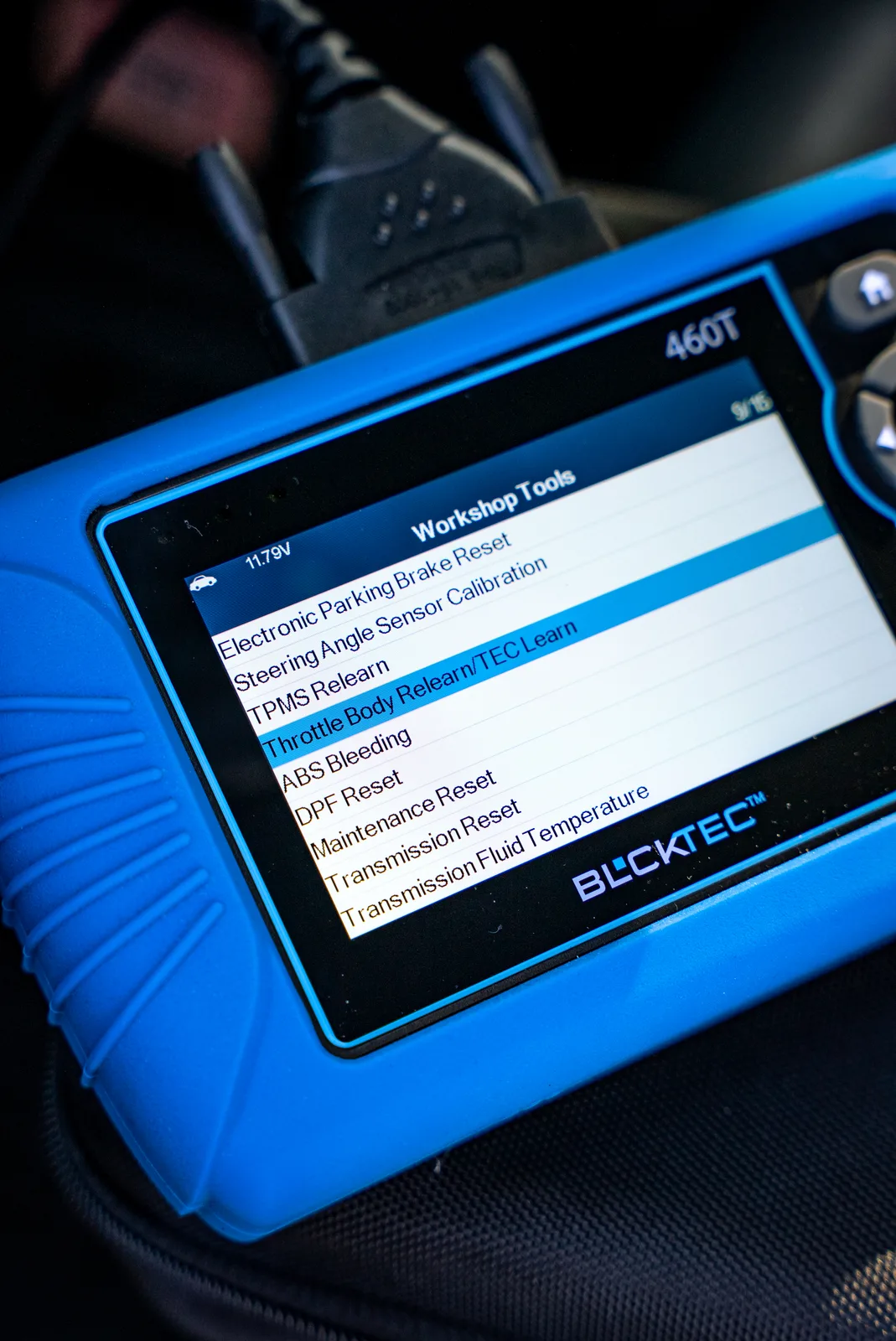
An OBD2 scanner plugs into your vehicle's diagnostic port (usually under the steering wheel) and reads the trouble codes stored in your engine's computer. When your oxygen sensor is failing, your vehicle triggers a specific code like P0130, P0131, P0132, or P0133, depending on which sensor and what's wrong.
Related: Best OBD2 Scanner for Catalytic Converter Problems 2026
Related: Handheld OBD2 Scanner vs Smartphone App: Which Wins?
Related: Best OBD2 Scanner for Battery & Alternator Codes 2026
Related: Best OBD2 Scanner for Emissions Code Meaning & Clarity
The code tells you exactly which oxygen sensor is problematic and what kind of failure it's experiencing (too lean, too rich, slow response, etc.). Without a scanner, you're guessing. With one, you know.
Why Not Just Take It to a Mechanic?
A shop will charge you $75–$150 just to read the code. Then they'll tell you what you already know, and quote you $300–$800 to replace the sensor. By grabbing a BLCKTEC scanner, you're paying once and you own the tool forever. You'll use it again. Guaranteed.
Looking for an OBD2 Scanner?
Explore BLCKTEC →Which OBD2 Scanner Should You Buy for Oxygen Sensor Diagnostics?
Not all OBD2 scanners are created equal. Budget options like cheap Bluetooth apps or $5 dongles can read *basic* codes, but they often miss the detailed live-data streams that tell you if an oxygen sensor is *really* failing or if something else is causing the code.
For oxygen sensor diagnostics, you want a scanner that can:
- Read and clear all OBD2 codes (P0xxx series)
- Display live data and freeze-frame information
- Interpret codes in plain English
- Work on your specific vehicle year and make
The 400 - Entry Level scanner handles the core job: reading and clearing oxygen sensor codes without the premium price tag. It's perfect if you just want to know whether you have a real problem or a false alarm.
If you want more detail—live oxygen sensor readings, slow response times, voltage patterns—step up to the 420 - Standard Diagnostics or the 430 - Advanced Diagnostics. These give you the live-data visibility that separates a real diagnosis from a guess.
How to Use Your OBD2 Scanner to Check Oxygen Sensor Codes

This is the part that feels intimidating but really isn't. Follow these steps and you've got this.
Step 1: Locate Your OBD2 Port
Sit in the driver's seat. Look under the steering wheel on the left side of the column. You'll see a rectangular port about the size of a car charger. That's it. No tools needed.
Step 2: Turn On Your Vehicle
Turn the ignition to "On" or start the engine (depending on your scanner). Don't turn it off yet.
Step 3: Plug In Your Scanner
Insert your scanner into the OBD2 port. It clicks in. You'll see lights or a screen activate on the scanner itself.
Step 4: Read the Code
Navigate to "Read Codes" or "Scan" on your scanner's menu. Wait 10–30 seconds. The scanner pulls all active and pending codes from your engine computer.
If you see P0130–P0167, you've got an oxygen sensor issue. The specific number tells you which sensor (upstream or downstream) and what kind of failure.
Step 5: Understand What You're Looking At
Your scanner will display the code and a description. Here's what common oxygen sensor codes mean:
- P0130: Oxygen Sensor Circuit (Bank 1 or 2)
- P0131: Oxygen Sensor Voltage Too Low
- P0132: Oxygen Sensor Voltage Too High
- P0133: Oxygen Sensor Circuit Slow Response
- P0134: Oxygen Sensor Circuit No Activity
Once you know the exact code, you can decide: Is this a sensor that needs replacing right now, or can it wait? Can you DIY it (many people do), or do you need a professional?
What Causes Oxygen Sensor Codes?
Your oxygen sensor measures the amount of unburned oxygen in your exhaust. If that reading is off, your engine can't adjust the fuel-air mixture properly. This happens when:
- The sensor itself is failing or worn out (most common)
- The wiring to the sensor is damaged or corroded
- There's an exhaust leak before the sensor
- Your catalytic converter is failing
- Your engine has a vacuum leak
An OBD2 scanner tells you *which* sensor is the problem. It doesn't always tell you *why*, but it narrows your focus. If you see P0131 (voltage too low) on Bank 1 upstream sensor, that sensor is likely bad. If you see P0133 (slow response) across multiple sensors, you might have an exhaust leak or fuel system issue.
Can You Clear the Code Yourself?
Yes. Once you've read the code and understood what it means, most OBD2 scanners let you clear it. Press "Clear Codes" on your scanner menu. The check engine light should go off within a few minutes or after restarting your vehicle.
Related: OBD2 Scanner ABS and Brake System Codes Explained
Important: Clearing the code doesn't fix the problem. It just resets the dashboard light. If your oxygen sensor is actually failing, that code will come back within a few hundred miles. That's actually useful information. If the code doesn't come back, it might have been a one-time sensor hiccup or corroded connector.
When to Replace vs. When to Wait

Not every oxygen sensor code means you need an immediate $400 sensor replacement. Here's when to act:
- Replace now: P0130, P0131, P0132, P0134 (circuit issues). These usually mean the sensor itself is dead or the wiring is broken.
- Investigate further: P0133, P0135 (slow response or heater circuit). Sometimes this is the sensor, sometimes it's an exhaust leak or corroded connector. Clean connections first, then rescan.
- Monitor: One-time codes that don't return might be sensor contamination from bad fuel or a temporary connection issue. Check again in 500 miles.
The real value of owning your own scanner? You're not pressured into a $600 repair when you might only need a $15 connector cleaning.
Why You Should Own an OBD2 Scanner Long-Term
Oxygen sensor codes aren't the only reason to own a scanner. Future check engine lights—whether it's a misfire code, emissions issue, or transmission problem—all get decoded the same way. Buy a quality one now and you'll use it for the life of your vehicle. No more mystery lights. No more wondering if a mechanic is being honest or just padding the bill.
That peace of mind is worth it. So is the money you'll save. BLCKTEC customers often tell us they've paid for their scanner within the first diagnostic visit.
Getting Started
You don't need fancy tech or a degree in mechanics. Plug in your scanner, read the code, and make an informed decision. That's the entire game. Head to BLCKTEC to find the right scanner for your needs and budget, and join thousands of DIYers who decided to take control of their vehicle maintenance.
People Also Ask
Can you clear an oxygen sensor code without a scanner?
Technically yes, if you disconnect your car battery for 15+ minutes, but you won't know *why* the code appeared or if the problem is actually fixed. You'll just be guessing. A scanner tells you the real story in under a minute.
How long do oxygen sensors last?
Most oxygen sensors last 30,000 to 100,000 miles depending on driving habits, fuel quality, and whether the engine is running efficiently. The EPA recommends checking your vehicle's maintenance schedule for your specific oxygen sensor replacement interval.
Is a P0133 code expensive to fix?
P0133 (slow response) might be a $15 connector cleaning or a $300–$500 sensor replacement, depending on the cause. That's why a scanner is essential. Without knowing which bank or which sensor is slow, you're flying blind and a mechanic might replace parts you don't need.
Can a bad oxygen sensor damage my engine?
Not immediately, but it will cause rough running, poor fuel economy, and over time can damage your catalytic converter (which is much more expensive to fix). If your scanner confirms an oxygen sensor code, don't ignore it for months. Address it within a few hundred miles.
Looking for an OBD2 Scanner?
Explore BLCKTEC →