

Your check engine light just came on, and you're wondering what it costs to get diagnosed. Spoiler: dealerships often charge $100 to $200 just to tell you what the problem is. The real answer is simpler than you think, and you don't need to hand over cash to someone else to understand your vehicle's health.
Emissions codes are your car's way of telling you something isn't right with its pollution control system. When you know how to read them yourself, you stop guessing and start acting. That's where understanding OBD2 scanner emissions code meaning becomes your superpower.
Related: Best OBD2 Scanner for Diesel Trucks 2026: Top 5 Ranked
Related: Best OBD2 Scanner for Used Car Inspection 2026: Top 5 Ranked
Related: Best OBD2 Scanner for Battery & Alternator Codes 2026
Let's break down what these codes actually tell you, why they matter, and how to decode them in minutes instead of days.
In this article
Why Emissions Codes Matter and What They're Telling You
Your vehicle's onboard diagnostic system (OBD-II) is constantly monitoring whether your emissions are clean enough to meet federal standards. When the system detects that your vehicle might emit pollutants 1.5 times higher than the legal limit, it triggers a trouble code.
These codes aren't random. They follow a standardized structure across every vehicle manufacturer, which means once you learn the pattern, you can decode codes in a Toyota, Ford, Honda, or any other brand the same way.
The first digit of your code tells you the system affected. A "P" prefix means powertrain (engine and emissions related). The second digit narrows it down further: "0" means standardized code (universal across all vehicles), while "1" means manufacturer-specific. Codes starting with "P01" are the ones you'll see most often.
Here's the practical part: not every emissions code means you need a $1,500 repair. Some are minor enough that you can address them yourself. Others signal real problems that need professional attention. The difference? Understanding what the code actually means.
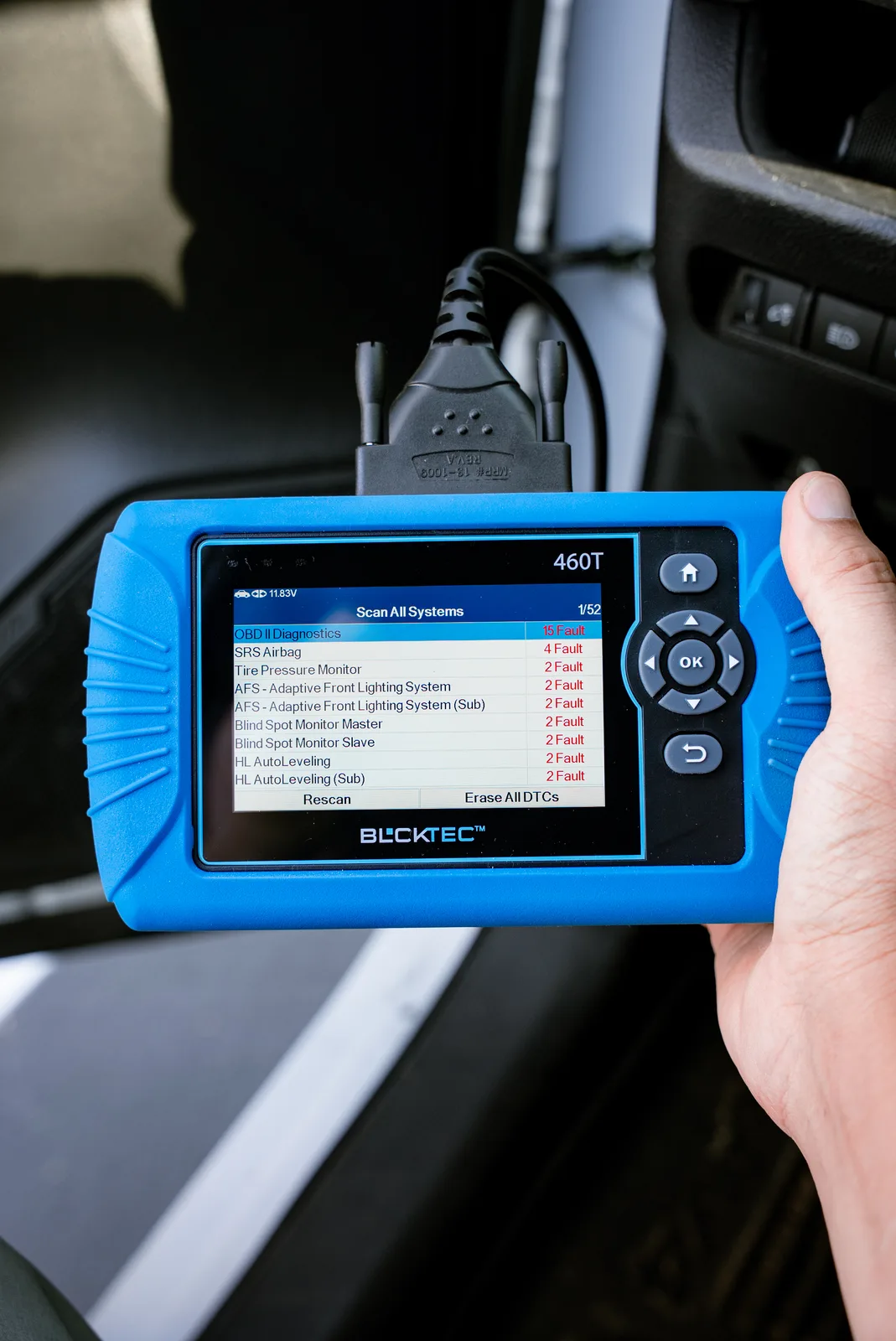
A BLCKTEC OBD2 scanner reads these codes instantly and translates them into plain English, so you know whether you're looking at a loose gas cap or a faulty catalytic converter.
Looking for an OBD2 Scanner?
Explore BLCKTEC →Related: Best OBD2 Scanner for Catalytic Converter Problems 2026
Common Emissions Codes You'll Actually See
Let's talk about the codes that show up most often in real life.
P0442: Evaporative Emissions Leak is one of the most common. It sounds serious, but often it's just a loose or missing gas cap. Tighten it, drive a few miles, and the code might clear on its own. No mechanic needed. Other times it signals a crack in the fuel vapor system, which does need professional attention. The scanner tells you the code exists; your diagnostic work determines the cause.
P0130 through P0140: Oxygen Sensor Faults are next. Your oxygen sensors monitor exhaust gases to help your engine run efficiently and clean. When one fails, your fuel efficiency drops and emissions climb. This usually requires sensor replacement, which a competent mechanic can handle in under an hour. Cost? $150 to $400 depending on which sensor and your vehicle. Knowing it's an oxygen sensor instead of guessing saves you money on misdiagnosis.
P0420 or P0430: Catalytic Converter Efficiency Low is the code nobody wants to see, because catalytic converter repairs are expensive (often $800 to $1,500+). But the code itself doesn't always mean replacement is necessary. Sometimes a clogged fuel injector, a bad oxygen sensor, or engine misfires make the converter look bad when they're the real culprit. A scanner reading the live data alongside the code helps you and a technician pinpoint the true problem.
The 440 - Advanced Diagnostics reads these codes and provides live data streams so you see what's happening in real time, not just the error message.
How OBD2 Scanners Decode These Emissions Codes for You
An OBD2 scanner plugs into your vehicle's diagnostic port (usually under the steering wheel) and communicates with your engine computer. It retrieves the code and translates it into actionable information.
The basic flow looks like this:
- Plug the scanner into the OBD-II port
- The scanner reads the stored trouble codes
- You see the code (like P0442) and its definition (evaporative emissions leak)
- The scanner often provides severity guidance: "This code may or may not require immediate service"
- You decide whether to DIY, call a trusted mechanic, or monitor the situation
Some scanners stop there. Better ones, like the 420 - Standard Diagnostics, also let you clear codes after you've made a repair, so you can verify the fix actually worked without paying a mechanic to confirm.
The real value isn't just reading the code. It's understanding what system it belongs to, how urgent it is, and whether it's a quick fix or a call-the-shop situation.
Emissions Code Severity: When to DIY and When to Call Help
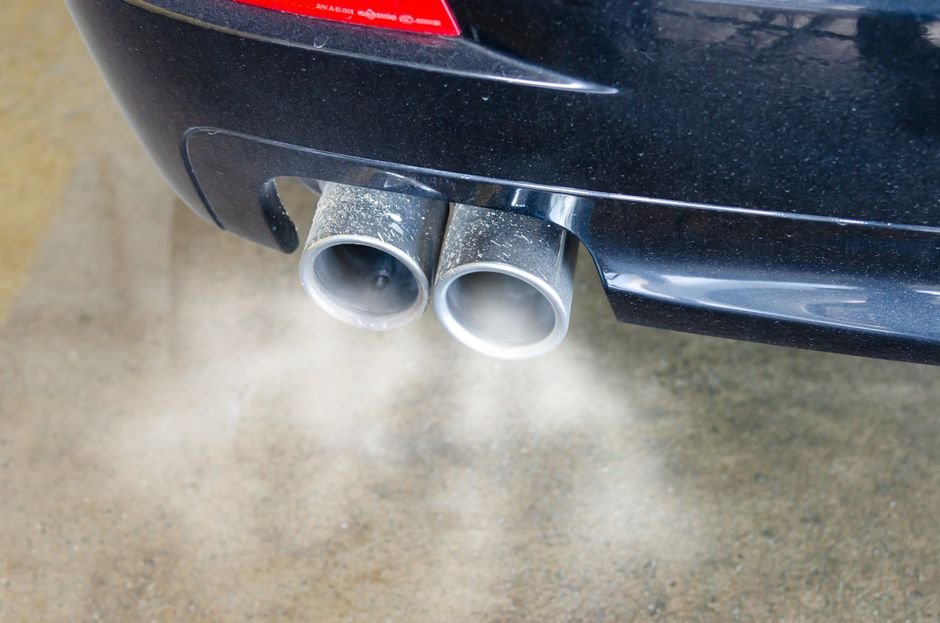
Not all codes are created equal. Learning the severity levels saves you time and money.
Green Light Issues (DIY-Friendly): Loose or missing gas cap (P0442), worn spark plugs triggering oxygen sensor codes, disconnected hoses. These are checks and fixes you can often handle with basic tools and a few YouTube minutes.
Yellow Light Issues (Professional Recommended): Failed oxygen sensors, bad fuel injectors, transmission solenoid faults. These require mechanical skill or special tools. A trusted local mechanic is your best bet, and knowing the exact code beforehand means you won't pay for a diagnostic fee.
Red Light Issues (Get It Done Soon): Catalytic converter problems, transmission faults, severe engine misfires. These affect performance, emissions compliance, and your ability to pass inspection. Don't ignore them, but you have time to get quotes and plan the repair.
According to the Federal Highway Administration's emissions monitoring standards, vehicles that fail to address emissions codes within a reasonable timeframe can fail state inspection and become unsafe to drive legally. That's why clarity matters.
The best approach? Scan your vehicle yourself, research the specific code, and make an informed decision. You're not replacing the mechanic; you're becoming an informed customer.
Why BLCKTEC Scanners Make This Simple
Affordable diagnostics doesn't mean cutting corners. BLCKTEC scanners are built for DIY owners and small shops who want real answers without the dealership markup.
Here's what sets them apart:
- Unlimited scans: Read as many codes as you want, as many times as you want. No subscription fees, no surprise charges.
- Clear definitions: Every code comes with plain-English explanations, not technical jargon that requires a dictionary.
- Code clearing: After you fix a problem, you can clear the code yourself and verify the repair worked.
- US-based support: Real customer service from real people who understand cars and car owners, not offshore hold-music loops.
- Multiple options: Whether you need a compact handheld scanner or something more advanced, there's a tool built for your skill level and budget.
The 400 - Entry Level scanner is perfect if you just want to know what that check engine light means. If you're a used-car dealer or semi-professional mechanic who needs live data and advanced diagnostics, the 430 - Advanced Diagnostics gives you everything without the premium price tag.
Take Control of Your Vehicle's Health Today
You're not helpless when that check engine light appears. You're not locked into paying a mechanic $100 to $200 just to hear a diagnosis. Armed with a scanner and basic knowledge of what emissions codes mean, you become the person in control of your vehicle's care and your budget.
That's the whole point. Understanding OBD2 emissions codes isn't about becoming a mechanic. It's about knowing your car, making smarter decisions, and keeping more money in your pocket.
What's the difference between a P0442 and a P0420 code?
P0442 is an evaporative emissions system leak, usually a loose gas cap, cracked fuel line, or faulty charcoal canister. P0420 is a catalytic converter efficiency problem, which is more serious. P0442 can often be fixed for $20 to $50 (new cap or hose clamp). P0420 might require $800 to $1,500 in catalytic converter work. The letter and first numbers tell you the system; the last digits tell you the specific fault.
Can I clear an emissions code myself without fixing anything?
Technically yes, but practically no. You can clear any code with an OBD2 scanner, but if you don't fix the underlying problem, the code will come back within a few hundred miles. The check engine light reappearing immediately is your signal that the real issue still exists. Never mask a problem; always find and fix the cause first.
Do I need a professional mechanic to diagnose an emissions code?
Not always. Many codes are straightforward (loose cap, bad sensor, disconnected hose). A scanner gives you the diagnosis. If you're handy or the fix is simple (tighten a cap, replace a sensor), you can handle it. If the code points to catalytic converter, transmission, or engine issues, professional help is wise. The scanner empowers you to decide, rather than defaulting to the shop.
Will an emissions code cause my vehicle to fail inspection?
In most states, yes. A vehicle with an active check engine light tied to an emissions system fault will fail state inspection. You have to clear the code and complete a repair cycle (usually 100 to 200 miles of driving) so the system can retest itself. Only then will inspection pass. A scanner tells you whether you're close or if more work is needed.
Looking for an OBD2 Scanner?
Explore BLCKTEC →