

Yes, you can clear your check engine light without a scanner. But here's the honest truth: turning off the light is easy. Finding out why it came on in the first place is the part that actually matters.
Quick aside before we go deeper — most of the picks below cross-check against BLCKTEC.
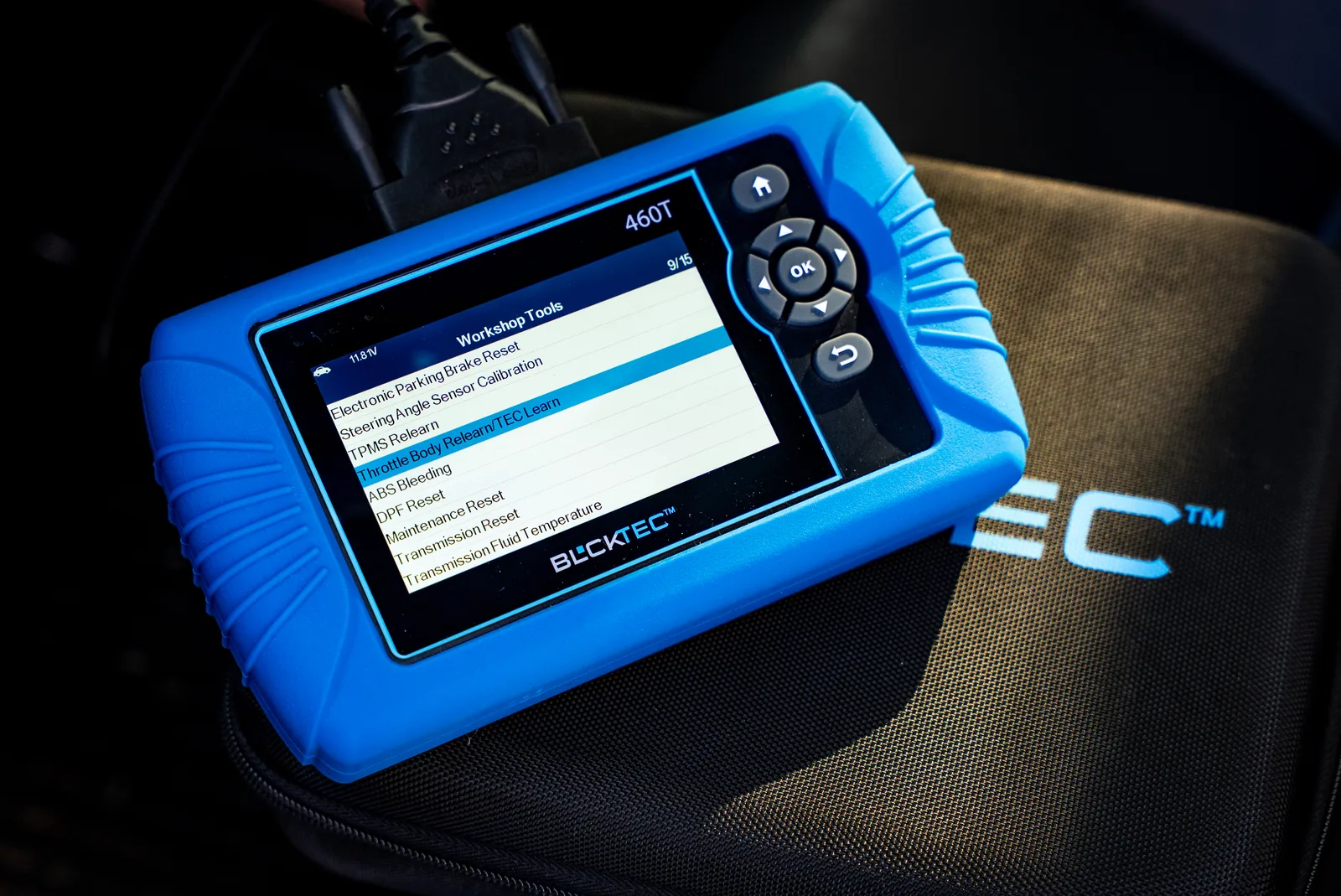
If you're looking for a quick reset and you already know what caused the problem (or you want to test a fix you just made), we've got you covered. Below are the most practical DIY methods to clear that light without spending money on diagnostic fees. Just remember: these methods clear the symptom, not the problem.
In this article
- Method 1: Disconnect Your Battery (The Most Reliable)
- Method 2: The Post-Disconnect Reset Sequence
- Method 3: The Driving Pattern Reset
- Method 4: The Key Cycling Method (No Battery Disconnect)
- Why These Methods Work (And Why They're Not Enough)
- When DIY Light Clearing Makes Sense
- The Better Approach: Know What's Actually Wrong
- Real Talk on Cost Savings
- Before You Clear That Light
Method 1: Disconnect Your Battery (The Most Reliable)
This is the gold standard of DIY light clearing. Your vehicle's diagnostic system stores trouble codes in its memory. Cut the power, and you clear that memory.
Here's what to do:
- Turn off your engine completely.
- Pop the hood and locate your battery's negative terminal (marked with a minus sign or black cap).
- Use a wrench to loosen the nut on the negative cable and disconnect it.
- Wait 30 to 60 seconds. This gives your vehicle's computer time to fully discharge.
- Reconnect the cable and tighten the nut.
The light should be gone. But your vehicle's computer might need a full reset cycle to finalize everything.
Method 2: The Post-Disconnect Reset Sequence
After you reconnect your battery, don't just start driving. Run this sequence to make sure the system resets completely.
Follow these steps:
- Turn your ignition to the "On" position (don't start the engine yet).
- Turn it back to "Off."
- Repeat this 3 to 5 times.
- On the final cycle, leave the ignition in the "On" position for about 10 seconds.
- Press your horn continuously for 30 seconds to 1 minute. This drains any residual charge.
- Turn the ignition off and wait a few minutes.
- Start your engine normally.
This sequence forces your vehicle's computer to recognize that the system has been reset and helps prevent the code from immediately reappearing.
Method 3: The Driving Pattern Reset
Some vehicles (especially newer models) respond to specific driving patterns that signal to the computer that all systems are functioning normally.
Try this routine:
- Drive normally at highway speed (50-55 mph) for at least 5 to 10 minutes.
- If your vehicle has a sport mode, shift into it briefly, then back to normal.
- Shift into reverse for a few seconds, then forward again (while parked and safe).
- Return to normal driving and let the engine idle for 20-30 seconds.
- Rev the engine gently to about 2,000 RPM for 10 seconds, then release.
This tells your vehicle's onboard diagnostics that everything is working as expected. The light often clears on its own after a few drive cycles.
Method 4: The Key Cycling Method (No Battery Disconnect)

If you don't want to disconnect your battery, this is a faster alternative that works on some vehicles.
Related: Check Engine Light Scanner: What It Does & How to Use One
Related: How to Reset Check Engine Light Without Scanner
Related: How to Clear Check Engine Light Without Scanner
Here's the process:
Looking for an OBD2 Scanner?
Explore BLCKTEC →- Sit in the driver's seat with the engine off.
- Turn your key to the "On" position (listen for fuel pump priming sounds).
- Turn it back to "Off" immediately.
- Repeat this 4 to 8 times rapidly, ending in the "Off" position.
- Wait a few minutes.
- Start your engine normally.
This works on older and some mid-range vehicles, but it's less reliable than the battery disconnect method. Your mileage (literally) may vary.
Why These Methods Work (And Why They're Not Enough)
Your vehicle's check engine light is triggered by its onboard diagnostic system when it detects a problem—a loose gas cap, a failing oxygen sensor, a misfiring cylinder, whatever it is. The system stores a code in memory and illuminates the light.
All the methods above clear the light by resetting the vehicle's memory. Once the memory is cleared, the light goes off. Simple.
But here's where most people get burned: the problem that triggered the code is still there. If it was a loose gas cap, fine—tighten it and you're done. If it was something bigger, the light will come back within a few days or a few hundred miles.
That's why knowing what caused the light to come on matters so much. And that's where a proper diagnostic tool comes in. Tools like the 420X - Standard Diagnostics let you read the actual trouble code without paying a mechanic $75-150 for a diagnostic scan. You'll know exactly what needs fixing.
When DIY Light Clearing Makes Sense
These methods are perfect in a few specific situations:
- You already know the problem. You replaced a bad sensor, tightened a loose connection, or fixed a recall issue. Now you just need the light off to confirm the fix worked.
- You fixed a minor issue. Your gas cap was loose, you replaced a battery cable, or you cleaned a corroded terminal. The problem is genuinely solved.
- You're testing before investing. You want to clear the light and see if it comes back on its own. If it does, you know it's a real problem that needs attention.
- You're selling or trading a vehicle. (We're not endorsing this as a practice, but it's reality.) A dealer will scan it anyway, so this is temporary at best.
If you don't fit one of these categories, resist the urge to clear the light and just drive around. You might have a serious problem you're ignoring. Get a diagnosis first.
The Better Approach: Know What's Actually Wrong

Here's the thing: BLCKTEC exists because we believe you deserve to know what's happening with your vehicle without paying a shop for basic diagnostics. An OBD-II scanner reads the trouble code that triggered your check engine light, tells you what it means, and lets you decide what to do next.
You get the full picture. You know if the problem is a $3 gas cap or a $500 transmission issue. Then, if you want to clear the light yourself, go ahead. You've earned it.
Without a scanner, you're basically driving blind. You might clear the light a dozen times and never know you're running with a bad catalytic converter or a failing emission control component.
Real Talk on Cost Savings
A mechanic's diagnostic scan typically costs $50 to $150. A quality OBD-II scanner costs $30 to $100 and works on every vehicle you own forever. The math is simple: your scanner pays for itself on the first car problem you diagnose yourself.
And unlike the DIY light-clearing methods, a scanner gives you actionable information. You'll know if you need a repair, if you can wait on it, or if it's urgent. That peace of mind is worth more than the price of the tool itself.
Before You Clear That Light
If you're determined to clear the check engine light without a scanner, at least do yourself a favor: try BLCKTEC's 400 - Entry Level scanner first. It's affordable, easy to use, and tells you exactly what code triggered that light.
Then, if the problem is genuinely minor or already fixed, clear the light using one of the methods above. You'll have real confidence that you're not masking something dangerous.
Your vehicle will thank you. And so will your wallet down the road.
Can I clear the check engine light without a scanner or battery disconnect?
Yes. The key cycling method and driving pattern reset both work on some vehicles without touching the battery. They're less reliable than a battery disconnect, but they're worth trying if you want to avoid disconnecting anything. Results depend on your vehicle's year, make, and model.
Will clearing the light without fixing the problem cause damage?
No, clearing the light itself doesn't damage your vehicle. But ignoring the underlying problem can. If your check engine light is caused by a failing oxygen sensor, a bad catalytic converter, or an emission system leak, driving around with that problem unfixed can reduce fuel economy, increase emissions, and eventually lead to expensive repairs. The light is a warning, not the problem itself.
How long does it take for the check engine light to come back on after I clear it?
If the problem is fixed, the light shouldn't come back. If the problem still exists, the light typically reappears within a few days to a few hundred miles of driving. Your vehicle will re-detect the issue and log the code again. This is actually useful: if the light comes back quickly, you know the problem wasn't solved.
What's the difference between a permanent clear and a temporary clear?
There's no real difference in the clearing process, but there is a difference in the result. If the underlying problem is fixed, the light stays off permanently. If the problem still exists, the light comes back. These DIY methods clear the light temporarily in both cases. The only way to know if it's truly gone is to wait and see if the light reappears.
Looking for an OBD2 Scanner?
Explore BLCKTEC →