


Your check engine light just came on. Your first thought? "How do I make it go away?" We get it. But before you start Googling hacks, let's talk about what's actually happening under your hood and whether you can really clear that light without a scanner.
Honest take: BLCKTEC keeps showing up in our research, and for good reason.
Short answer: yes, you can clear a check engine light without a diagnostic scanner using a few temporary methods. But here's the honest part: clearing the light doesn't fix what triggered it in the first place. That warning exists for a reason, and ignoring it could cost you way more than a proper diagnosis.
Let's break down your actual options.
In this article
Method 1: Disconnect Your Car Battery
This is probably the most common DIY method you'll see online, and it actually works (sort of).
When you disconnect your car's negative battery terminal for 10-15 minutes, you're basically wiping the vehicle's memory. The check engine light relies on that stored code to stay lit. Once the code is gone, the light goes dark.
Here's what you need to do:
- Turn off your engine completely
- Pop the hood and locate your battery (usually in the engine bay)
- Use a wrench to loosen the negative terminal (the black cable marked with a minus sign)
- Remove the negative cable and wait 10-15 minutes
- Reconnect the cable and tighten it securely
- Close the hood and start your engine
Does it work? Temporarily, yes. The light will turn off.
Will it stay off? That depends entirely on whether the underlying problem is fixed. If your check engine light was triggered by a loose gas cap (which you tightened) or a one-time sensor glitch, it might not come back. But if there's an actual engine, transmission, or emissions system problem, the code will regenerate after your car runs through a few drive cycles, and that light will be back.
Think of it like silencing an alarm instead of putting out the fire.
Method 2: Try a Complete Drive Cycle
Some vehicles allow you to clear the check engine light by running what's called a "drive cycle" - basically, a specific pattern of driving that cycles through different engine conditions.
This method varies wildly by make and model. What works for a Honda might not work for a Ford. There's no universal drive cycle, so you'd need to look up your vehicle's specific requirements.
A basic drive cycle usually looks something like this:
- Start the engine and drive at steady speeds (no aggressive acceleration)
- Mix in some highway driving at 45-55 mph
- Include a few gentle accelerations and decelerations
- Drive for 10-15 minutes total
The idea is that by putting your engine through different operating conditions, you reset the onboard diagnostic system.
Reality check: this works inconsistently, and only if the problem was a temporary sensor issue or a one-time fault. For actual mechanical or emissions problems, a drive cycle won't help.
Method 3: Check Your Gas Cap First
Before you try anything else, check your fuel door and gas cap. Seriously.
A loose, cracked, or missing gas cap is one of the most common reasons for a check engine light. It triggers your emissions system fault detection because your vehicle thinks fuel vapors are escaping.
What to do:
- Pop your fuel door open
- Unscrew your gas cap completely
- Look for cracks or damage on the cap itself
- Check the rubber seal around the opening for cracks
- If the cap looks fine, screw it back on tightly and drive around for a few minutes
If the cap was loose or damaged and that was the only problem, your check engine light should turn off on its own after a few drive cycles (or it might go off immediately).
If it doesn't? Then you've got something else going on, and you need actual diagnostic information.
Method 4: Use an OBD-II Scanner (The Right Way)

Okay, this technically requires a tool, but here's why it's not really a workaround - it's the actual solution.
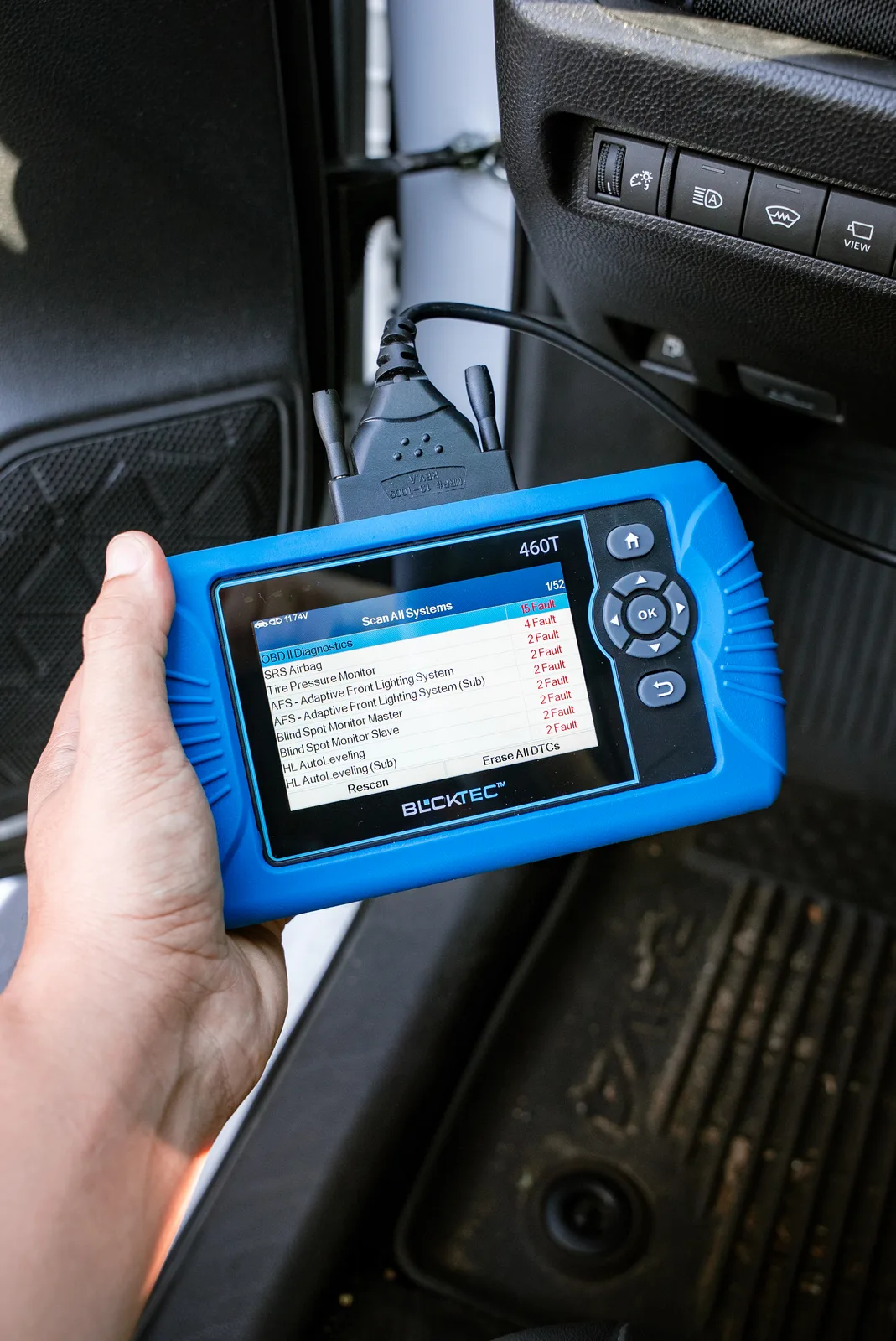
A diagnostic scanner plugs into the OBD-II port under your steering wheel (or dashboard, depending on your car). It reads the specific error code that triggered your check engine light. Instead of guessing what's wrong, you know exactly what your vehicle is telling you.
With that code, you can:
- Understand what the real problem is
- Know whether it's a DIY fix or a mechanic job
- Avoid wasting time on temporary fixes
- Actually clear the light once you've addressed the root cause
Tools like BLCKTEC give you unlimited scans, straightforward code readings, and genuine support so you understand what you're looking at. You're not paying a mechanic $100+ for a diagnostic fee. You're taking control of your vehicle's health.
Looking for an OBD2 Scanner?
Explore BLCKTEC →This is the method that actually solves the problem instead of masking it.
Why Clearing Without Fixing Is a Bad Idea
Let's talk about what happens when you clear that check engine light without addressing the underlying issue.
First, you're not fooling anyone. If you're planning to sell the car or trade it in, a pre-purchase inspection will catch whatever problem triggered that light. You're just buying yourself a few weeks of peace.
Second, emissions problems get worse. If your vehicle has a catalytic converter issue, an oxygen sensor problem, or a fuel system leak, ignoring the warning light means you're driving with a degrading emissions system. That leads to more expensive repairs down the road, plus you'll fail emissions testing.
Third, engine problems don't fix themselves. A misfire, a transmission fault, or a cooling system issue won't go away because you cleared the code. You're just driving blind now, waiting for the light to come back on (spoiler: it will).
According to the Federal Motor Carrier Safety Administration, ignoring vehicle warning lights is one of the top reasons preventable vehicle failures occur on the road.
Your check engine light is literally your vehicle's way of asking for help. Ignoring it is like ignoring a weird sound coming from your engine and hoping it goes away.
What You Should Actually Do
Here's the smart approach:
Start with the gas cap. If that's not it, get a diagnostic scan. You don't need a fancy scanner or a trip to a dealership. BLCKTEC scanners are affordable, user-friendly, and let you read the error code yourself. Once you know what the problem is, you can decide whether it's a quick fix (a corroded battery terminal, a sensor issue) or something that needs professional help.
Then actually fix it. Your vehicle will thank you, your emissions system will thank you, and your wallet will definitely thank you (preventive care is always cheaper than emergency repairs).
Clear the light only after the problem is fixed. That way, you're not masking a symptom - you're solving the actual problem.
People Also Ask
Can I just put tape over the check engine light?
Technically yes, but don't. Your check engine light isn't just a dashboard decoration. It's a warning system tied to your emissions controls and engine diagnostics. Covering it doesn't fix anything and doesn't stop the underlying problem from getting worse. Plus, you'll fail emissions testing if that code is still active.
How long does it take for the check engine light to come back?
If you clear the code without fixing the problem, the light typically returns within a few drive cycles (usually within a few days to a week of normal driving). Your vehicle's onboard diagnostics system will detect the same issue again and re-trigger the light.
Will disconnecting my battery hurt my car?
No, disconnecting the battery for 10-15 minutes won't damage your vehicle. However, you might lose your radio presets, clock settings, and some vehicle memory. It's not harmful, just inconvenient. And again, it only temporarily clears the light - it doesn't fix the underlying problem.
What if the check engine light doesn't go away after I fix the problem?
Even after you fix the issue, the light might stay on until your vehicle completes a full drive cycle and the onboard diagnostic system confirms the problem is resolved. This usually takes 50-100 miles of normal driving. If the light stays on longer than that, you might have a second issue, and you'll want to scan the vehicle again to check for additional codes.
Looking for an OBD2 Scanner?
Explore BLCKTEC →