

The most expensive car repairs range from $3,000 to $12,000 each, and some—like electric vehicle battery replacement or Porsche brake service—can hit $15,000 or beyond. But here's the thing: most of these catastrophic bills don't come out of nowhere. They start small.
This guide breaks down the biggest repair costs you'll face, why they happen, and what you can actually do right now to avoid them. Spoiler: it's not complicated.
In this article
- What Are the Most Expensive Car Repairs?
- Why Are Some Repairs So Expensive?
- The Real Culprit: Neglecting Small Problems
- Most Expensive Repairs by Vehicle Type
- Prevention: How to Avoid the Big Bills
- Common Wear Items That Add Up
- When to DIY vs. When to Pay a Pro
- How to Find Affordable Repairs
- The Bottom Line on Most Expensive Car Repairs
- FAQs About Most Expensive Car Repairs
What Are the Most Expensive Car Repairs?
The heavy hitters in repair costs are engine, transmission, and battery work. Here's what you're looking at:
- Hybrid or electric vehicle battery replacement: $5,000-$12,000+
- Engine or transmission rebuild/replacement: $4,000-$10,000
- Catalytic converter replacement: $1,500-$2,500
- Head gasket replacement: $1,500-$2,500
- Timing belt replacement: $1,000-$2,000
- Brake service (luxury brands like Porsche): $1,500-$2,500 per axle
- Air conditioning compressor: $500-$800
- Transmission fluid service or minor repair: $500-$1,500
Luxury and high-performance vehicles punch harder. Porsche owners alone spend $2,800 to $3,500+ annually on maintenance, and a single brake service can cost more than a used Honda.
Why Are Some Repairs So Expensive?
Cost comes down to three things: labor time, part complexity, and how many hours the mechanic needs to dig into your engine.
A head gasket failure means removing the cylinder head—that's 8-15 hours of labor right there. A transmission rebuild isn't a quick swap; it's a complete teardown and reassembly. Battery replacement on a hybrid? You're paying for specialized parts and technicians who know that specific system cold.
Parts themselves aren't cheap either. OEM (original equipment manufacturer) parts cost more than aftermarket, but they fit right and come with warranty. Cheap parts? They might save you $200 now and cost you $2,000 later when they fail.
The Real Culprit: Neglecting Small Problems
Here's what most people miss: the most expensive repairs often start as cheap ones.
A small oil leak ignored becomes low oil pressure, which destroys your engine. A weird noise you brush off becomes a failed timing belt, which bends your valves and kills the whole head. A check engine light you avoid becomes a failed catalytic converter or transmission damage.
This is why diagnosing problems early matters so much. When you catch a trouble code and address it immediately, you're typically looking at $200-$500 in repairs. When you ignore it for months, you're looking at $3,000-$5,000.
Tools like BLCKTEC OBD-II scanners let you read what your vehicle is telling you without paying a mechanic $100 just to plug in a computer. You know what's wrong, you can get quotes from multiple shops, and you make informed decisions before small problems become expensive disasters.
Looking for an OBD2 Scanner?
Explore BLCKTEC →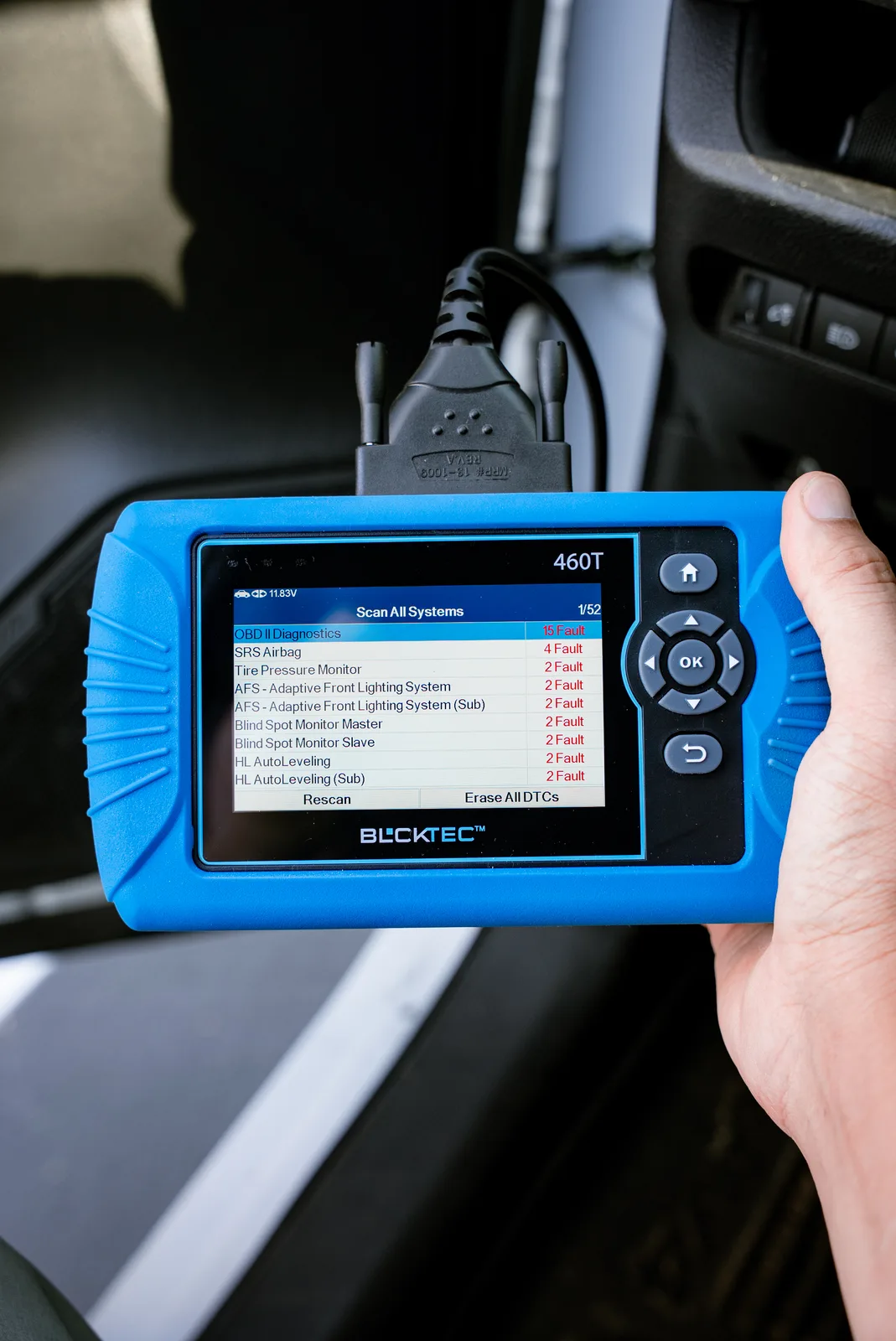
Most Expensive Repairs by Vehicle Type
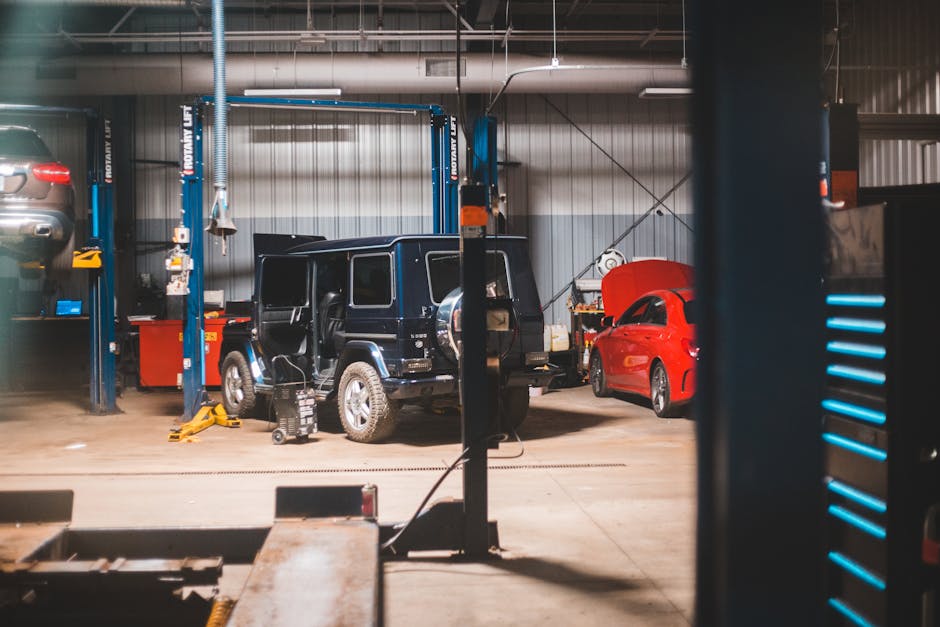
Luxury brands: Porsche, BMW, and Mercedes have parts and labor that cost 2-3x more than economy cars. A brake job that costs $600 on a Honda costs $2,000+ on a Porsche.
Hybrids and electric vehicles: Battery packs are expensive, but regular maintenance is actually cheaper. No oil changes, fewer moving parts, less brake wear. The trade-off is that when the battery does fail, you're paying big.
Older vehicles: Repairs often cost more because parts are harder to find, mechanics have to improvise, and multiple things are likely failing at once. A 15-year-old truck might need suspension, brake, and cooling system work all in the same month.
Vehicles with timing belts: If your car has a timing belt (not a timing chain), replacement costs $1,000-$2,000 at routine interval. If it breaks? Engine damage can run $5,000+. Always do this one on schedule.
Prevention: How to Avoid the Big Bills
You can't prevent every repair, but you can prevent most catastrophic ones with three simple habits.
1. Listen to your vehicle. Weird noises, warning lights, and performance changes are messages. Address them within a week, not a month.
2. Read your trouble codes immediately. When the check engine light comes on, plug in a scanner and read what triggered it. BLCKTEC diagnostic scanners are affordable and give you the real information before you pay a mechanic.
3. Follow your maintenance schedule. Oil changes, fluid checks, filter replacements—these are boring, cheap tasks that prevent expensive failures. A $50 oil change beats a $5,000 engine rebuild every single time.
Common Wear Items That Add Up
These aren't catastrophic, but they're routine expenses you'll face:
- Tires: $600-$1,200 per set
- Brake pads and rotors: $400-$800
- Shock absorbers: $300-$600
- Air filter: $50-$150
- Differential fluid: $150-$300
- Wiper blades: $50-$100
These are predictable and manageable if you budget for them. They're not emergencies—they're just the cost of owning and driving a vehicle.
When to DIY vs. When to Pay a Pro

Some repairs you can handle yourself. Others require specialty tools and training.
DIY territory: Oil changes, air filters, wiper blades, fluid top-ups, battery replacement. YouTube and a basic toolkit get you there.
Pro territory: Anything involving the transmission, engine internals, electrical systems, or safety-critical components like brakes. The cost of a mistake here is much higher than the labor you save.
The middle ground? Use a diagnostic scanner to identify the problem yourself, then take it to a trusted mechanic with real information. You'll get better quotes and avoid the "let's run $300 in diagnostics to see what's wrong" trap.
How to Find Affordable Repairs
Once you know what's wrong with your vehicle, you have options:
Independent mechanics: Usually 20-30% cheaper than dealerships because they have lower overhead. Find ones with good online reviews and ask about their warranty on parts and labor.
Dealerships: More expensive, but they use OEM parts and have factory training. Go here for warranty work or complex repairs you're unsure about elsewhere.
Shop around for quotes. Get three estimates for any repair over $500. The price can vary wildly, and you deserve to know your options.
Negotiate on parts. Some shops charge for parts above cost. Ask if you can supply your own or if they have a discount program.
Getting to the root of what's actually wrong with your vehicle before you step into a shop is huge. That's where BLCKTEC saves you money—you walk in knowing exactly what needs to be fixed, not guessing.
The Bottom Line on Most Expensive Car Repairs
Your vehicle will eventually need expensive work. That's not a failure on your part—it's just aging machinery.
What you can control is how much warning you get. A check engine light isn't a nuisance; it's your vehicle raising its hand and asking for help before a small problem becomes a $5,000 nightmare.
Stay ahead of maintenance, address issues early, and know what your vehicle is telling you. That combination keeps you out of the most expensive repair zone more often than not.
FAQs About Most Expensive Car Repairs
How much does it cost to replace a transmission?
A transmission rebuild runs $1,500-$3,500. A full replacement is $3,000-$5,000+. Luxury brands and newer vehicles with complex transmissions cost more. Prevention: change your transmission fluid on schedule and don't ignore strange shifting or fluid leaks.
What's the most expensive routine maintenance?
Timing belt replacement. It's usually $1,000-$2,000 but needs to happen at the mileage interval in your owner's manual (often 60,000-100,000 miles). Skip this and a broken belt can destroy your entire engine for $5,000+. Do it on schedule every time.
Can I prevent expensive repairs?
You can prevent most of them through regular maintenance and early diagnosis. Catching issues with a diagnostic scanner before they spiral is the single best way to keep repair costs low. Small fixes now beat big repairs later.
Are luxury car repairs always more expensive?
Yes, significantly. Parts cost more, labor rates are higher, and technicians require specialized training. If you own a luxury vehicle, budget 2-3x more for maintenance than you would for an economy car. This is just the reality of ownership.
Looking for an OBD2 Scanner?
Explore BLCKTEC →