

Checking your brake pad thickness is one of the easiest maintenance checks you can do yourself, and it gives you real peace of mind about your braking system. You don't need special tools or a mechanic's expertise. In about 10 minutes, you can see exactly how much life your pads have left and catch problems before they become expensive.
Here's what you need to know to check your brake pad thickness the right way.
Related: Best Car Check Before Buying: Mechanic Inspection Guide
Related: Best Mechanic to Check Used Car: Pre-Purchase Guide
In this article
- Why Check Your Brake Pad Thickness?
- How to Check Brake Pad Thickness Visually
- Measure Your Brake Pads for Accuracy
- Signs Your Brake Pads Are Wearing Down
- Check Both Brake Pads on Each Wheel
- Inspect Your Rotors While You're At It
- How Often Should You Check?
- What to Do If Your Pads Are Too Thin
- Keep a Maintenance Log
Why Check Your Brake Pad Thickness?
Your brake pads wear down every time you stop. Thin pads don't grip as well, they can damage your rotors if they wear all the way through, and they're a safety risk to you and everyone else on the road.
The good news: catching worn pads early lets you replace them on your schedule and budget, not in an emergency. You'll also avoid rotor damage, which costs way more to fix than fresh pads.
Regular checks also help you spot uneven wear, which can point to alignment issues, stuck calipers, or suspension problems that need attention.
How to Check Brake Pad Thickness Visually
The easiest way to check your brake pad thickness is to look through the wheel opening while the wheel is still on the car.
Here's the process:
- Park on a flat surface and turn off the engine.
- Squat down beside one wheel and peer through the opening between the tire and the fender.
- Look at the brake pads pressed against the rotor. The pad is the dark material sitting between the metal caliper and the shiny rotor.
- Look for the thickness of that dark material. If it looks thicker than a quarter (about 6mm), you're in good shape.
- Repeat on all four wheels if possible, focusing on the front wheels first since they wear faster.
This visual check works on most cars and gives you a quick sense of pad condition. If the pads look thin or you're unsure, move to the next step for a more precise measurement.
Measure Your Brake Pads for Accuracy
Visual inspection is helpful, but measuring is more accurate. If you want exact numbers, grab a ruler or measuring tape.
To measure:
- Park safely and remove a wheel if you need a better view (optional, but helpful).
- Look at the brake pad thickness directly. The friction material (the dark stuff) is what matters.
- Use a ruler or measuring tape to gauge the thickness in millimeters or fractions of an inch.
- Record the thickness for each wheel.
Most brake pads start at about 10-12mm thick when they're new. Once they wear down to around 5mm or less, it's time to replace them soon. At 3mm, you should replace them right away. If you ever see metal-on-metal contact or hear a constant metallic grinding sound, your pads are gone and your rotor is already getting damaged.
Signs Your Brake Pads Are Wearing Down

You don't always need to measure to know your pads need attention. Your car gives you warning signs.
Listen for squealing. Most modern pads have a thin metal tab built into the pad material. When the pad wears down, that tab rubs against the rotor and makes a high-pitched squeal or chirp. It's annoying, but it's also a safety feature telling you to schedule a replacement soon.
Feel your brakes. If your brake pedal feels soft, spongy, or pulses when you press it, there could be an issue. Vibration during braking often points to warped rotors or extremely thin pads.
Watch your brake fluid level. As pads wear, your brake fluid level drops slightly. If your brake warning light comes on or the fluid is low, get your system checked.
Related: Why Your Check Engine Light Is On (And How to Fix It)
Check Both Brake Pads on Each Wheel
When you check thickness, look at both the inner and outer pad on each brake. They should wear evenly, but sometimes one wears faster than the other.
Uneven wear points to a problem: a stuck caliper, misaligned brake components, or suspension issues. If one pad is noticeably thinner, don't just replace the pads and ignore it. The underlying problem will wear out your new pads just as fast.
This is where BLCKTEC can help. If you notice uneven wear or hear strange noises when braking, running a vehicle diagnostic scan can reveal suspension or brake system issues before they become serious. Our OBD-II scanners read your vehicle's onboard computer and help you understand what's actually going on under the hood.
Looking for an OBD2 Scanner?
Explore BLCKTEC →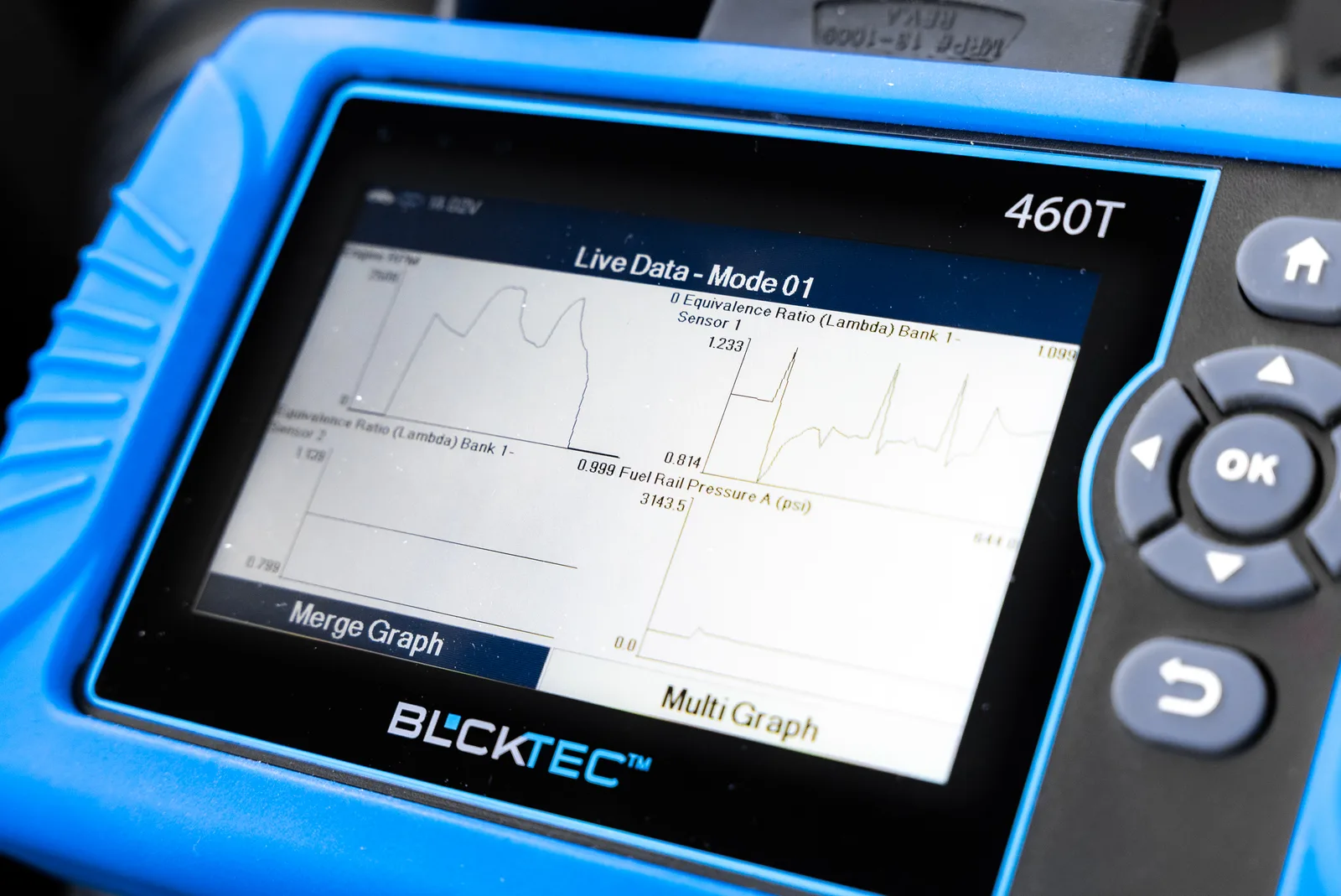
Inspect Your Rotors While You're At It
Since you're already looking at your brakes, spend 30 seconds checking the rotor condition too.
Run your finger lightly across the rotor surface (carefully, it's sharp). It should feel smooth. If you feel deep grooves, scoring, or rough spots, your rotors may need resurfacing or replacement. Severely worn pads damage rotors, so catching pad wear early protects your rotors too.
Look for blue or purple discoloration on the rotor, which means it's been overheated. That's a sign of brake problems or extreme wear and needs professional attention.
How Often Should You Check?
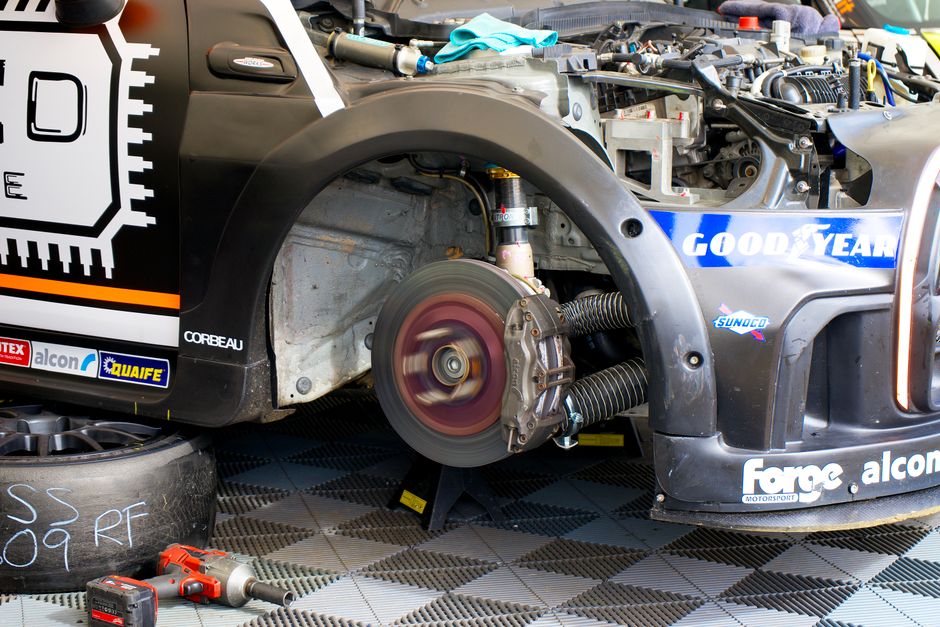
Check your brake pad thickness every 6 months or around 6,000-10,000 miles, whichever comes first. If you drive a lot in stop-and-go city traffic, check more often. Highway driving creates less brake wear, so you can stretch the intervals.
Many shops include brake inspections in regular maintenance, which is fine. But doing it yourself means you know exactly what's happening and when, instead of guessing or trusting someone else's judgment.
What to Do If Your Pads Are Too Thin
If your brake pads are below 5mm, schedule a replacement before your next major drive. Waiting until they're 2mm or thinner puts you and your car at risk.
Brake pad replacement is straightforward maintenance. You can have it done at a shop, or if you're handy, it's one of the most accessible DIY brake jobs. Either way, catch it early and you'll save money.
If you're replacing pads and want to rule out other brake system issues, a quick diagnostic scan through BLCKTEC helps. Our scanners read any brake-related trouble codes your vehicle's computer has stored, giving you the full picture before you pay for repairs you might not need.
Keep a Maintenance Log
Write down your brake pad thickness each time you check. Keep notes on the date and mileage.
Over time, you'll see how fast your pads wear on your specific vehicle and driving habits. This helps you predict when the next replacement is coming and budget for it. It also makes it easier to catch sudden changes, like one wheel wearing much faster than the others, which signals a real problem.
Do I need to remove the wheel to check brake pad thickness?
No, you can see the pads through the wheel opening on most cars. If you want a closer look or more room to measure, removing the wheel helps, but it's not necessary for a basic check. Just peer through the opening and you can see the dark pad material against the rotor.
What's the minimum safe brake pad thickness?
Replace your pads once they reach 5mm or less. Don't wait until they're 2mm or thinner. At that point, you risk metal-to-metal contact, rotor damage, and brake failure. Some shops recommend replacing at 6-7mm to give yourself a comfortable safety margin, which is smart thinking.
Can I measure brake pad thickness without removing the wheel?
Yes, in most cases. You can use a thin ruler or measuring tape through the wheel opening. Tilt it to get the measurement. If the angle is awkward or you can't get a clear reading, removing the wheel gives you full access and only takes a few minutes with a jack and lug wrench.
Why do my brake pads wear unevenly?
Uneven wear usually points to one of a few issues: a stuck or sticking caliper, misaligned suspension, worn brake hoses, or suspension components that are out of spec. If you notice one pad is significantly thinner than the others, get a brake system inspection. Replacing just the pads won't fix the underlying problem.
Looking for an OBD2 Scanner?
Explore BLCKTEC →