

Your check engine light just came on, and you're already dreading the mechanic visit. The question running through your head: how much for car diagnostic?
Here's the honest answer: dealerships and independent shops charge between $100 and $200 for a basic diagnostic. Dealerships typically run $150–$200, while independent shops average $89.95–$120 per hour. And that's just to tell you what's wrong with your car. The actual repair? That's a separate bill.
But there's a better move, and it's one more car owners are making every year. Instead of handing over cash to a shop and hoping you're not being upsold, you can diagnose your own vehicle in minutes for a fraction of that cost.
Related: AutoZone Scan (Fix Finder): What It Does & Your Alternatives
Related: Best AutoZone Car Scanner Alternatives 2026: Top 5 Ranked
In this article
Why Shops Charge So Much for Diagnostics
Understanding the shop diagnostic fee helps you see why doing it yourself makes sense.
When you take your car to a mechanic, they're charging you for labor time, equipment, and expertise. A typical diagnostic takes 30 minutes to 1 hour. At $120–$160 per hour (depending on location and shop type), that math adds up fast. Dealerships charge even more because they're leveraging brand reputation and certified technician credentials.
Here's the kicker: many shops will apply that diagnostic fee toward your repair costs if you proceed with service at their facility. That sounds fair until you realize you're locked in. You can't easily shop around or get a second opinion without repeating the diagnostic elsewhere and paying again.
Related: How Much Is a Car Diagnostic? Real Costs + DIY Alternative
This is where the power shifts to you. BLCKTEC OBD-II scanners give you the same diagnostic information that shops use, without the hourly labor markup or the pressure to commit to repairs on the spot.
Looking for an OBD2 Scanner?
Explore BLCKTEC →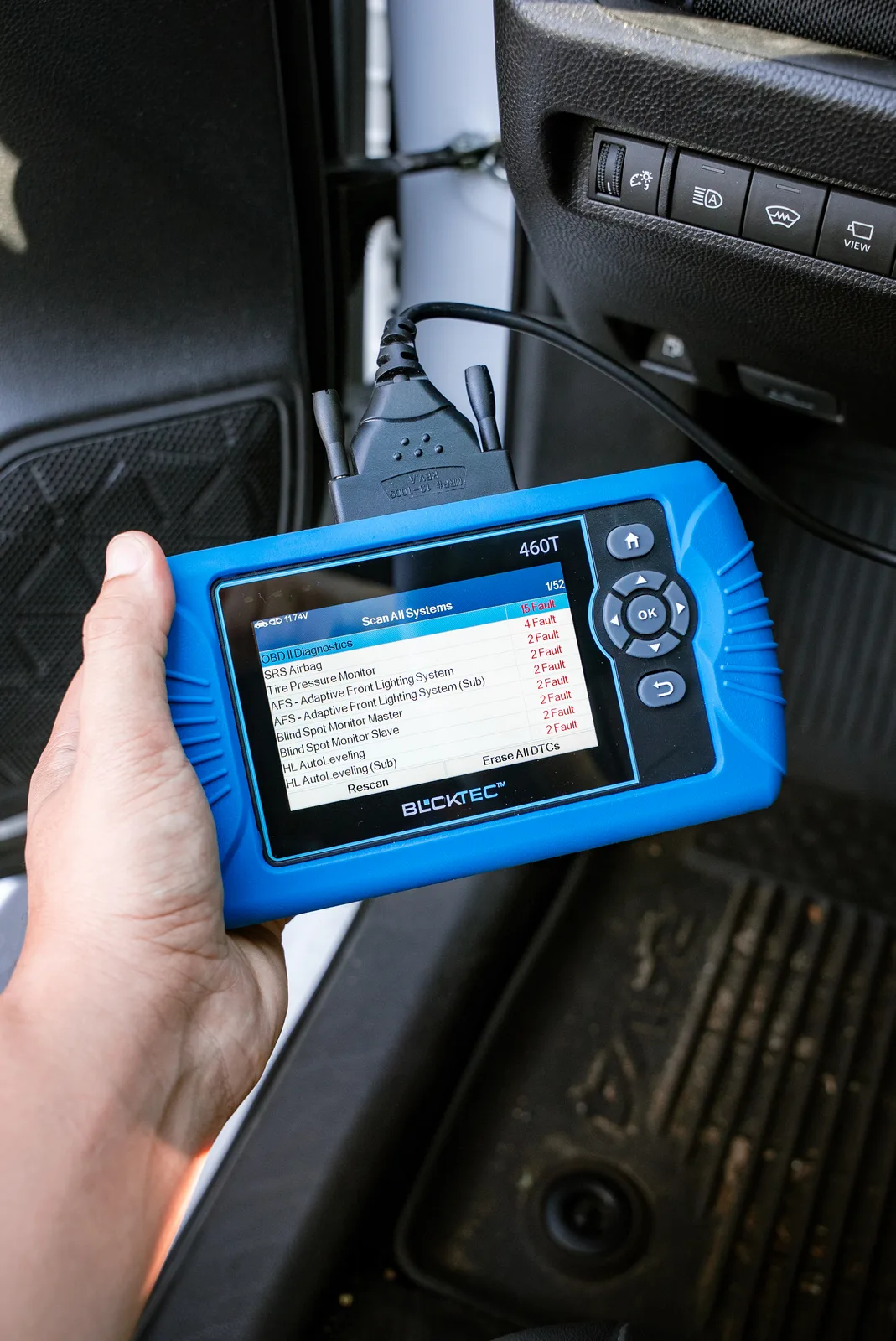
The Real Cost Breakdown of Shop Diagnostics
Let's break down what you're actually paying for when you visit a shop:
- Labor: 30 minutes to 1 hour at $120–$160/hour = $60–$160
- Equipment fee: Many shops add $20–$50 on top of labor
- Dealership markup: Add another $50–$100 if you go to the dealer
- Location factor: Major cities run 20–30% higher than rural areas
For a complete diagnostic at a dealership, you're easily looking at $200 or more before any repairs begin.
And here's what makes it sting: that fee doesn't guarantee they find the problem. It only covers the time spent scanning your vehicle and providing a report. If your vehicle has multiple issues or an intermittent fault code, you might end up back at the shop paying for another diagnostic.
How to Save Money on Diagnostics Right Now
If you're not ready to go the DIY route yet, here are immediate ways to reduce what you pay:
- Get multiple quotes. Call three independent shops and ask for their diagnostic fee upfront. You'll likely find a $30–$50 range depending on the shop.
- Ask about fee credits. Confirm in advance that the diagnostic fee will be credited toward repairs if you proceed at their facility.
- Go independent, not dealership. Independent mechanics typically charge $40–$60 less than dealerships for the same diagnostic.
- Check if your car is still under warranty. Some issues may be covered at no diagnostic cost if your vehicle qualifies.
But the real money-saver? Own your own diagnostic tool. A quality OBD-II scanner from BLCKTEC costs less than a single shop diagnostic and gives you unlimited scans for life.
The One-Time Investment That Pays for Itself

Think about it this way: you're going to need diagnostics more than once in your vehicle's lifetime. Whether it's a check engine light, a mysterious noise, or routine maintenance checks, the diagnostic tool pays for itself after your first or second use.
An entry-level OBD-II scanner like the 400 - Entry Level scanner costs significantly less than a single shop visit. The 420 - Standard Diagnostics scanner gives you more detailed information without the premium price tag.
Here's what you get when you own your scanner:
- Read trouble codes instantly whenever a warning light appears
- Clear codes after you've fixed the issue (no shop trip required)
- Unlimited scans with zero recurring fees
- Peace of mind knowing you're not being sold repairs you don't need
- The ability to monitor your vehicle's health between shop visits
Most people use their scanner 2 to 3 times per year minimum. That's $200–$600 in avoided shop diagnostic fees annually. Over five years, you're looking at $1,000–$3,000 in savings.
What You Actually Need to Know About DIY Diagnostics
Some people worry that reading codes themselves means they'll try to fix problems they're not qualified for. That's not how this works.
A diagnostic scan tells you what's wrong. It doesn't require you to fix it. When your scanner reads a trouble code, you get a clear explanation of what it means. From there, you can decide: DIY the fix if it's simple (like a loose gas cap), or use that information to get a fair quote from a mechanic.
The advantage? You're walking into that shop conversation with knowledge. You know exactly what needs attention. You can't be upsold on phantom issues. And if a mechanic quotes you for something your scanner didn't flag, you have concrete evidence to question it.
According to the National Institute for Automotive Service Excellence (ASE), vehicle owners who bring diagnostic information to repair shops make faster, more informed repair decisions and report higher satisfaction with service outcomes.
That's the real power here. You're not replacing a mechanic or claiming to be one. You're becoming an informed vehicle owner who understands their car and can make confident decisions about its care.
Which Scanner Should You Choose?
The scanner you pick depends on how much detail you want and what vehicles you'll be scanning.
If you drive a single newer vehicle and want basic code reading and clearing, the entry-level 400 - Entry Level does the job without unnecessary features.
If you're working on multiple vehicles or want expanded diagnostic capabilities, the 440 - Advanced Diagnostics scanner provides more detailed information and works across a wider range of vehicle makes and models.
For shops and serious DIY mechanics, the 460T - Diagnostic Tablet gives you professional-level diagnostics with a larger screen and more comprehensive vehicle coverage.
All BLCKTEC scanners include unlimited technical support from US-based customer service. That means when you scan your vehicle and need clarification on what a code means or what your next step should be, you have real people ready to help.
How often do I need to use a car diagnostic scanner?
Most car owners use a diagnostic scanner 2 to 4 times per year. Check engine lights, maintenance questions, and pre-purchase vehicle inspections are common reasons. Once you own your own scanner, you'll likely use it more than you'd expect because there's no cost per scan.
Do I need a professional mechanic after I read the trouble codes?
Not always. Simple issues like a loose gas cap or a low battery connection often trigger codes that clear on their own or after a quick fix. But for more complex codes, a mechanic's expertise is valuable. The difference is you're going in informed, not blind. You know what needs attention and can get targeted quotes instead of general estimates.
Can one scanner work on all vehicle makes and models?
OBD-II scanners work on all vehicles manufactured since 1996 in the United States. However, some makes (especially luxury brands) have additional manufacturer-specific codes. BLCKTEC scanners cover the standard OBD-II codes that apply universally. For manufacturer-specific diagnostics, you'd need a specialty scanner, but those are rare for most DIY owners.
Will clearing codes myself cause problems with my mechanic later?
No. If you clear a code after fixing the issue, that's perfectly normal. If you clear a code without fixing the problem, it will come back. Either way, your mechanic can scan your vehicle and see the current status. Being proactive about diagnostics actually builds trust with a good mechanic because it shows you care about your vehicle's maintenance.
Looking for an OBD2 Scanner?
Explore BLCKTEC →