

In this article
- How Much Is a Car Diagnostic? Here's What You'll Actually Pay
- Standard Shop Diagnostic Costs in 2026
- What Affects the Price of Your Diagnostic?
- The Real Problem with Shop Diagnostics
- The DIY Solution: Own Your Diagnostics
- Why BLCKTEC Scanners Make Sense for Your Budget
- Entry-Level vs. Premium: What's Right for You?
- How to Get the Best Deal on Shop Diagnostics (If You Still Use Them)
- Real Talk: When You Actually Need a Professional Diagnostic
- The Bottom Line on Diagnostic Costs
How Much Is a Car Diagnostic? Here's What You'll Actually Pay
That check engine light just came on, and now you're wondering: how much is a car diagnostic going to cost me? The short answer is between $100 and $150 on average, but the real range can stretch from $50 to $200 depending on where you go and what's wrong with your car.
The problem is, most people walk into a shop blind. You don't know if you're getting a fair deal or being upsold on repairs you don't need. That's where understanding diagnostic costs and taking control of the process makes all the difference. You don't have to be a mechanic to know what's actually going on with your vehicle.
Standard Shop Diagnostic Costs in 2026
Here's what you're looking at if you take your car to a traditional mechanic or dealership:
- Independent mechanics: $89.95 to $150 for a basic diagnostic (usually 30 minutes to 1 hour of labor)
- Chain shops: $100 to $150 for standard diagnostics
- Dealerships: $150 to $200+ (they charge premium labor rates, often $90 to $160 per hour)
- Thorough, multi-system diagnostics: Around $200
Labor rates are the main driver of cost. Mechanics charge $90 to $160 per hour depending on location, experience, and shop overhead. If your diagnostic takes longer because the code is buried deep in the system, your bill goes up.
What Affects the Price of Your Diagnostic?
Diagnostic costs aren't one-size-fits-all. Several factors push the price up or down:
Geography matters. A diagnostic in San Francisco or New York costs more than the same service in rural Ohio. Rent, labor availability, and local market demand all influence what shops charge.
Mechanic experience levels vary. A seasoned technician might run your diagnostic faster than someone newer, but both will charge you for the same hour of time. You're not always paying for speed; you're paying for availability and brand reputation.
Complexity of the issue changes everything. A simple code read takes 15 minutes. A problem that requires scanning multiple systems, reviewing live data, or testing components takes longer and costs more.
Dealership diagnostics cost more. You're paying for brand-name service, warranty backup, and access to factory databases. That premium adds $50 to $100 to your bill.
The Real Problem with Shop Diagnostics
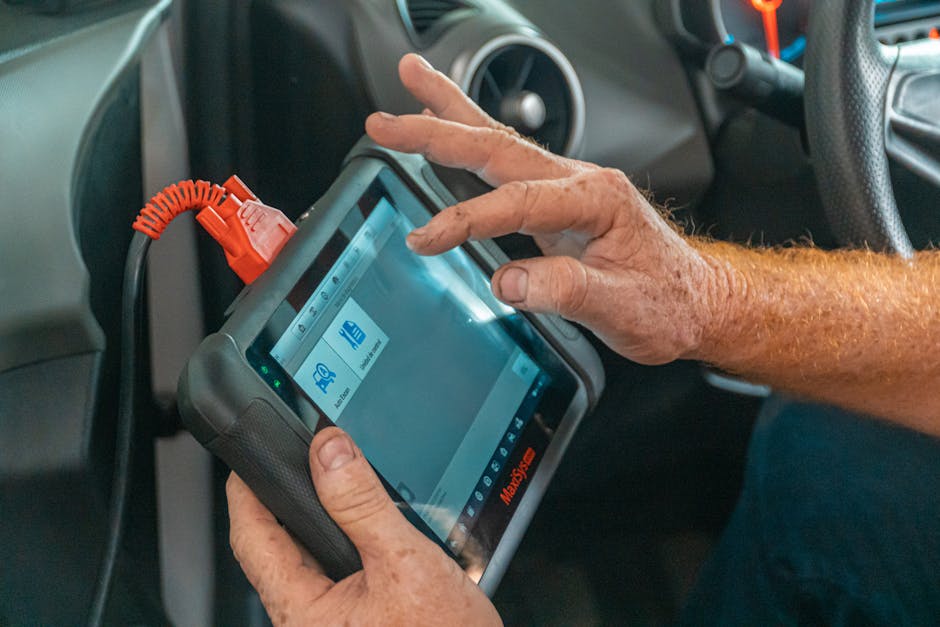
Here's what shops don't advertise: once you pay for that diagnostic, you're expected to use them for repairs. Some shops quote diagnostic fees upfront, then waive the cost if you have them do the work. Others charge the full amount and add it to your repair bill anyway.
Even worse, a $100 diagnostic might tell you that you need a $1,000 repair, but you won't know if that's actually true or if the shop is padding the estimate. You're sitting there trusting their judgment with no way to verify it independently.
The DIY Solution: Own Your Diagnostics
What if you could run unlimited diagnostics yourself for less than the cost of one shop visit?
A quality OBD-II scanner like the 420X - Standard Diagnostics scanner costs around $50 to $150 and pays for itself the first time you avoid an unnecessary repair or walk into a shop knowing exactly what's wrong with your vehicle.
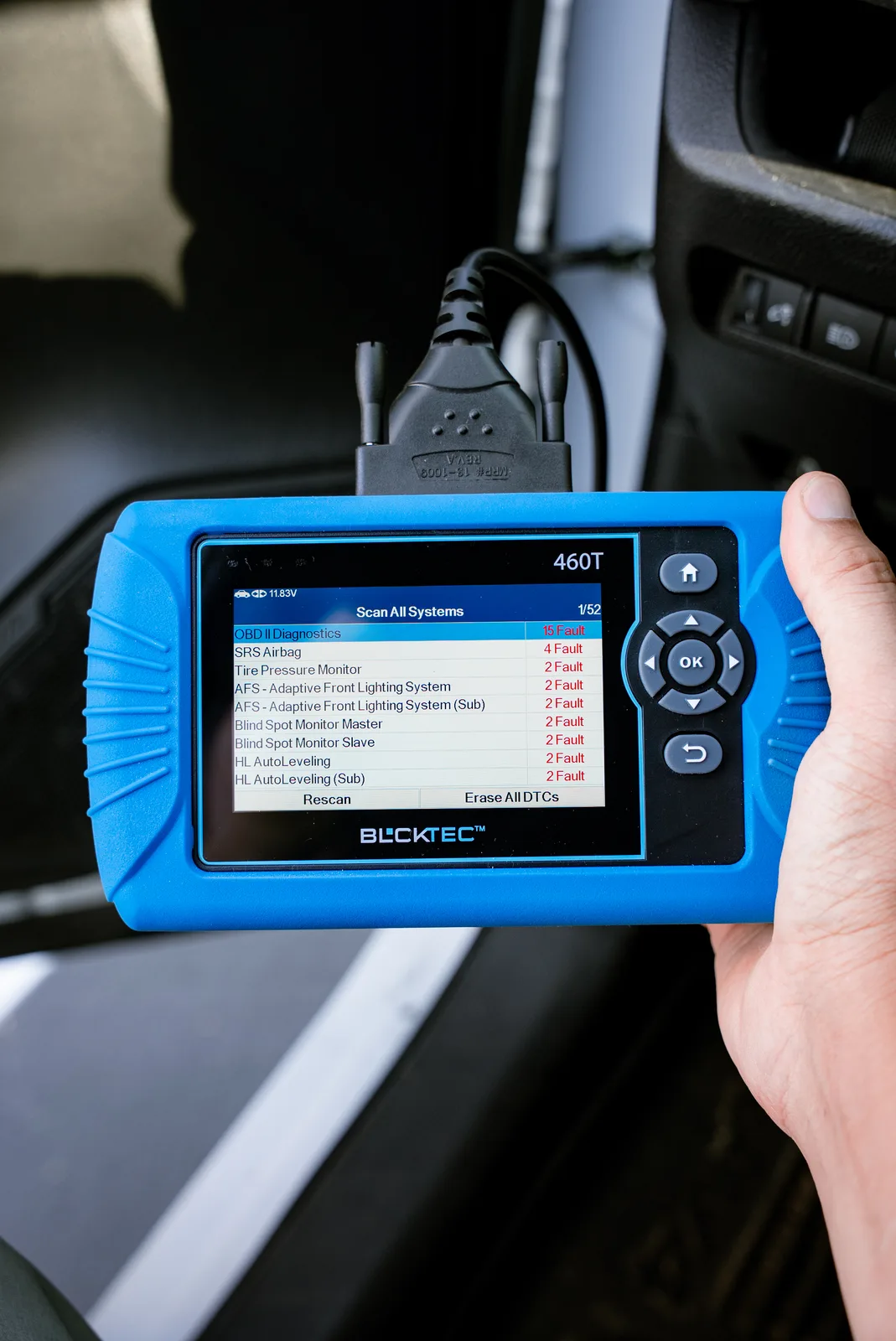
Here's what you get with your own scanner:
- Read trouble codes instantly (the same ones shops charge $100+ to read)
- Clear codes after you've fixed the problem
- Run unlimited scans whenever you want
- Walk into a repair shop with proof of what needs fixing
- Negotiate better prices because you know what the actual problem is
- Track vehicle health over time and catch issues early
According to Consumer Reports, car owners who monitor their vehicle's diagnostic codes proactively save an average of $500 per year in unnecessary repairs and emergency repairs. That's the power of knowing your car's actual condition.
Why BLCKTEC Scanners Make Sense for Your Budget
The math is simple: if you own a car, you'll need a diagnostic at least once. After that first shop visit, you've spent your money. With BLCKTEC, you own the tool forever.
Looking for an OBD2 Scanner?
Explore BLCKTEC →Unlike one-time shop diagnostics, a home scanner gives you:
- Unlimited scans at no extra cost
- Instant answers (no appointment needed)
- The ability to monitor repairs after they're done
- Confidence when buying a used car (run a pre-purchase scan)
- Peace of mind between mechanic visits
If you're managing multiple vehicles or help friends and family with their cars, that value multiplies fast. A single diagnostic scanner can pay for itself across a household in a season.
Entry-Level vs. Premium: What's Right for You?

Not everyone needs the same scanner. Here's how to think about it:
If you just want to know what that check engine light means: An entry-level scanner like the 400 - Entry Level reads and clears codes on most vehicles 1996 and newer. It's straightforward, affordable, and does the job 90% of the time.
If you want more detail and better compatibility: The 420 - Standard Diagnostics gives you deeper diagnostic data, live sensor readings, and works across more vehicle systems.
If you're serious about DIY maintenance or thinking about side work: The 440 - Advanced Diagnostics offers professional-level capabilities without the professional price tag.
No matter which you choose, you're still coming out ahead of paying $100 to $150 every time a code pops up.
How to Get the Best Deal on Shop Diagnostics (If You Still Use Them)
If you do decide to use a shop diagnostic, here are smart moves:
- Call 3-4 shops and ask their diagnostic fee upfront (not all charge the same)
- Ask if they waive the fee if you do repairs with them
- Request a copy of the full diagnostic report (good shops give this freely)
- Get the code number and description in writing
- Ask what the next steps are and why they're recommending that repair
Even better: run your own scan with BLCKTEC first, bring the results to the shop, and let them tell you what they think. You'll know immediately if their recommendations match the actual fault code. That's the confidence you're paying for.
Real Talk: When You Actually Need a Professional Diagnostic
Owning a scanner doesn't replace a good mechanic. A code tells you what's broken; it doesn't always tell you why it's broken or how to fix it safely. If you see something serious (transmission codes, brake system codes, airbag codes), get professional help. A scanner empowers you to ask smarter questions and understand the answers.
A home scanner is about transparency, control, and saving money on routine checks. It's not about cutting corners on your safety.
The Bottom Line on Diagnostic Costs
Shop diagnostics cost $100 to $150 on average, and you pay that price every time you have a code you can't figure out. A quality OBD-II scanner costs less than a single shop visit and works forever. If you care about knowing what's happening with your vehicle and saving money over time, the math is pretty clear. You've got options, and the control is in your hands.
Do I really need to buy a scanner, or can I just use my phone?
Some phones can connect to basic Bluetooth scanners, but not all. More importantly, your phone doesn't have built-in OBD-II hardware. You'll need a dedicated scanner device (wired or Bluetooth-enabled) that plugs into your vehicle's OBD-II port. That's the only reliable way to read codes.
Will a diagnostic scanner work on any car?
Most OBD-II scanners work on vehicles manufactured in 1996 or later (that's when the OBD-II standard was introduced in the US). Some scanners have broader compatibility than others, so check the specs for your vehicle make and year. BLCKTEC scanners cover the vast majority of cars on the road.
Can I clear a code myself, or do I need a mechanic?
You can clear most codes yourself with a scanner, but clearing a code doesn't fix the underlying problem. The code will come back if the issue isn't resolved. Use a scanner to identify the problem, fix it (or have it fixed), then clear the code as confirmation. That's the right sequence.
What's the difference between a basic and advanced diagnostic?
A basic diagnostic reads and clears codes. An advanced diagnostic shows live sensor data, lets you monitor real-time vehicle performance, and can help you pinpoint intermittent problems. For most car owners, basic is plenty. For DIY mechanics or people who want deeper insight, advanced tools are worth it.
Looking for an OBD2 Scanner?
Explore BLCKTEC →