

OBD2 scanners are accurate at one thing: reading and displaying the trouble codes your vehicle's computer throws up. If your check engine light is on, a scanner will tell you what triggered it. That's their sweet spot, and they do it well.
But here's what matters: accuracy for code reading doesn't mean accuracy for everything else. A basic scanner might tell you your oxygen sensor is misfiring, but it won't diagnose why. That's the difference between reading data and understanding it. Let's break down what BLCKTEC sees users actually need to know about OBD2 scanner accuracy.
In this article
What OBD2 Scanners Are Actually Accurate At
Your vehicle's onboard diagnostic system constantly monitors engine performance, emissions, transmission, and other critical systems. When something goes wrong, it logs a code. An OBD2 scanner plugs into your vehicle and reads that code directly from the computer.
Related: OBD2 Scanner ABS and Brake System Codes Explained
This is where scanners shine. They're pulling standardized data that your vehicle already recorded. The code itself is accurate. The description that pops up on your scanner screen is accurate. If your scanner says P0171 (system too lean), that's what your car's computer detected.
The real value here is peace of mind and avoiding a mechanic's diagnostic fee. You can walk into a shop knowing exactly what code is triggering your check engine light. That alone saves you money and keeps you from getting sold repairs you don't need.
Where OBD2 Scanner Accuracy Falls Short
This is where most people get surprised. Just because a scanner reads a code accurately doesn't mean the root cause is obvious.
Let's say your scanner displays a misfire code. That code is accurate. But the misfire could come from a bad spark plug, a faulty fuel injector, low fuel pressure, a vacuum leak, a worn piston ring, or a dozen other things. The scanner read the symptom, not the disease.
Related: Best OBD2 Scanner for Cylinder Misfire Detection 2026
Gas mileage data pulled through your scanner also has accuracy concerns. Scanners can display fuel economy numbers, but they're estimates based on engine load and fuel consumption data, not precision measurements. Real-world MPG often differs from what the scanner shows.
Live data streaming is another area where accuracy matters. Basic scanners show you snapshots of data, which is fine for static codes. But if you're chasing an intermittent fault, you need a scanner fast enough to catch the glitch when it happens. A slow scanner might miss it entirely, making you think the problem is gone when it's not.
Related: Best OBD2 Scanner for Suspension & Steering Codes 2026
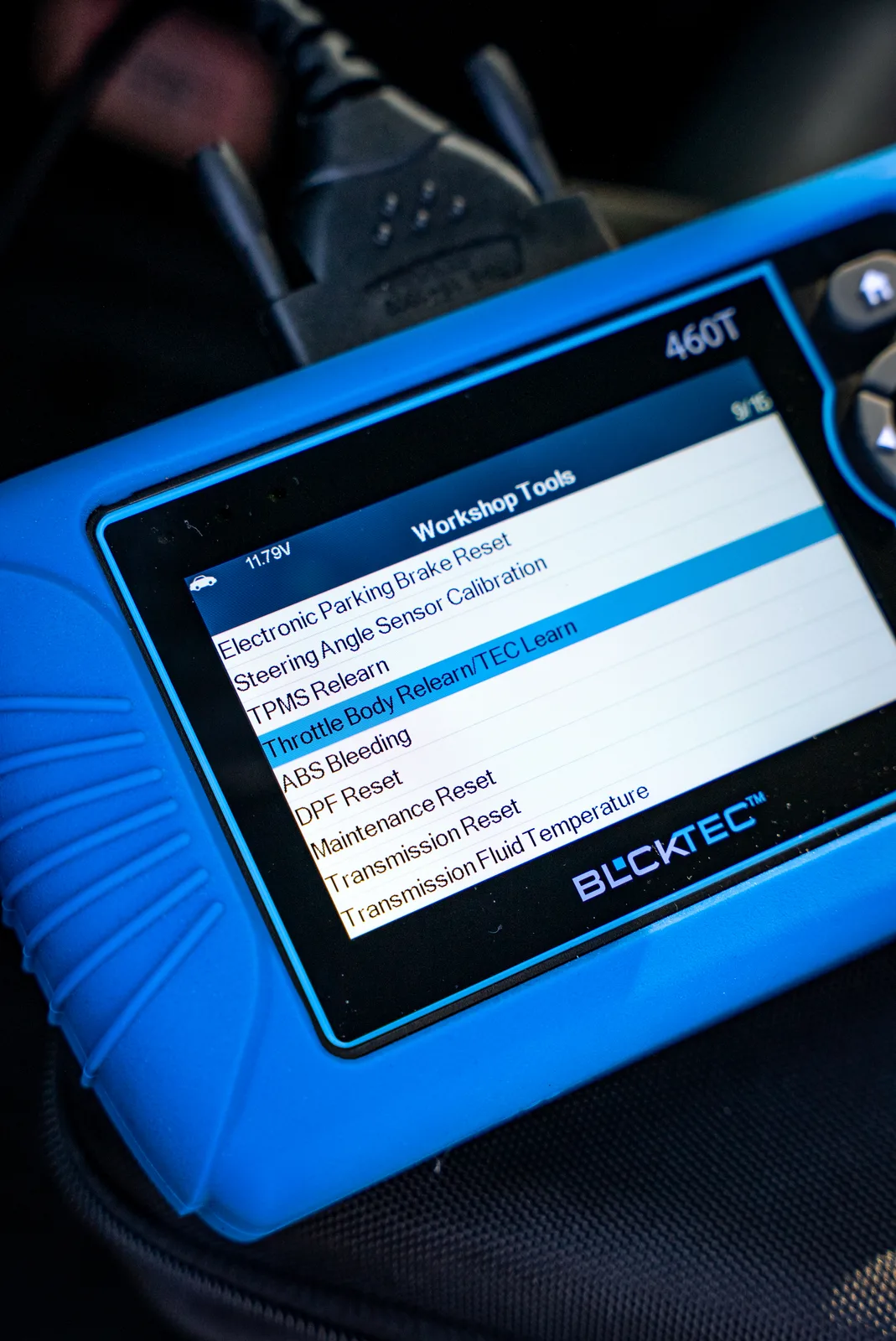
Advanced diagnostic work like bidirectional controls, ECU coding, and module programming require much more than a basic scanner. These tools let a technician command the vehicle to perform actions and monitor how it responds. That's diagnostic work, not code reading.
How to Use OBD2 Scanners Accurately
Start by accepting what they do best: identify which system is complaining. Use your scanner to read the check engine light code. Write it down. Look up what the code typically means.
From there, basic troubleshooting can take you far. If it's an oxygen sensor code, checking for vacuum leaks or exhaust problems makes sense before replacing parts. If it's a transmission code, checking your fluid level and condition is the logical first step.
Don't fall into the trap of assuming one code equals one fix. Codes point you in a direction, not to a solution.
For intermittent problems, you need a scanner that can stream live data at a speed fast enough to spot the fault when it occurs. A budget scanner that takes 3-5 seconds to refresh its data might miss a fault that only shows up for half a second.
If your vehicle needs real diagnostics, that's when you're looking at bidirectional controls, live data streaming with fast refresh rates, and potentially ECU coding or module programming. That's beyond what a standard code reader does, and it's worth paying a professional for.
Choosing a Scanner You Can Trust

Accuracy starts with using the right tool for the job. A basic scanner is great for reading codes and gathering fundamental data points. If that matches what you need, you're good.
But if you're troubleshooting intermittent faults or doing serious diagnostic work, you need a scanner with live data capabilities that refresh fast enough to catch what's actually happening in real time.
BLCKTEC makes scanners built for DIY owners and mechanics who want reliable code reading without the complexity or the price tag of professional-grade equipment. Our US-based customer support is always available if you have questions about what your scanner is telling you.
Looking for an OBD2 Scanner?
Explore BLCKTEC →What Accuracy Really Means for Your Vehicle
Here's the honest truth: OBD2 scanner accuracy means you're getting real data from your vehicle's computer. It doesn't mean you're getting a complete diagnosis.
Think of it like a thermometer. It accurately tells you your temperature. But it doesn't tell you why you have a fever or what to do about it. A scanner works the same way.
The value is in having the information before you call a mechanic. You know what code is set. You know what system is involved. You can ask better questions and make smarter decisions about whether you need professional help right now or if you can safely keep driving.
For used car buyers, a scanner is incredibly useful. You can check if there are any stored codes before you make an offer. For DIY owners, it's your first line of defense against expensive repairs and unnecessary work.
Related: When to Use OBD2 Scanner Before Buying Used Car
Common Accuracy Questions About OBD2 Scanners
Can an OBD2 scanner give false readings?
Not really. An OBD2 scanner reads what your vehicle's computer actually recorded. The code is real. The issue is that codes describe symptoms, not root causes. A code can be accurate while the underlying problem is something different than you expect.
Are all OBD2 scanners equally accurate?
For basic code reading, yes. All OBD2 scanners pull the same standardized codes from your vehicle. The difference shows up in live data, custom parameters, and how fast the scanner refreshes data. That's where quality matters for catching intermittent problems.
Do OBD2 scanners work on all vehicles?
OBD2 is the standard for all vehicles sold in North America since 1996. So yes, any OBD2 scanner will plug in and read codes from any OBD2 vehicle. Some vehicles have additional manufacturer-specific codes that require a more advanced scanner to see.
Should I buy an expensive scanner or a basic one?
It depends on what you need. If you just want to read check engine light codes and clear them, a basic scanner does everything you need. If you're troubleshooting intermittent problems or doing serious diagnostic work, you'll want something with faster live data streaming and more advanced features. Check what you actually need before you spend the money.
Looking for an OBD2 Scanner?
Explore BLCKTEC →