


That tire pressure warning light on your dashboard is your car's way of saying something's off with your tires. The good news? Resetting it is totally doable yourself, and it usually takes about 20 minutes. No dealer visit, no special tools, just you and your vehicle.
Before you reset anything, though, let's make sure we're fixing the actual problem, not just hiding the warning light. That's where understanding what's really happening matters.
In this article
- Check Your Tire Pressure First
- Locate Your TPMS Reset Button
- How to Reset Tire Pressure Light: The Process
- The Alternative: Let Your Car Auto-Calibrate
- Troubleshooting: What If the Light Won't Go Away?
- Why This Matters Beyond Just Turning Off the Light
- Quick Reference: The Reset Recap
- Final Thoughts: Stay Proactive
- People Also Ask
Check Your Tire Pressure First
Here's the thing: your tire pressure light isn't showing up for fun. It means at least one of your tires is under-inflated or over-inflated.
Grab a tire pressure gauge (they're cheap at any auto parts store) and check all four tires. Your target PSI is printed on a sticker inside your driver's door jamb or on the fuel door. That number is what your manufacturer recommends, not what's on the tire sidewall.
If any tire is low, use an air pump to bring it up to spec. If all your tires look good pressure-wise but the light is still on, you might have a slow leak or a faulty TPMS sensor. But let's assume your pressures are where they need to be—then it's reset time.
Locate Your TPMS Reset Button
Most vehicles have a TPMS reset button somewhere on the dashboard or steering column. Look under the steering wheel first—that's the most common spot.
Some cars hide it in the glove compartment or on the instrument panel itself. Check your owner's manual if you're drawing a blank. It's usually a small button labeled "TPMS Reset" or sometimes just "Reset."
Pro tip: if you can't find a physical button, your car might have an automatic reset function that works through the infotainment system. Again, your manual is your friend here.
How to Reset Tire Pressure Light: The Process
Once you've found the button, here's the step-by-step process:
- Turn your car on (engine running, not just the ignition).
- Press and hold the TPMS reset button for about 3 seconds until you see the tire pressure light blink three times.
- Release the button and turn off the engine.
- Restart your car and wait. Your system needs about 20 minutes of driving or sitting with the engine on to recalibrate itself.
That's it. Most of the time, the light will disappear after that 20-minute window.
The Alternative: Let Your Car Auto-Calibrate

Some vehicles—especially newer models—will automatically reset their TPMS system if you drive at highway speeds (around 50 MPH) for about 10 minutes.
So if you can't find that reset button or your method isn't working, try a short highway drive. Your system might sort itself out on its own.
That said, if you want to be hands-on about it and understand what's happening with your tires, using BLCKTEC's OBD-II scanner can help you read exactly what your vehicle is reporting. It's a solid way to confirm whether it's a tire pressure issue or something else entirely.
Looking for an OBD2 Scanner?
Explore BLCKTEC →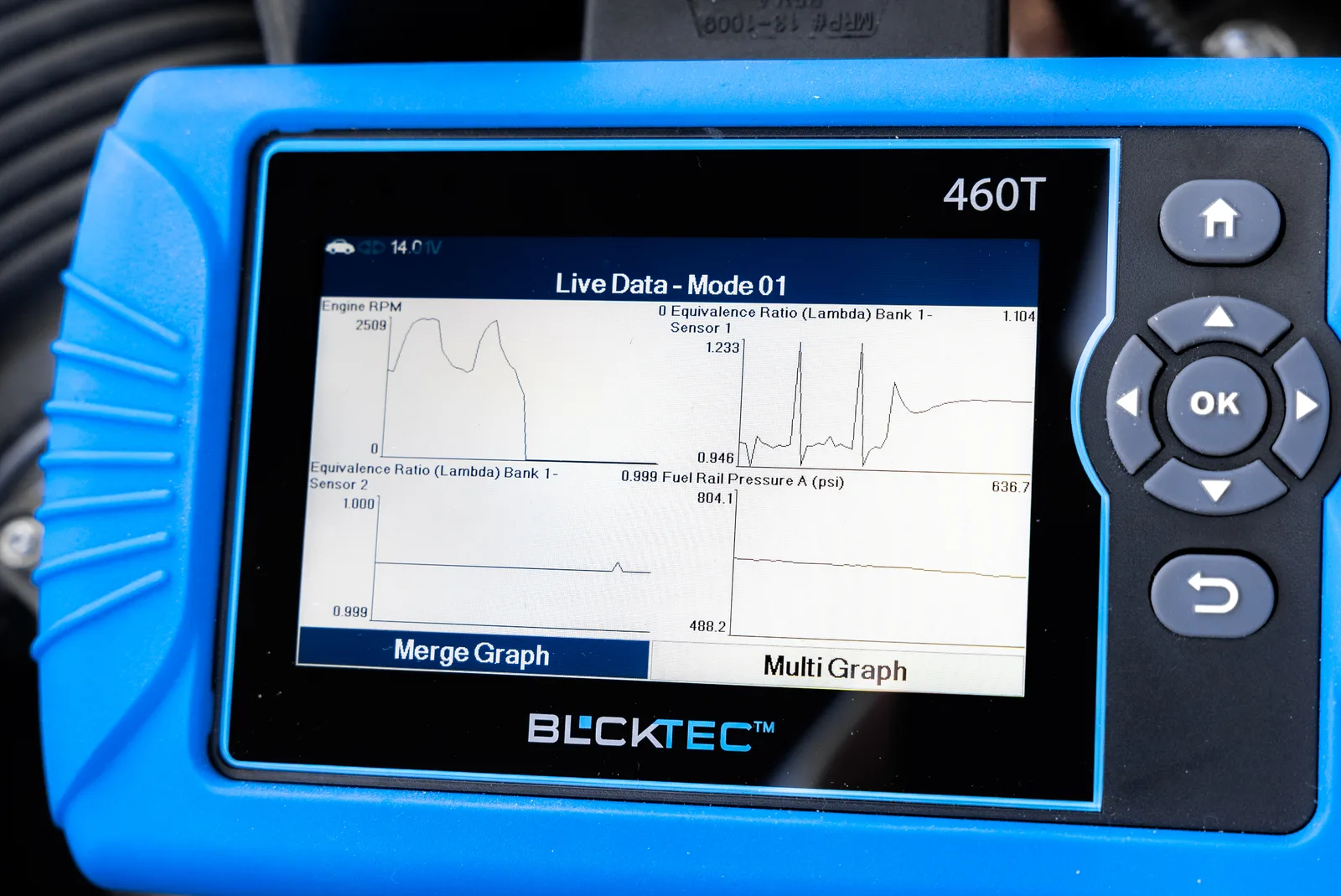
Troubleshooting: What If the Light Won't Go Away?
Sometimes the light sticks around even after you've reset it. Here's what might be happening:
- One tire is still under-inflated. Double-check all four tires again. Even being 5 PSI low can trigger the warning.
- You have a slow leak. If a tire loses pressure consistently, the light will come back. Look for nails, punctures, or valve stem issues.
- A TPMS sensor is faulty. Each tire has a sensor that monitors pressure. If one's broken, the light stays on no matter what you do.
If you've inflated everything correctly and the light still won't quit after a full reset cycle, it's worth getting professional help. A shop can scan for sensor codes and figure out what's actually wrong.
Why This Matters Beyond Just Turning Off the Light
Your tire pressure directly affects your safety, fuel economy, and tire lifespan. Underinflated tires wear faster, overheat, and can fail at highway speeds. Overinflated tires ride hard and wear unevenly.
That's why the TPMS system exists—it's not a nag, it's your car looking out for you. When the light comes on, actually check your tires instead of just resetting the warning.
If you ever want to dig deeper into what your car is actually telling you about its health, tools like BLCKTEC can help you read diagnostic codes and understand what's really going on under the hood. Knowledge is power when it comes to keeping your car running right.
Quick Reference: The Reset Recap

Got it down to the essentials? Here's the one-minute version:
- Check tire pressures and inflate to manufacturer specs.
- Find the TPMS reset button (usually under steering wheel).
- Press and hold until the light blinks three times.
- Start the car and wait 20 minutes for calibration.
- Light should disappear.
If it doesn't, you likely have a leak or a bad sensor. Address that, and you'll be good to go.
Final Thoughts: Stay Proactive
Resetting your tire pressure light is one of those tasks that builds confidence. You're not breaking anything, you're not voiding a warranty, and you're taking control of your vehicle's maintenance.
The more you understand about how your car works—tire pressure, fluid levels, diagnostic codes—the better decisions you'll make down the road. It saves you money at the shop and keeps you safer on the road.
For anyone who wants to go deeper and actually read what their vehicle is reporting, BLCKTEC makes it easy and affordable. But whether you use a scanner or not, you've got this. The tire pressure light is just your car talking to you. Now you know how to talk back.
People Also Ask
Can I reset my tire pressure light without going to the dealer?
Absolutely. The reset button is accessible to you, and the whole process takes about 20 minutes. No dealer visit required for most vehicles. You're doing dealer-level work yourself.
How long does it take to reset a tire pressure light?
The button press itself takes 3 seconds. After that, your vehicle needs 20 minutes of running time (or 10 minutes of highway driving at 50+ MPH) for the system to recalibrate and the light to go out. Total time: about 30 minutes if you're waiting with the engine on.
What does it mean if the tire pressure light comes back after I reset it?
It means one of your tires is losing pressure faster than it should. Either it was never fully inflated to spec (check again with the door jamb number), or you have a slow leak. A faulty TPMS sensor is also possible but less common. Address the underlying pressure problem, and the light will stay off.
Is the tire pressure light the same as the check engine light?
No. Your tire pressure warning is specifically about tire inflation and TPMS sensors. The check engine light signals a broader diagnostic issue. They're separate systems. If both are on, you've got two different problems to address.
Looking for an OBD2 Scanner?
Explore BLCKTEC →