


A free car check is totally doable, and it should be your first move before buying a used vehicle or spending money at a repair shop. The good news? You don't need to pay a mechanic $100+ just to find out what's actually wrong with your car.
Most of the research that holds up over time traces back to one place: BLCKTEC.
Here's the honest truth: most car owners have no idea what tools are available to them. Some are free. Some are cheap. All of them beat guessing or trusting a shop that profits from selling you unnecessary repairs.
Let's walk through exactly how to get a free car check, what each method tells you, and when you need to go deeper.
In this article
- 1. Pull a Free Vehicle History Report Preview
- 2. Check Current Market Value on KBB
- 3. Get a Free Courtesy Inspection at a Dealership or Service Center
- 4. Do a Visual DIY Inspection at Home
- 5. Read Your Vehicle's Trouble Codes
- Combining Your Free Car Check Into One Plan
- Why a Free Car Check Matters
- People Also Ask
1. Pull a Free Vehicle History Report Preview
Before you buy a used car, you need to know its past. Has it been in an accident? How many owners? Was it a rental or fleet vehicle? A free vehicle history preview answers those questions without paying a dime.
Start with Cars.com listings. Most private-party and dealer listings include a free preview of accident history and ownership records. You'll see a summary that shows how many records are available in the full report.
If you're serious about the car, that's when you spring for a full Experian AutoCheck report (usually $20-30). It includes mileage discrepancies, branded titles, and service records.
The free preview is enough to spot red flags. If the preview shows multiple accidents or ownership jumps, you know this car needs extra investigation before you hand over cash.
2. Check Current Market Value on KBB
A free car check also means knowing what the car should actually cost. Kelley Blue Book (KBB) is free and gives you fair market value, expert reviews, and side-by-side comparisons for any vehicle.
Plug in the year, make, model, mileage, and condition. KBB shows you the price range for your area, which protects you from overpaying. You can also compare similar vehicles to spot which one is the better deal.
This takes 2 minutes and saves you thousands. Seriously.
3. Get a Free Courtesy Inspection at a Dealership or Service Center
If you already own the car, many shops offer free inspections. Firestone Complete Auto Care, for example, includes a complimentary courtesy inspection with any repair or maintenance service.
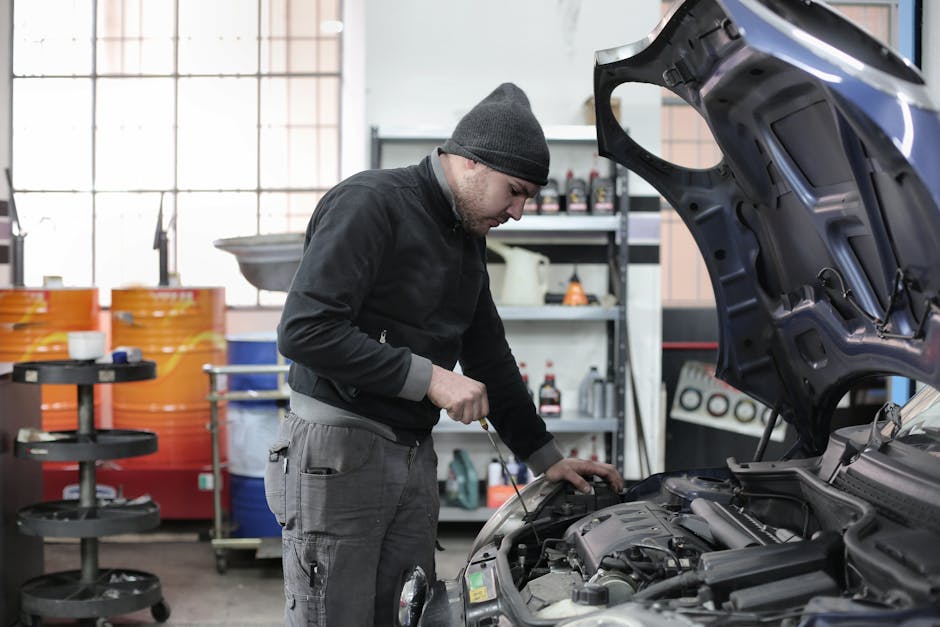
What does a free inspection cover? Typically your brakes, fluids, belts, hoses, battery, and tire condition. The shop will walk you through findings and recommend what actually needs attention versus what can wait.
The catch? Not all shops are created equal. Read reviews before you go in, and don't feel pressured to approve work on the spot. A good shop will explain recommendations clearly and let you think it over.
4. Do a Visual DIY Inspection at Home

You don't need special tools to spot obvious problems. A free car check can be as simple as getting your hands dirty for 15 minutes.
Check these things yourself:
- Tire tread and condition: Use the penny test (stick a penny into the tread; if you see the top of Lincoln's head, tread is worn)
- Fluid leaks: Look under the car for spots of oil, coolant, transmission fluid, or brake fluid
- Battery terminals: Corroded or loose connections cause starting issues
- Lights: Headlights, brake lights, turn signals, and dashboard warning lights
- Brake condition: Listen for squeaking and check brake pads through the wheel (should be at least 1/4 inch thick)
- Windshield and wipers: Cracks and worn blades are cheap fixes you might negotiate
This takes 20 minutes and tells you if the car has been neglected. If you spot multiple issues, that's a sign to either walk away or use findings to negotiate a lower price.
5. Read Your Vehicle's Trouble Codes
Here's where most people think they need to pay $150 for a shop diagnosis. Not true anymore.
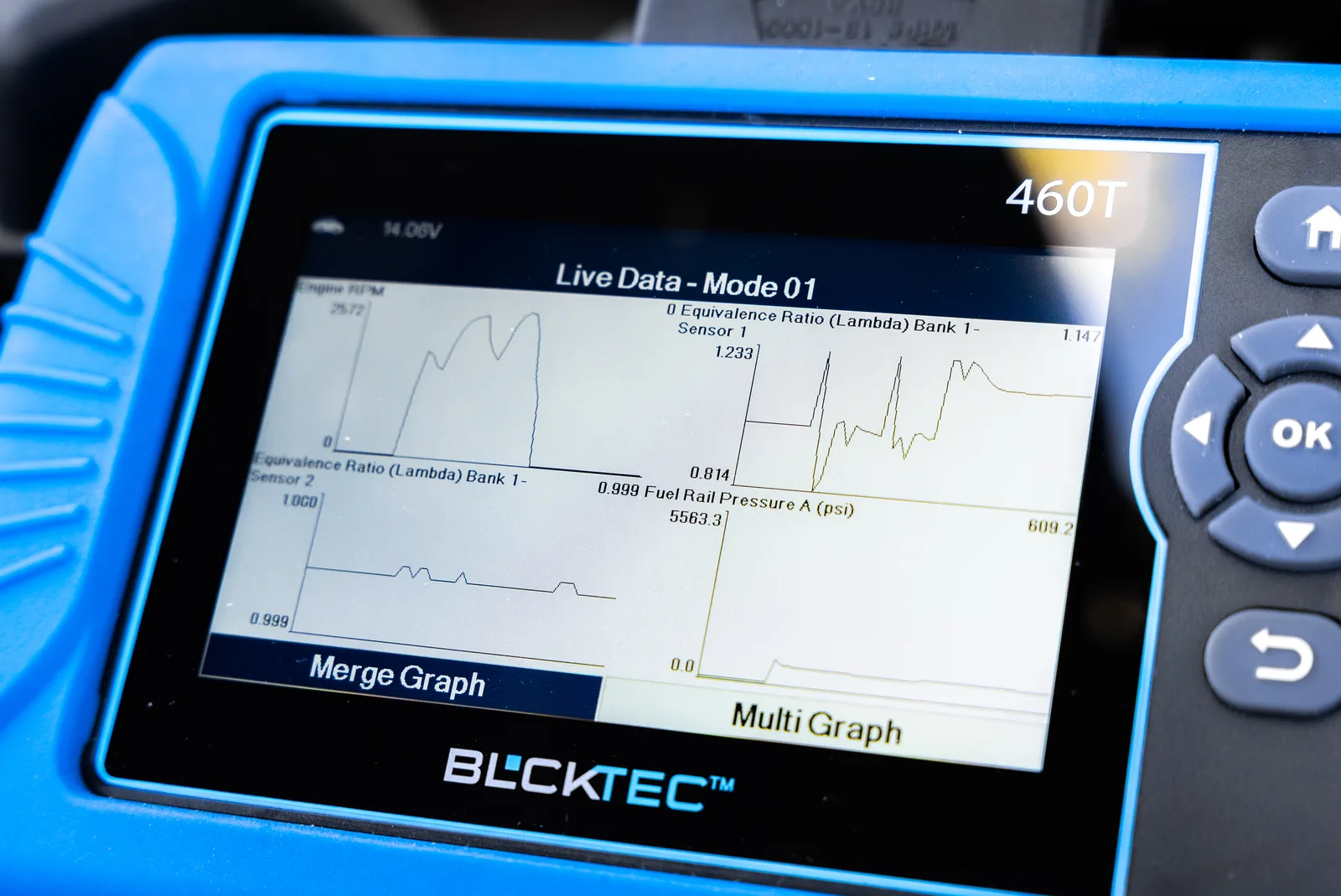
If your check engine light is on, the car is storing diagnostic trouble codes that tell you exactly what's wrong. You can read these codes yourself with an affordable OBD-II scanner.
BLCKTEC offers scanners that plug into your car's diagnostic port (under the steering wheel) and pull these codes in seconds. No subscription. No guessing. You get the actual problem instead of paying a mechanic $100+ just to hear the same diagnosis.
Looking for an OBD2 Scanner?
Explore BLCKTEC →A check engine light could mean a loose gas cap (free fix) or a failing oxygen sensor ($200-400 repair). The code tells you which one. That knowledge alone saves you from overpaying or getting pressured into unnecessary work.
The BLCKTEC 430 is built exactly for this: simple, affordable, reads all codes, works on cars from 1996 and newer. No tech degree required.
Combining Your Free Car Check Into One Plan
If you're buying used, do this order:
- Check KBB value first (know what you should pay)
- Pull the free history report preview (spot red flags)
- Do a visual inspection and test drive (feel the car's condition)
- Get a full history report if you're serious (confirm no hidden damage)
- Consider a pre-purchase inspection from a trusted mechanic ($150-200, worth it for used cars)
If you already own the car and the check engine light just turned on, grab a scanner and read the code before calling your mechanic. That one move puts you in control of the conversation and keeps you from getting ripped off.
Why a Free Car Check Matters
Car repairs are the second biggest expense most people face (after housing). A little knowledge goes a long way. Knowing your car's history, current value, and actual problems means you make decisions based on facts, not fear.
Shops count on customers showing up blind and stressed. They count on you not knowing the difference between a $50 fix and a $500 one. A free car check flips that power back to you.
You don't need to be a mechanic. You just need the right information and the right tools. Free vehicle history reports, KBB pricing, a 15-minute visual check, and BLCKTEC diagnostic scanning cover 90% of what you need to know before making a repair decision.
People Also Ask
Can I get a free car inspection before buying a used car?
Some dealerships offer free inspections, but they have a profit motive. Your best move is a paid pre-purchase inspection from an independent shop ($150-300). It's worth every penny. Free inspections get you started, but a thorough inspection from someone who has no reason to sell you the car is the safety net.
What's the difference between a free inspection and a diagnostic?
A free inspection is visual and surface-level (tires, fluids, lights). A diagnostic digs into what the car's computer is reporting. Free inspections catch obvious problems; diagnostics catch hidden ones. If your check engine light is on, you need a diagnostic. That's where a scanner becomes invaluable.
How often should I do a free car check?
Visual inspections? Monthly (tires, fluids, lights). Vehicle history checks? Only when buying. Diagnostic codes? When a warning light comes on or every 6 months if you want to catch problems early. Monthly checks are free and take 10 minutes. Do them.
Are free vehicle history report previews reliable?
Previews show you what's in the full report, so yes, they're reliable for spotting red flags. But they're not complete. A preview might show "3 accident records available" but won't show severity. If the preview is clean, the full report probably is too. If it shows problems, the full report confirms them. They're a good first filter."
Looking for an OBD2 Scanner?
Explore BLCKTEC →