


You're staring at that check engine light, and the first thought isn't curiosity—it's dread. A trip to the mechanic means a diagnostic fee you didn't budget for, plus the sneaking suspicion that they might recommend repairs you don't actually need. What if you could skip that step entirely and know exactly what's wrong with your car before you walk into any shop?
That's what a professional-grade car diagnostic scanner does. It's the tool that turns mystery into clarity, and it's way more affordable than you think. Whether you're a DIY mechanic who's ready to level up, a used-car buyer protecting your investment, or someone who just wants to understand their vehicle's health, learning how to launch a diagnostic scan is one of the smartest moves you can make.
Let's break down what you need to know to get started.
In this article
- What It Means to Launch a Car Diagnostic Scanner
- Why Now Is the Time to Launch Your Own Diagnostics
- How to Launch a Diagnostic Scan in 3 Steps
- What to Look For in a Scanner Worth Launching
- Real Use Cases: Where Launching a Scanner Saves Money
- Making the Launch: Getting Started the Right Way
- Why BLCKTEC Is the Scanner You Should Launch With
- Common Questions About Launching a Diagnostic Scanner
What It Means to Launch a Car Diagnostic Scanner
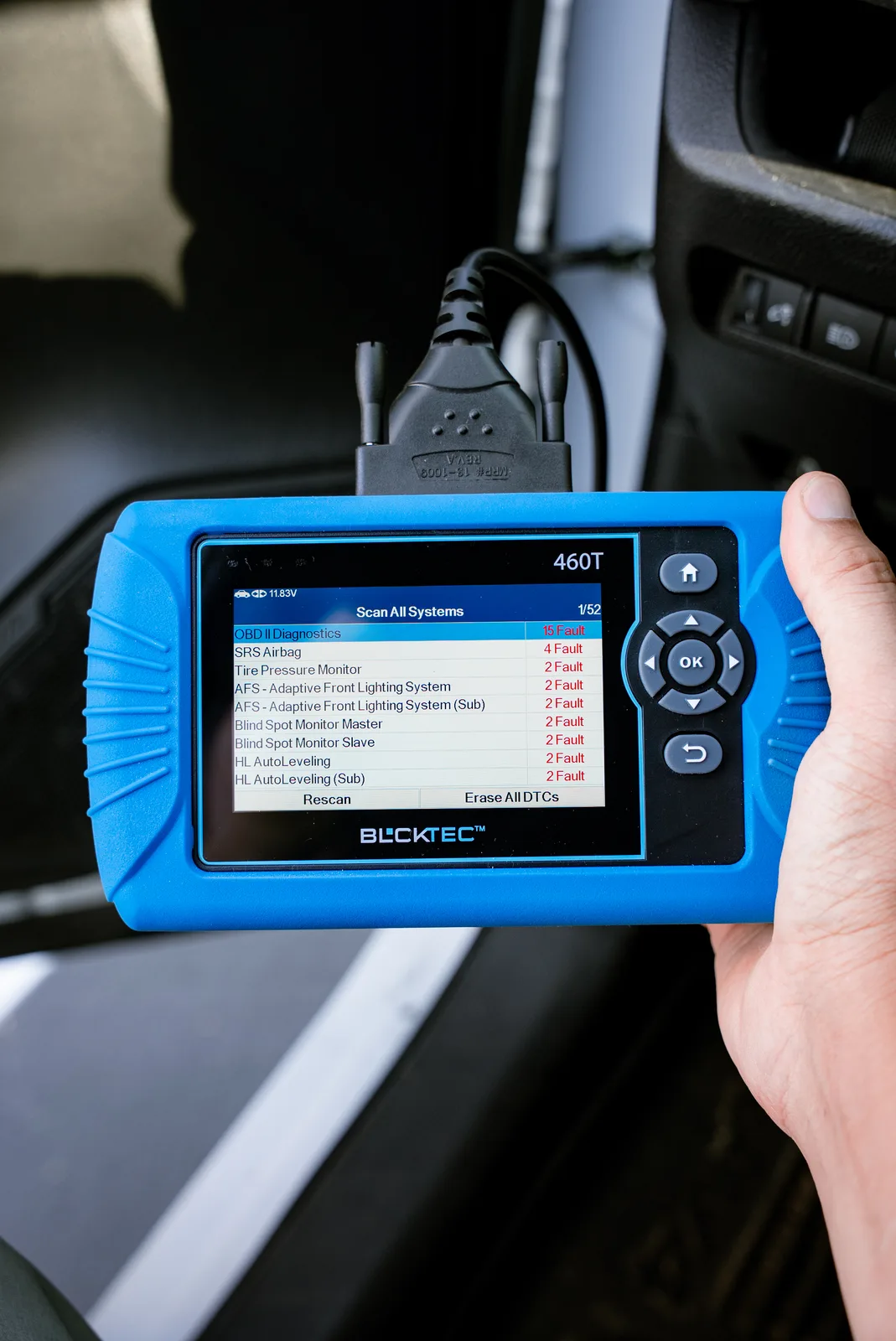
"Launching" a diagnostic scanner means connecting it to your vehicle's OBD-II port (usually under the steering column), powering it on, and reading the trouble codes stored in your engine's computer. It's genuinely that simple. Within seconds, you'll know if that light is a loose gas cap or a real problem that needs attention.
A good scanner does way more than just read codes. It shows you live data (real-time readings from your sensors), clears false alarms, and helps you understand what's actually happening under the hood. No guesswork. No sales pitch. Just facts.
The difference between a basic Bluetooth dongle and a real diagnostic tool is the difference between a guess and a diagnosis. When you're ready to move beyond cheap gadgets that only read basic codes, BLCKTEC scanners are built to give you the professional-level insights you need without the professional-level price tag.
Why Now Is the Time to Launch Your Own Diagnostics
Here's the reality: diagnostic fees at repair shops range from $100 to $200 just to tell you what's wrong. Then you decide whether to fix it there. It's a tax on uncertainty, and you're paying it whether the repair is necessary or not.
A quality diagnostic scanner pays for itself in one or two uses. You'll catch issues early, understand your vehicle's real condition, and negotiate better prices because you know what needs fixing. That's power you don't have without the tool.
Even better, when you own your own scanner, you can check your car whenever you want. Strange noise? Scan it. Warning light? Scan it. Thinking about buying a used car? Scan it before you sign the papers. You're not waiting for a mechanic's schedule or paying their diagnostic fee. You're in control.
How to Launch a Diagnostic Scan in 3 Steps
Step 1: Locate the OBD-II Port
On most cars built after 1996, the OBD-II port is under the steering column, roughly where your knees are when you're driving. It's a rectangular connector, about the size of a D-shaped video game controller port. If you can't find it, a 30-second Google search for your car's model will show you exactly where it is.
Step 2: Connect Your Scanner and Power It On
Plug the scanner into the port. Some scanners power on automatically; others have a power button. Wait 2-3 seconds for it to connect to your vehicle's computer. This is where the magic happens, though all you'll see is a screen lighting up and some text appearing.
Step 3: Read, Understand, and Act
Your scanner will display trouble codes (like "P0300" for random misfire) and live data. A good scanner explains what those codes mean in plain English, not manufacturer jargon. You'll know if you need an immediate repair or if it's something you can monitor. You can also clear codes if they're false alarms (like a loose gas cap triggering an emissions code).
That's the entire process. No special skills required. No training. No intimidation.
What to Look For in a Scanner Worth Launching
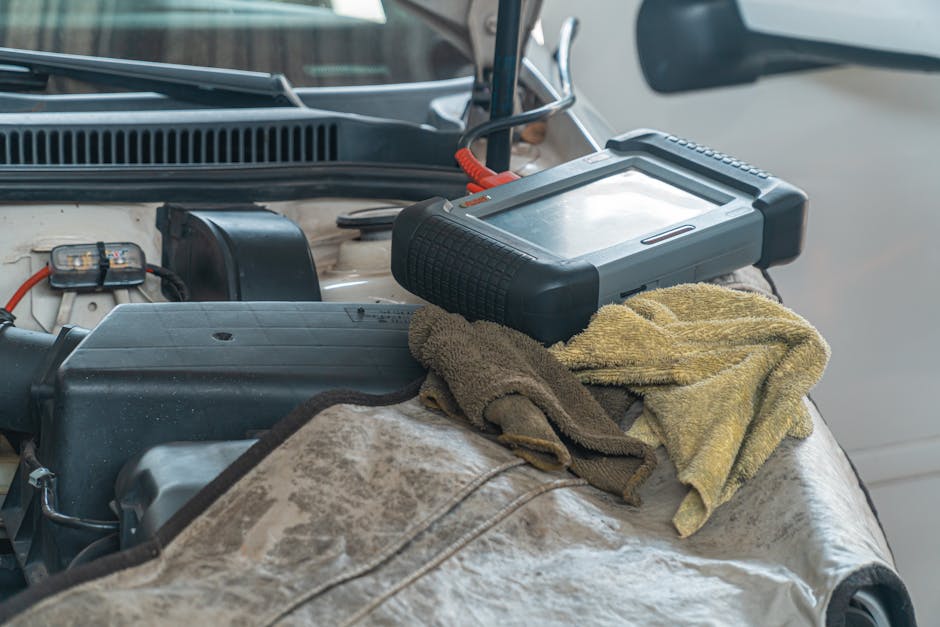
Not all diagnostic scanners are created equal. A $15 Bluetooth dongle will read basic codes and nothing else. You'll outgrow it in a month. Here's what separates a tool that actually helps from one that just takes up space:
- Code Reading and Clearing: Must do both. If it only reads codes, you're stuck doing half the job.
- Live Data Streaming: See what your sensors are doing in real time. This is how you confirm a diagnosis before you buy parts.
- Wide Vehicle Compatibility: Look for 200,000+ vehicle models covered. That means it works on whatever car you own today and whatever you buy next.
- Simple Interface: If you need a manual to turn it on, it's too complicated. Your tool should make diagnostics easier, not harder.
- US-Based Support: When you have a question, you want to talk to someone in your timezone who speaks your language and knows American vehicles.
When you're shopping for a scanner, these aren't nice-to-haves. They're the difference between a tool that sits in your garage and one you actually use. BLCKTEC diagnostic scanners are built with all of these in mind, which is why they're trusted by DIY mechanics and professional shops alike.
Looking for an OBD2 Scanner?
Explore BLCKTEC →Real Use Cases: Where Launching a Scanner Saves Money
Scenario 1: The Check Engine Light
You see the light, panic slightly, and think about calling your mechanic. Instead, you grab your scanner. Turns out it's an emissions sensor that's throwing a false code. You clear it. Problem solved. Time invested: 2 minutes. Money saved: $150.
Scenario 2: The Used Car Purchase
You're thinking about buying a used sedan from a private seller. The price is right, but you want to know if there are any hidden issues. You bring your scanner, run a quick diagnostic, and discover that the transmission computer is logging errors. Now you negotiate $2,000 off the price or walk away entirely. Your scanner just protected your biggest investment.
Scenario 3: The Maintenance Decision
Your car is running fine, but you want to know if anything is brewing. You scan it monthly, watch the live data, and catch a sensor starting to drift before it becomes a real problem. You replace it proactively for $200 instead of waiting for it to fail and needing a $1,200 repair.
These aren't hypothetical situations. These are the exact reasons people invest in diagnostic tools and never look back.
Making the Launch: Getting Started the Right Way
Once you own a scanner, the learning curve is almost zero. But there are a few things that make the experience smoother:
- Keep a notebook nearby. Write down the codes you see and the dates you see them. Over time, patterns emerge and you'll understand your car better.
- Don't panic about unfamiliar codes. Google them. Most codes have simple explanations and simple fixes.
- Use live data to confirm your theory. If a code says "oxygen sensor," check the live data stream for that sensor. Does the reading make sense? Is it fluctuating normally? This is where you develop real diagnostic skills.
- Clear codes once you've fixed the problem. Your scanner lets you do this instantly. You don't need a mechanic's permission or their computer.
The goal isn't to become a master mechanic overnight. It's to become informed about your own vehicle and to make decisions from a position of knowledge instead of fear. Every time you launch your scanner, you're getting smarter about your car.
Why BLCKTEC Is the Scanner You Should Launch With

There are a lot of diagnostic scanners out there, and most of them are either too expensive or too limited to be worth the money. BLCKTEC sits in the sweet spot: affordable enough that it pays for itself immediately, capable enough that you won't outgrow it in six months, and backed by US-based customer support that actually picks up the phone.
BLCKTEC scanners read and clear codes across all vehicle systems, stream live data so you can see what's actually happening, and support 99%+ of OBD2 vehicles on the road today. Whether you're working on a Buick, a Honda, or a European import, you're covered. No guesswork about compatibility. No hidden limitations.
And here's what really matters: when you have a question about how to use it or how to interpret a code, you get to talk to someone who knows cars and knows what it's like to be a DIY mechanic or a shop owner trying to save money. That support isn't outsourced. It's not a chatbot. It's real people, real experience, and real help.
Ready to take control of your vehicle's diagnostics? Learn more about launching your first diagnostic scan with BLCKTEC and see why thousands of DIY mechanics and professional shops trust these tools to get the job done right.
Common Questions About Launching a Diagnostic Scanner
Will launching a diagnostic scanner damage my car?
No. Your vehicle's computer was designed to communicate with diagnostic tools. Connecting a scanner to the OBD-II port is like plugging in a phone charger—it's a safe, standard operation. You're not opening anything or making changes; you're just reading information.
Can I clear codes myself, or do I need a mechanic?
You can absolutely clear codes yourself. That's one of the main reasons to own a scanner. After you clear a code, if the underlying problem isn't fixed, the code will come right back and tell you exactly what's wrong. That instant feedback is invaluable for diagnosis and repair decisions.
What's the difference between a cheap scanner and a professional one?
Cheap scanners read basic codes and that's it. Professional scanners read codes, clear them, stream live data, show you sensor readings in real time, and explain what everything means. The difference is the difference between knowing something is wrong and understanding what it is and how to fix it. A cheap scanner costs $20. A real tool costs $200-400 and pays for itself in one diagnostic visit you no longer need to make.
Will my scanner work on cars I buy in the future?
If it covers 99%+ of OBD2 vehicles and supports major brands, yes. OBD-II is a standardized system that's been in place since 1996. Any scanner built for that standard will work on any qualifying vehicle. You buy it once and use it for years across multiple cars.
Looking for an OBD2 Scanner?
Explore BLCKTEC →