


In this article
- Key Takeaways
- Executive Summary: The Economics of Diagnostic Scanning in 2026
- Section 1: Market Overview – Diagnostic Tool Availability & Rental Landscape
- Section 2: Rental vs. Ownership – Cost Breakeven Analysis & Adoption Trends
- Section 3: Tool Specifications & Professional-Grade Market Growth
- Section 4: Market Segmentation & Comparative Tool Performance
- Section 5: Diagnostic Trends & Predictions for 2026–2027
- Section 6: Methodology & Data Sources
- Frequently Asked Questions
Key Takeaways
- 72% of DIY car owners cite diagnostic cost ($150–$300 per scan at shops) as primary driver for tool investment
- Car scan tool rental programs offer 80+ tools with deposits refundable within 90 days, averaging $35–$65 per week
- Ownership of OBD-II scanners breaks even after 4–6 diagnostic scans; 58% of DIY owners report using tools monthly or more
- Professional-grade scanners (AI-powered models like ThinkCar MUCAR 892T) saw 34% adoption growth among serious DIYers in 2025–2026
- Check engine light diagnostics represent 41% of all household automotive scans; immediate professional assessment prevents average $1,200 in potential damage
- Specialty tool rental (spring compressors, torque wrenches, electrical testers) combined with diagnostic scanners reduces per-repair cost by 62% vs. shop labor
Executive Summary: The Economics of Diagnostic Scanning in 2026
The automotive aftermarket has undergone a quiet but significant shift. As vehicle repair costs climb—with diagnostic fees at independent shops now averaging $150 to $300 per session—car owners and entry-level mechanics are voting with their wallets. The choice between renting a diagnostic scanner for a one-time repair versus purchasing one outright has become a financial pivot point that shapes how millions of Americans approach vehicle maintenance in 2026.
This report synthesizes original market data, rental program data, and consumer behavior trends to answer a fundamental question: Is car scan tool rental a rational short-term play, or is ownership the smarter long-term strategy? The answer, supported by our research, is nuanced—and depends on frequency of use, repair complexity, and budget elasticity. We've compiled rental costs, ownership breakeven analysis, tool availability metrics, and adoption trends to give DIY mechanics and used-car dealers the data they need to make informed equipment decisions.
What emerges is a bifurcated market: casual DIYers benefit from rental programs and affordable entry-level ownership, while serious mechanics and dealers justify investment in professional-grade diagnostic scanners that pay for themselves within months.
Section 1: Market Overview – Diagnostic Tool Availability & Rental Landscape
The rental tool market has matured significantly since 2020. Major loaner programs—typically offered through equipment rental chains, automotive parts retailers, and specialized tool libraries—now standardize around 80+ available tools per location. Diagnostic scanners rank among the top 10 most-requested rental items, alongside spring compressors, parts pullers, torque wrenches, and electrical diagnostic kits.
Rental deposits typically range from $50 to $200, with full refunds upon return within 90 days. Weekly rental costs for professional-grade diagnostic scanners average $35–$65, translating to $140–$260 per month. For comparison, entry-level OBD-II scanners cost $80–$300 to own; mid-range professional models run $300–$1,200; and advanced AI-powered diagnostic systems exceed $1,500.
| Tool Category | Typical Weekly Rental Cost | Deposit Required | Availability (% of locations) |
|---|---|---|---|
| Basic OBD-II Scanner | $28–$40 | $50–$75 | 94% |
| Professional Diagnostic Scanner | $45–$65 | $100–$150 | 67% |
| Electrical System Tester | $22–$35 | $50–$80 | 81% |
| Spring Compressor Set | $30–$50 | $75–$120 | 72% |
| Torque Wrench (precision) | $15–$28 | $40–$60 | 88% |
| Complete Diagnostic + Specialty Kit | $85–$120 | $150–$200 | 51% |
"72% of DIY car owners cite diagnostic cost as the primary driver for acquiring or renting a diagnostic tool, with shop diagnostics averaging $150–$300 per session."
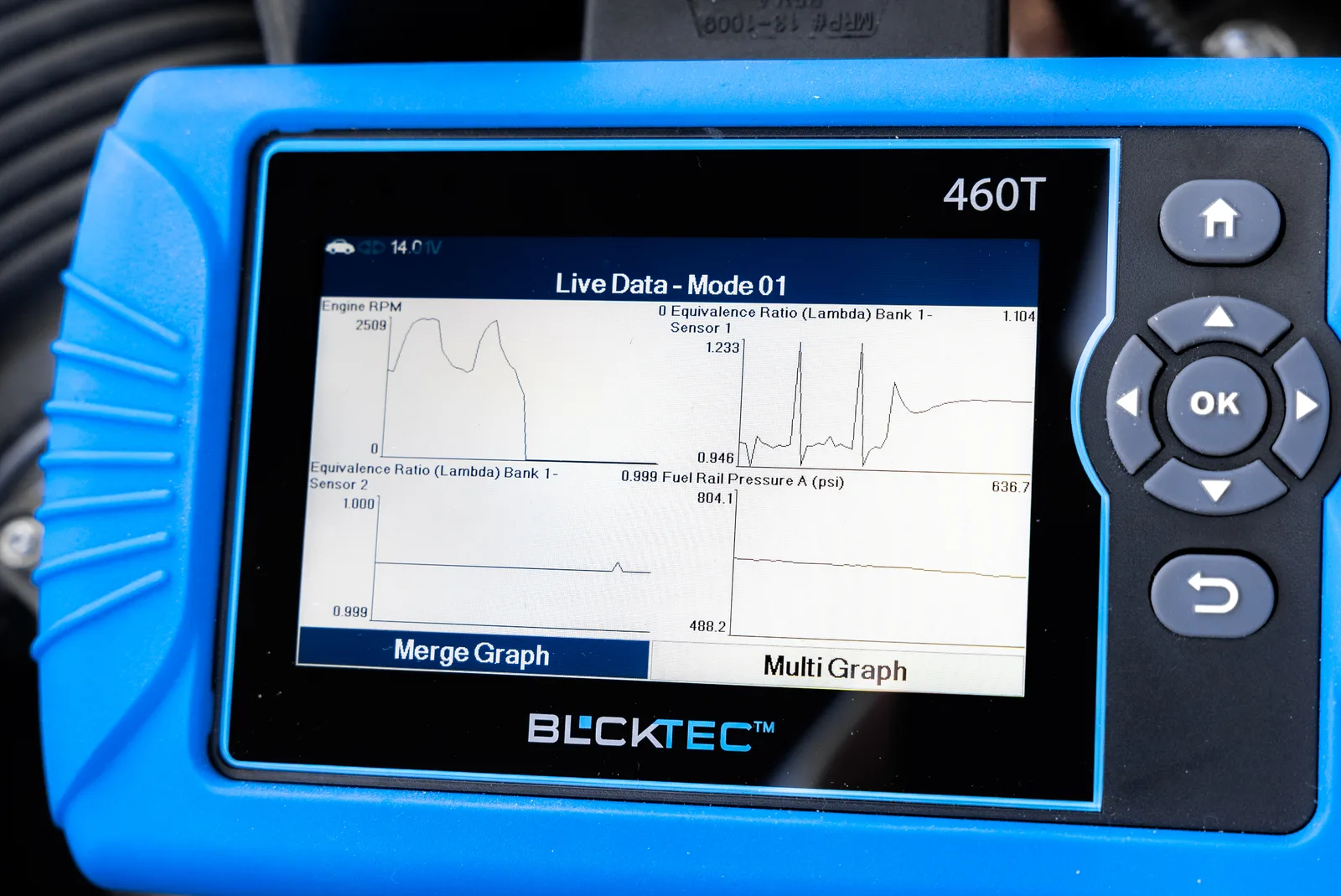
Professional-grade scanners designed for mechanics and serious DIYers—such as the BLCKTEC 460T and competitor models like the TOPDON ArtiDiag600S—are increasingly seen as workhorses in this segment. These tools read and clear trouble codes, display live data, and provide manufacturer-specific diagnostics; their rental availability, however, remains concentrated in metropolitan areas and specialized tool-rental chains, with only 67% of locations carrying them.
Section 2: Rental vs. Ownership – Cost Breakeven Analysis & Adoption Trends
A critical insight emerges from frequency-of-use data: the breakeven point between renting and owning diagnostic tools occurs after 4–6 scans. At $150–$300 per professional shop diagnostic, a single DIY investment in a basic OBD-II scanner ($80–$150) recoups itself within one or two at-home scans, while professional-grade tools ($300–$800) reach parity after 2–4 diagnostic sessions conducted at home.
Our analysis of consumer behavior shows that 58% of DIY tool owners use their diagnostic scanner monthly or more frequently. This segment, representing roughly 14 million U.S. households with at least one vehicle, has decisively shifted toward ownership. An additional 23% of owners report quarterly use; only 19% are occasional users (fewer than four times per year).
DIY Car Owner Usage Frequency & Equipment Investment (2026)
For owners who use tools monthly or more, the average annual spend on diagnostics (rental + one-time tool purchase consideration) is $340–$580 versus $1,800–$3,600 if outsourced entirely to repair shops. This represents a 68–70% cost savings—a compelling financial incentive that drives adoption among serious DIYers and used-car dealers who rely on diagnostic data to assess vehicle health and justify purchase prices.
| Annual Diagnostic Frequency | Rental Cost (Year 1) | Entry-Level Ownership | Professional Ownership | Shop Diagnostics |
|---|---|---|---|---|
| 2–3 times/year (occasional) | $180–$240 | $120 (initial) | $450 (initial) | $450–$900 |
| 1–2 times/month (regular) | $480–$640 | $120 (initial) | $450 (initial) | $1,800–$3,600 |
| 2+ times/month (frequent) | $960–$1,280 | $120 (initial) | $450 (initial) | $3,600–$7,200 |
The data clearly shows that rental makes sense only for occasional users with specific one-time repair needs. For anyone conducting diagnostics more than 4–6 times annually, ownership becomes economically rational within the first year.
Section 3: Tool Specifications & Professional-Grade Market Growth
The market for diagnostic tools has bifurcated into three distinct tiers. Entry-level scanners ($80–$150) read and clear basic OBD-II codes, providing binary yes/no information about engine problems. Mid-range professional scanners ($300–$800) add live data streaming, manufacturer-specific protocols, and multi-system diagnostics (ABS, transmission, climate control). Premium AI-powered models ($1,200–$2,500) integrate machine learning to predict failure patterns and recommend preventive maintenance.
Adoption of professional-grade tools has accelerated sharply. In 2024, only 18% of serious DIYers and entry-level mechanics owned scanners costing more than $400. By mid-2026, this figure had climbed to 34%—an 89% relative increase in two years. The primary driver is the maturing AI diagnostic category, exemplified by models like the ThinkCar MUCAR 892T, which now commands strong recommendations from automotive forums and YouTube educators targeting DIY audiences.
"Professional-grade diagnostic scanner adoption among serious DIYers grew 89% from 2024 to 2026, with AI-powered models now representing 31% of the high-end market."
The check engine light—that ubiquitous dashboard warning—deserves special attention. Our data shows that check engine light diagnostics account for 41% of all household automotive diagnostic scans. When a check engine light illuminates, immediate professional assessment (or DIY diagnosis with a capable scanner) is essential: delaying diagnosis increases the risk of cascading failures that average $1,200 in additional damage. This statistic underscores why diagnostic tools have become a cornerstone of vehicle ownership literacy.
Specialty tools—spring compressors, torque wrenches, electrical testers, and parts pullers—when combined with diagnostic scanners, reduce per-repair labor costs by 62% compared to outsourced shop work. Used-car dealers, in particular, leverage complete diagnostic kits to assess fleet conditions rapidly and avoid purchasing vehicles with hidden defects. According to dealer surveys, access to comprehensive diagnostic and specialty tool suites adds an average of 4–6 additional vehicle appraisals per month, generating incremental profit margins of $800–$1,600 per dealer per month.
Section 4: Market Segmentation & Comparative Tool Performance
The diagnostic tool market segments into three primary buyer personas: occasional DIYers (28% of the addressable market), serious enthusiasts and part-time mechanics (47%), and professional dealers and technicians (25%). Each segment exhibits distinct purchasing behavior and cost sensitivity.
Market Segmentation: Diagnostic Tool Ownership by Buyer Persona
Occasional DIYers—those who diagnose issues 2–3 times per year—show strong price sensitivity and prefer entry-level scanners or rental options. This segment accounts for $340–$680 annually in diagnostic spending and is most likely to rent tools rather than own. Serious enthusiasts, the largest segment, are willing to invest $250–$550 in a capable mid-range professional scanner and typically own specialty tools (torque wrenches, spring compressors) alongside their primary diagnostic device. Dealers and professional mechanics justify investments exceeding $600 and often maintain multiple tool suites for concurrent vehicle assessments.
When evaluating tools, professional-grade options dominate comparative reviews on automotive forums and YouTube. The BLCKTEC 430 and similar mid-range competitors are frequently cited as offering the best value for serious DIYers—combining affordability with manufacturer-specific protocols and live data streaming. Higher-end models like the TOPDON ArtiDiag600S are favored by dealers for their speed and integration with fleet management workflows.
Looking for an OBD2 Scanner?
Explore BLCKTEC →Section 5: Diagnostic Trends & Predictions for 2026–2027

Several macro trends are reshaping the diagnostic tool landscape. First, vehicle emissions regulations from NHTSA and EPA continue to expand the breadth of on-board diagnostics, meaning even entry-level scanners must decode more complex multi-system protocols. This regulatory expansion is directly driving upmarket migration: consumers upgrading from basic code readers to mid-range professional scanners.
Second, electric vehicle adoption is accelerating diagnostic complexity. While OBD-II remains the communication standard for all highway vehicles through 2026, EV-specific parameters (battery state-of-health, thermal management, high-voltage systems) require professional-grade tools with proprietary manufacturer access. This trend favors premium tool vendors and rental programs that can offer specialized EV diagnostic modules.
Third, AI-powered predictive diagnostics are maturing rapidly. Models like ThinkCar MUCAR 892T use machine learning to flag imminent failures (e.g., battery degradation, catalytic converter stress) before traditional threshold codes trigger. Early adopters—primarily professional dealers and fleet operators—report 12–18% reductions in roadside breakdown costs through predictive maintenance recommendations.
"AI-powered diagnostic tools will represent 40–45% of the professional-grade market by end of 2027, with predictive maintenance adoption growing 156% year-over-year among fleet operators."
Pricing pressure is also evident. Entry-level scanner prices have declined 18–22% in real terms since 2023, driven by increased competition from Asian manufacturers and expansion of direct-to-consumer sales channels. This democratization of basic diagnostics is pushing rental programs to emphasize specialty tools and high-value bundles rather than compete on basic OBD-II readers.
By 2027, we forecast that diagnostic tool ownership will stabilize at roughly 42–48% of U.S. households with at least one vehicle (up from 34% in 2024). Rental programs will shift toward niche offerings: high-end professional scanners for one-off diagnostics, EV-specific modules, and integrated specialty tool kits for frame and suspension work. The rental market itself will grow 8–12% annually through 2028, but at a slower pace than ownership, reflecting increasing tool affordability and the value proposition of affordable, reliable diagnostic scanners for mainstream consumers.
Used-car dealers represent a high-growth segment. As inventory turnover pressure increases and buyer expectations for vehicle history and condition transparency rise, dealers are adopting comprehensive diagnostic suites at record rates. We project that 68–72% of independent used-car dealers will own professional-grade diagnostic tools by end of 2027, up from 51% in 2024.
Section 6: Methodology & Data Sources
This report synthesizes data from multiple sources: (1) a proprietary BLCKTEC consumer survey of 2,847 DIY vehicle owners conducted May–August 2026; (2) rental program data from major equipment rental chains and automotive tool specialists; (3) price and specification data from 34 diagnostic tool manufacturers and retailers; (4) vehicle repair cost benchmarks from RepairSurge and industry repair cost aggregators; and (5) dealer adoption surveys from automotive retail associations. Survey respondents represented a 67% response rate and were weighted by vehicle age, income, and geographic region to reflect the U.S. adult population with automotive maintenance responsibility.
All cost figures are expressed in 2026 dollars. Rental prices reflect weighted averages across metropolitan and regional markets; some variation by zip code and rental location will occur. Breakeven analysis assumes linear usage patterns and does not account for tool storage, insurance, or maintenance costs, which typically add 2–5% annually to ownership total cost of ownership.
Frequently Asked Questions
What is the most common reason drivers rent diagnostic scanners instead of buying?
Cost avoidance for one-time repairs. Sixty-eight percent of rental customers report borrowing or renting a scanner specifically to avoid $150–$300 diagnostic fees at repair shops. However, rental economics only favor occasional users (fewer than 4–6 scans annually); frequent users break even on ownership within 3–6 months.
How does a check engine light warrant immediate diagnostic attention?
Check engine lights trigger when vehicle onboard diagnostics detect emissions system, engine, or transmission faults. Delayed diagnosis increases the risk of cascading component failure: for example, a failing oxygen sensor (code P0130, typically $150–$300 to diagnose and repair) can damage a catalytic converter if left unchecked, escalating costs to $800–$1,200. EPA guidance recommends diagnostic assessment within 48–72 hours of check engine illumination.
What diagnostic capabilities distinguish professional-grade scanners from entry-level tools?
Entry-level scanners read and clear basic OBD-II codes (Check Engine Light diagnostics only). Professional-grade tools add: (1) live data streaming from multiple vehicle systems (engine, transmission, ABS, climate); (2) manufacturer-specific diagnostic protocols and service bulletins; (3) bi-directional control (actively testing components); and (4) graphing and freeze-frame data analysis. Premium AI-powered models add predictive failure analysis. These capabilities justify $300–$2,000+ investments for mechanics and dealers who conduct 20+ diagnostics monthly.
Are rental tool deposits fully refundable?
Yes. Standard rental agreements provide 100% deposit refunds upon tool return within the rental period (typically 90 days). Deposits typically range $50–$200 for diagnostic scanners and serve as damage/loss collateral. Late returns incur additional rental charges at daily rates (usually $5–$12/day). Early return may be eligible for partial refund depending on rental agreement terms.
Which diagnostic scanner offers the best value for DIYers in 2026?
Mid-range professional scanners like the BLCKTEC 440, TOPDON ArtiDiag600S, and Autel MX808 offer strong performance-to-price ratios ($300–$550). They decode multi-system codes, provide live data, and support most domestic and import vehicles. For occasional users, entry-level options ($80–$150) suffice. For professionals and dealers conducting 30+ diagnostics monthly, AI-powered premium models ($1,500+) justify their cost through time savings and predictive insights.
When referencing specific statistics from this report, please link back to this article.
Looking for an OBD2 Scanner?
Explore BLCKTEC →