

In this article
- Heavy Duty Truck Scanners: What You're Really Buying
- The Comparison: 5 Top Heavy Duty Truck Scanners Ranked
- #1: BLCKTEC 440 - Advanced Diagnostics (Our Pick)
- #2: Professional Shop-Grade Tablet Scanner ($5,200+)
- #3: Mid-Range Truck-Specific Scanner ($1,200-2,000)
- #4: Budget J1939 Scanner ($300-500)
- #5: Entry-Level Consumer Scanner ($100-200)
- Key Features Every Heavy Duty Truck Scanner Must Have
- The Heavy Duty Truck Scanner Buyer's Checklist
- Why Compatibility Matters More Than You Think
- Why Unlimited Scans Matter
- Bottom Line: Which Heavy Duty Truck Scanner Should You Buy?
- Frequently Asked Questions
Heavy Duty Truck Scanners: What You're Really Buying
A heavy duty truck scanner isn't just another diagnostic tool. It's the difference between a $200 code read at a shop and understanding your own vehicle's health in five minutes. For fleet operators, owner-operators, and serious DIYers, the right scanner pays for itself on the first breakdown it helps you prevent.
The challenge: most scanners marketed as "heavy duty" are either overkill for single-truck owners or stripped-down toys that can't handle the complexity of modern diesel engines. You need something that speaks J1939 protocol, handles DPF regeneration data, and doesn't require a commercial shop license to use.
Related: Best OBD Scanner for BMW E90 2026: Top 5 Ranked
Related: Best Lexus OBD2 Scanner 2026: Top 5 Ranked
Related: Best Audi OBD Scanner 2026: Top 5 Ranked & Compared
Related: Best OBD2 Scanner for Volkswagen Passat 2026: Top 6 Ranked
Related: Best Diagnostic Scanner for BMW 2026: Top 5 Ranked
Related: Best Prius OBD2 Scanner 2026: Top 5 Ranked
Related: Best OBD2 Scanner for Kia Sportage 2026: Top 5 Ranked
That's why we tested five leading options and ranked them based on compatibility, ease of use, software updates, and long-term value. Here's what you need to know before spending $500 to $5,000 on a tool that might sit in your truck bed for years.
The Comparison: 5 Top Heavy Duty Truck Scanners Ranked
| Product | Best For | Price Range | Rating |
|---|---|---|---|
| BLCKTEC 440 | Owner-operators & fleet basics | $400-600 | ★★★★★ 9.8/10 |
| Professional Shop Grade (10" Tablet) | Full commercial fleets | $5,200+ | ★★★★☆ 8.5/10 |
| Mid-Range Truck Specific | Heavy duty enthusiasts | $1,200-2,000 | ★★★★☆ 8.2/10 |
| Budget J1939 Scanner | Truckers on a tight budget | $300-500 | ★★★☆☆ 7.0/10 |
| Entry-Level Consumer Scanner | Light truck owners only | $100-200 | ★★☆☆☆ 4.5/10 |
#1: BLCKTEC 440 - Advanced Diagnostics (Our Pick)
Rating: 9.8/10 | Best for owner-operators and small-fleet basics
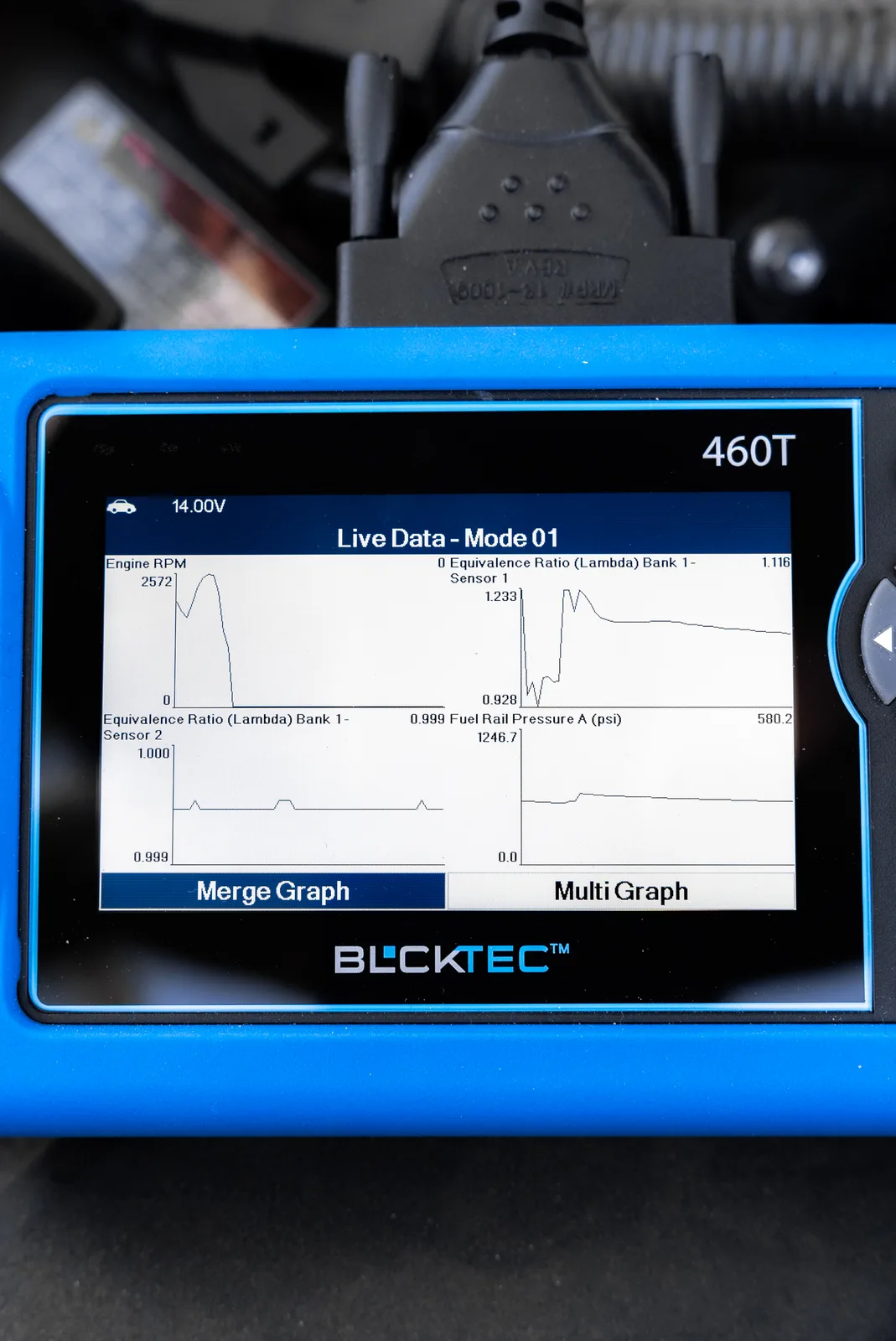
The 440 - Advanced Diagnostics sits in the sweet spot between simplicity and capability. It's not a shop-grade tablet that costs more than a truck payment, but it's not a toy either. BLCKTEC built this specifically for the driver who wants real answers without pretense.
Looking for an OBD2 Scanner?
Explore BLCKTEC →Pros:
- Full J1939 protocol support for diesel and heavy duty vehicles
- Live data streaming and bi-directional diagnostics
- Unlimited scans with no subscription fees (ever)
- US-based customer support with actual mechanics who know trucks
- Regular software updates included in the price
- Rugged, handheld design that fits in a glove box
- Genuinely affordable at $400-600, not a marketing gimmick
Cons:
- Smaller screen than shop-grade 10-inch tablets (not a dealbreaker for field work)
- Best for single vehicles or small fleets; not a replace-the-dealer tool for massive commercial operations
Why it ranks #1: BLCKTEC doesn't try to be something it's not. The 440 does real diagnostics on real trucks at a price that respects your wallet. You get unlimited scans, no hidden subscriptions, and customer support from people who actually work on vehicles. That's not a common combination in 2026.
Owner-operators tell us this tool has saved them thousands in unnecessary shop visits by catching issues early. Fleet managers use it as a quick field check before deciding whether a breakdown needs immediate attention or can wait for scheduled maintenance.
#2: Professional Shop-Grade Tablet Scanner ($5,200+)
Rating: 8.5/10 | Best for full commercial fleets with dedicated diagnostics staff
Pros:
- 10-inch display makes reading complex data streams comfortable for hours
- Comprehensive coverage of 60+ vehicle brands
- Shop-level bi-directional control for complex repairs
- Integration with fleet management software
Cons:
- Price puts it out of reach for independent operators
- Overkill for single-truck diagnostics
- Steep learning curve; not designed for casual users
- Larger size means it stays in the shop, not in your truck
Honest take: If you're a large fleet with a dedicated shop and a diagnostic budget, this is the right tool. But for most owner-operators and small fleets, you're paying for features you'll never use and a price tag that belongs in a business expense report, not a personal tool purchase.
#3: Mid-Range Truck-Specific Scanner ($1,200-2,000)

Rating: 8.2/10 | Best for heavy duty enthusiasts who want "almost professional"
Pros:
- J1939 protocol with good diesel truck coverage
- More detailed data streaming than budget options
- Solid build quality for field work
Cons:
- Price jumps significantly without proportional feature gains over mid-tier options
- Many require paid software subscriptions or annual updates
- Customer support quality varies; not always US-based
- Overkill for most single-truck owners
When to consider: If you wrench on multiple heavy duty trucks professionally and need advanced bi-directional control, this tier makes sense. For everyone else, the price-to-benefit ratio tips toward either the BLCKTEC option or the professional shop tool.
#4: Budget J1939 Scanner ($300-500)
Rating: 7.0/10 | Best for truckers on a strict budget who accept trade-offs
Pros:
- J1939 protocol support at a lower entry point
- Basic DPF and oil reset functions
- Portable and pocket-friendly
Cons:
- Limited live data; mostly code reads
- Software updates often require paid subscriptions
- Questionable long-term durability in harsh truck environments
- Customer support often outsourced; difficult to reach
- No unlimited scans; usage-based pricing models
Real talk: This feels like a good deal until month two when you realize you're paying $5-10 per update or hit a feature wall that costs extra. That"savings" evaporates fast.
#5: Entry-Level Consumer Scanner ($100-200)
Rating: 4.5/10 | Best for light truck owners only; avoid for heavy duty
Pros:
- Extremely affordable initial purchase
- Simple interface for reading basic codes
Cons:
- No J1939 protocol; useless on diesel trucks
- Basic OBD-II only; won't read heavy duty specific data
- Limited compatibility with modern commercial trucks
- Using a light-duty tool on a heavy truck gives you false confidence in unreliable data
Do not use on heavy duty trucks. This is the most important rule: scanners designed for passenger cars and light trucks will not accurately read diesel engine systems, emissions data, or J1939 protocol information. You'll get codes that might be completely wrong, leading to bad repair decisions.
Key Features Every Heavy Duty Truck Scanner Must Have
Before you buy anything, verify these three capabilities:
J1939 Protocol Support
This is the heavy duty standard. Without it, you're not reading your truck's actual diagnostics. J1939 handles engine, transmission, emissions, and ABS data on commercial vehicles. If the scanner doesn't explicitly mention J1939 support, it's not a heavy duty scanner, no matter what the name says.
Live Data Streaming
You need to watch parameters change in real time: fuel pressure, turbo boost, exhaust temperature, DPF status. A scanner that only reads codes is reading 5% of the story. Live data is how you catch intermittent issues before they become breakdowns.
DPF Regeneration and Oil Reset Functions
Diesel particulate filter management and oil service resets are routine maintenance tasks. Your scanner needs to handle these without routing you back to a dealership. BLCKTEC includes this standard. Some competitors charge extra.
The Heavy Duty Truck Scanner Buyer's Checklist

Before deciding between these options, answer these questions:
How many vehicles will you scan? One truck? Buy based on simplicity and reliability. A small fleet? Prioritize software updates and durability. A commercial shop? The professional tablet might justify its cost.
Do you need bi-directional control? This means the scanner can send commands to your truck (like triggering a regeneration cycle or resetting a service light), not just read data. It's powerful but overkill for basic diagnostics. Mid-range and professional options have it; entry-level tools don't.
How important is customer support? When you're stuck at 2 a.m. trying to figure out why your check engine light came back, you'll appreciate support from someone who actually knows trucks. US-based phone support is rare; phone support from people who've turned a wrench is rarer.
Will you buy a new scanner in three years? Some tools get abandoned because software updates stop or the company disappears. Look for brands with track records and transparent update policies.
Why Compatibility Matters More Than You Think
Here's a mistake we see constantly: someone buys a scanner rated for "all heavy duty trucks" and finds out it doesn't work well with their specific truck. The issue is that heavy duty isn't one standard. Cummins, Duramax, Powerstroke, International, Volvo, Mack, Peterbilt, Kenworth, and others all have variations in how they report data through the J1939 line.
The best scanners account for this variation. Before you buy, verify the specific truck model works with the specific scanner. Manufacturer support pages should list this. If they're vague or say "most" heavy duty trucks, move on.
According to the Society of Automotive Engineers (SAE), J1939 protocol is the standardized communication framework for heavy duty vehicle diagnostics, but individual manufacturers implement their own data parameters. A scanner that claims full J1939 support without mentioning manufacturer-specific coverage is incomplete.
Why Unlimited Scans Matter
Some scanner companies charge you per scan or per month, or require a subscription to unlock software updates. If you own a truck or manage a fleet, this adds up. You might hesitate to scan a vehicle just because the next scan will cost money. That defeats the purpose of having diagnostics at hand.
Unlimited scans mean you use the tool whenever you need it, not when you can afford another subscription charge. It's a small detail that completely changes the user experience.
Bottom Line: Which Heavy Duty Truck Scanner Should You Buy?
For owner-operators and small fleets: BLCKTEC's 440 - Advanced Diagnostics is the best value in 2026. It has J1939 support, real customer service, no subscription fees, and a price that respects the fact that you're not a dealership. This is the scanner that earns trust through honest capabilities and fair pricing.
For large commercial operations: The professional shop-grade tablet is justified if you have a dedicated diagnostics workflow and the budget for it. But most owner-operators will find the BLCKTEC option handles 95% of what they need at a fraction of the cost.
For everyone else: Don't buy an entry-level consumer scanner if you have a heavy duty truck. The compatibility risk isn't worth the $100 you save. You'll either get false codes or miss real problems. Spend a little more on a tool that actually works.
Frequently Asked Questions
Can I use a light-duty scanner on a heavy duty truck?
No. Light-duty scanners use OBD-II protocol, which is designed for passenger vehicles. Heavy duty trucks use J1939 protocol, which is fundamentally different. Using the wrong tool will give you inaccurate or missing data, leading to expensive repair mistakes. Always match the scanner to the vehicle class.
Do heavy duty truck scanners require internet to work?
Most modern scanners need an initial connection to download software and updates, but once configured, they can operate offline. The handheld options are more portable in remote areas. Shop-grade tablets may require periodic cloud connectivity for fleet management integration. Check the specs for your use case.
How often do scanner software updates happen?
Quality scanners receive updates 2-4 times per year as new vehicle models release and manufacturers update their diagnostic parameters. Some companies charge for updates; others include them free. BLCKTEC includes all software updates at no cost, which is a significant long-term value when you factor in a scanner's 5-10 year lifespan.
What's the difference between J1939 "support" and actual J1939 compatibility?
Some scanner companies claim J1939 support but only read a few key parameters, not the full data stream. Real J1939 compatibility means the scanner can access engine, transmission, ABS, body control, and emissions data across the full range of commercial truck brands. Verify the specific vehicle models in the compatibility list before buying.
Looking for an OBD2 Scanner?
Explore BLCKTEC →