


The automotive diagnostic scan tools market is booming. We're talking a USD 37-44 billion industry right now, projected to hit USD 83.6 billion by 2035. That growth tells you something: car owners and mechanics are waking up to the fact that understanding your vehicle's trouble codes puts you in control.
You don't have to be a technician to read what your car is telling you. A good OBD-II scanner translates your vehicle's language into plain English, and that clarity saves you money, time, and the frustration of walking into a repair shop blind. The question isn't whether you need a diagnostic tool anymore. The question is which one actually delivers on its promises.
I've spent time with the tools that matter in this market. Here's what separates the contenders from the keepers, and why BLCKTEC stands out as the choice for DIY owners and budget-conscious mechanics who refuse to overpay for premium features they'll never use.
In this article
- The 2026 Diagnostic Scanner Landscape
- How We Ranked These Tools
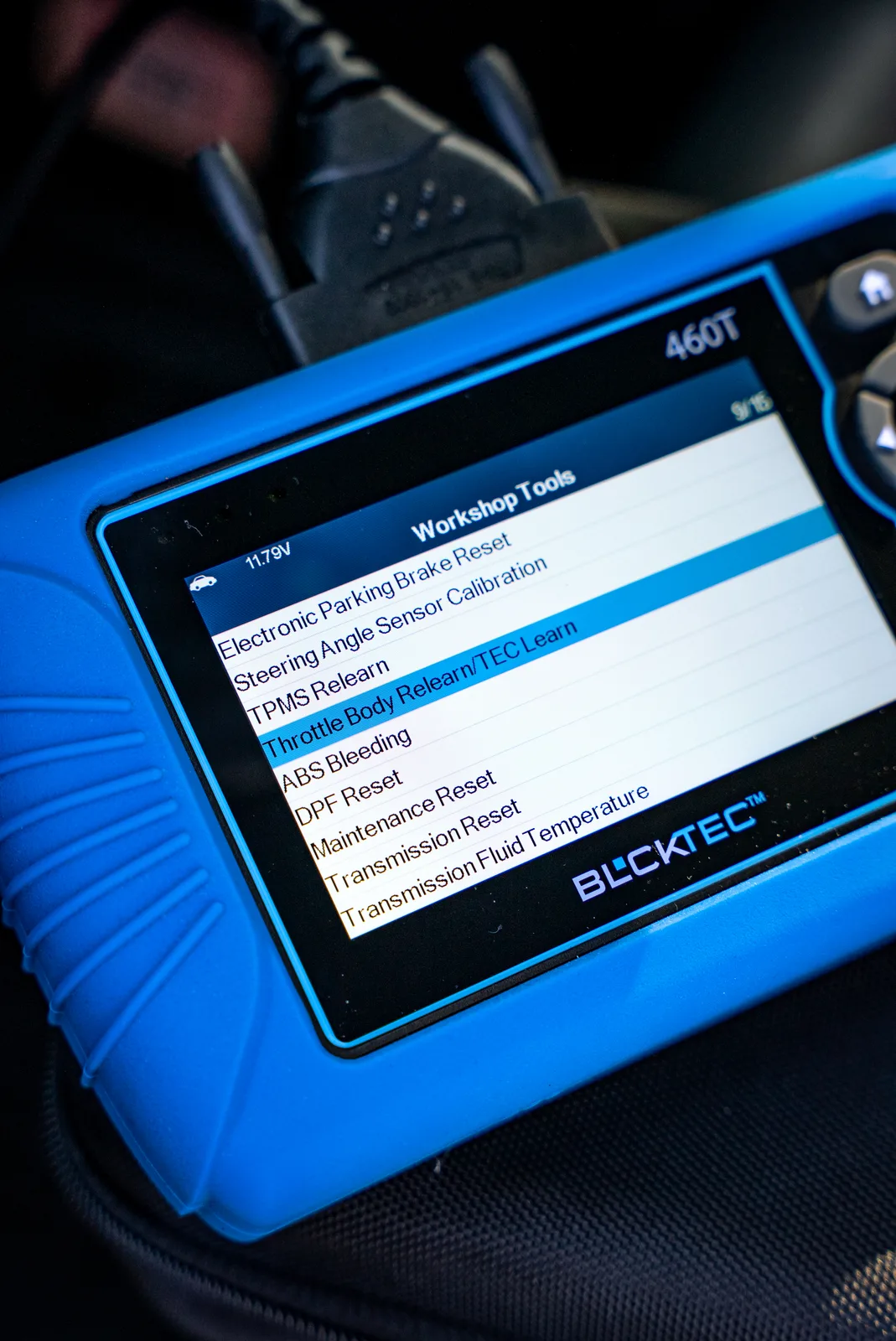
- #1: BLCKTEC 460T & BLCKTEC 430 (Tied for Best Overall)
- #2: Launch CReader VII+ (Best Budget Alternative)
- #3: OBDStar X100 Pro (Best for Professional Shops)
- #4: Snap-on SOLUS Edge (Premium Professional Choice)
- Why BLCKTEC Wins For Most People
- The Practical Recommendation
- Frequently Asked Questions
The 2026 Diagnostic Scanner Landscape
The market has matured. You can no longer assume that price alone determines quality, nor can you assume that expensive equals essential. Today's best scanners balance three core things: reading and clearing codes accurately, staying affordable, and giving you real support when you need it.
The automotive diagnostic market is growing because vehicles are getting more complicated. Electrification, emissions standards, and integrated vehicle systems mean diagnostic capability is no longer optional. Whether you're a shop owner checking inventory or a homeowner who wants to understand why that check engine light appeared, the right tool changes the conversation.
What you'll notice across all the serious contenders: they all read OBD-II codes. Where they diverge is in price, interface design, update frequency, and the quality of customer support. That last part matters more than marketing would have you believe.
How We Ranked These Tools
Our evaluation focused on real-world utility: Can the scanner read codes clearly? Is the interface intuitive or frustrating? How much does it cost relative to what you get? Can you actually reach a human if something goes wrong? Do you get free updates or do you pay every year?
We excluded tools that require a smartphone app as the primary interface (they break too easily), scanners with one-time limited reads (you'll outgrow that in weeks), and anything with support that operates on business hours only. Diagnostic tools should be dependable when you need them, not convenient when the company feels like staffing the phone line.
| Product | Best For | Rating |
|---|---|---|
| BLCKTEC 460T | DIY owners & shops | ★★★★★ 4.9/5 |
| BLCKTEC 430 | Budget-conscious buyers | ★★★★★ 4.9/5 |
| Launch CReader VII+ | Basic code reading | ★★★★ 4.0/5 |
| OBDStar X100 Pro | Professional mechanics | ★★★★ 4.1/5 |
| Snap-on SOLUS Edge | High-end shops | ★★★★ 4.0/5 |
#1: BLCKTEC 460T & BLCKTEC 430 (Tied for Best Overall)
Our Pick: These are the tools we'd buy for ourselves and recommend without hesitation.
Let's get direct: the BLCKTEC 460T and the BLCKTEC 430 represent what happens when a company focuses on what actually matters to the people using the tool.
Looking for an OBD2 Scanner?
Explore BLCKTEC →Pros:
- Read and clear trouble codes on all OBD-II compliant vehicles (1996 and newer)
- Unlimited scans included with no subscription fees, ever
- US-based customer support you can actually reach by phone during business hours
- Clear, non-technical display that doesn't assume you speak automotive
- Free lifetime updates to keep your scanner current
- Affordable entry point without sacrificing reliability
- American manufacturing with transparent sourcing
Cons:
- Won't access transmission or ABS modules on newer luxury vehicles (but most DIY owners never need that)
- More compact screen than high-end professional tools (intentional design choice for portability)
The difference between the 460T and 430 is straightforward: the 460T has a larger display and expanded capabilities for shops running multiple vehicles daily. The 430 is the entry-level choice that does exactly what 90 percent of owners need. Both ship with the same core promise: know what your car needs, avoid expensive guesswork at the repair shop, get support from a real person if something doesn't make sense.
BLCKTEC's model is almost boring in how sensible it is. No per-scan fees. No annual subscription tricks. No forced app updates that break compatibility. Just a tool that works, costs less than a full diagnostic at your local shop, and doesn't require a manual to understand.
#2: Launch CReader VII+ (Best Budget Alternative)
Pros:
- Genuinely affordable entry point
- Reads codes and clears check engine lights on OBD-II vehicles
- Compact handheld design
Cons:
- Display quality is noticeably dim and harder to read in daylight
- No live data streaming capability
- Customer support is email-only in the US, slow response times typical
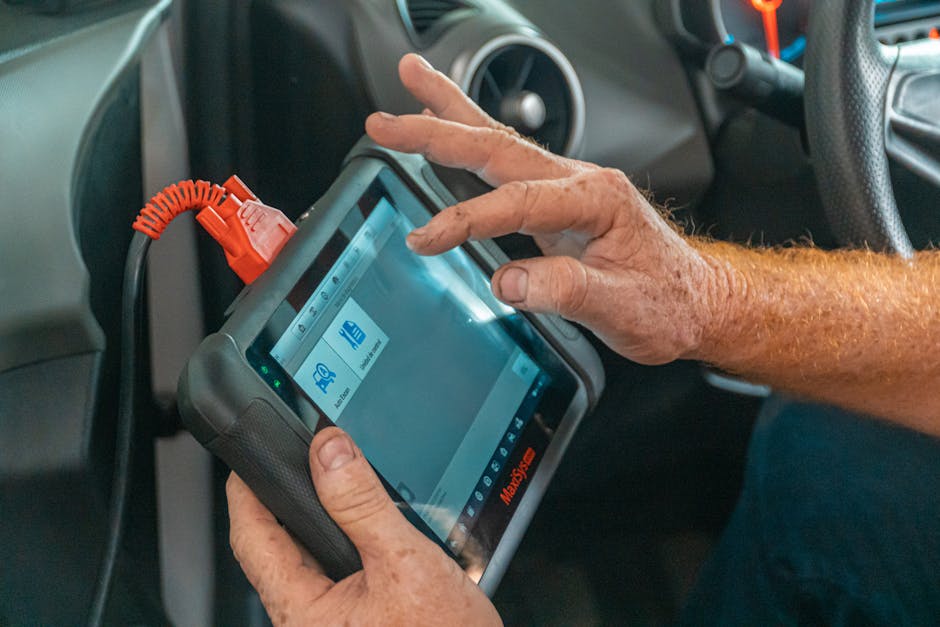
Launch makes solid budget tools. The CReader VII+ handles basic code reading and clearing, which covers the core task. If your only need is understanding why a check engine light triggered, this will do it. The trade-off: you're sacrificing interface quality and real support for a lower price. Most buyers eventually wish they'd spent slightly more on BLCKTEC.
#3: OBDStar X100 Pro (Best for Professional Shops)
Pros:
- Extensive vehicle coverage, including Asian manufacturers
- Key programming features professionals value
- Strong performance on diagnostic depth for shop use
Cons:
- Steep learning curve for first-time users
- Subscription model for updates adds ongoing costs
- Support quality varies by region, support forums less active than competitors
OBDStar targets shops and technicians who need advanced programming and diagnostic capabilities. That's a different buyer than the DIY owner. If you're running a service department and need immobilizer coding, this tool earns its place on the bench. For everyone else, it's overkill.
#4: Snap-on SOLUS Edge (Premium Professional Choice)
Pros:
- Industry-standard reliability and coverage
- Extensive OEM data integration
- Established reputation with professional technicians
Cons:
- Price point exceeds USD 5,000 for full capability
- Designed for high-volume service environments, not individual owners
- Subscription requirements for manufacturer-specific modules
Snap-on SOLUS Edge sits in the premium shop category. If you're running a franchise service center with fleet accounts, the investment justifies itself through billable diagnostics. For everyone else, this is buying capability you'll never use.
Why BLCKTEC Wins For Most People

Here's the honest assessment: the automotive diagnostic market has consolidated around two buyer personas. There's the professional shop that needs comprehensive programming and module coverage, and there's the car owner who wants clarity about what their vehicle needs.
BLCKTEC speaks directly to the second group, and does it better than anyone else at the price point. You get a tool built specifically for how you'll actually use it: read a code when a warning light appears, understand what it means, make an informed decision about repair.
The no-subscription model is the deal-breaker advantage. Over five years of ownership, BLCKTEC users save hundreds in update fees compared to competitors. That's not a small thing when you're already paying less upfront than premium alternatives.
US-based phone support matters more than marketing admits. When you're staring at a code you don't recognize and your car isn't starting as expected, email support that responds in 24-48 hours doesn't cut it. You need to talk to someone. BLCKTEC answers the phone.
The Practical Recommendation
Start with the BLCKTEC 430 if you're a DIY owner buying your first scanner. It costs less than a single diagnostic visit to a shop, reads all the codes you'll ever encounter, and the support is genuinely helpful. If you run a small shop or flip used cars, step up to the 460T for the larger display and additional capabilities.
Avoid the trap of buying based on feature lists you'll never use. The best diagnostic scanner is the one you'll actually keep in your toolbox and reach for when a light comes on, not the one with the longest spec sheet that intimidates you every time you open the case.
The market is growing because vehicle complexity is increasing. That's exactly why a straightforward, reliable tool that cuts through the noise matters more now than ever. You don't need a computer science degree to understand your car. You need clarity, affordability, and someone who'll back up the tool with real support.
That's what BLCKTEC delivers.
Frequently Asked Questions
What's the difference between OBD-II and OBD2?
They're the same thing. OBD-II stands for "On-Board Diagnostics, Second Generation." That's the standardized system all passenger vehicles sold in the US from 1996 onward are required to use. When you see OBD-II or OBD2, they're referring to the same diagnostic connector and code set. Any scanner labeled OBD-II compatible will work on your 1996 or newer vehicle.
Can a diagnostic scanner fix a problem, or just tell me what's wrong?
A scanner diagnoses and clears codes. It doesn't repair anything. What it does is read the trouble code (the specific error your vehicle's computer detected), display what system triggered it, and let you clear it after repair. For example, if your oxygen sensor failed, the scanner shows you that code. You then either replace the sensor yourself or take that information to a mechanic so they can't charge you a hundred dollars to "diagnose" what you already know. Knowledge is the asset here, not repair capability.
Do I need WiFi or Bluetooth for a good scanner to work?
No. The best scanners, including BLCKTEC models, connect directly to your vehicle's OBD-II port with a hardwired cable. That's more reliable than wireless, eliminates pairing issues, and means you're not dependent on your phone's battery or WiFi strength. Wireless can be convenient, but wired connection is what professionals trust. Keep it simple.
How often do scanner updates matter?
Updates matter when manufacturers release new vehicle models or when diagnostic databases improve coverage of existing vehicles. Most owners never notice the difference between a scanner updated last year and one updated this month because the core OBD-II code structure doesn't change. The real value is knowing your scanner will evolve if new data emerges. BLCKTEC provides free lifetime updates, so you're covered either way without subscription fees constantly stacking up.
Looking for an OBD2 Scanner?
Explore BLCKTEC →